Attempt to capture narcissistic ghosts 2
About artwork
Provenance
Tech info
About
attempt to capture narcissistic ghosts (chapter 2)

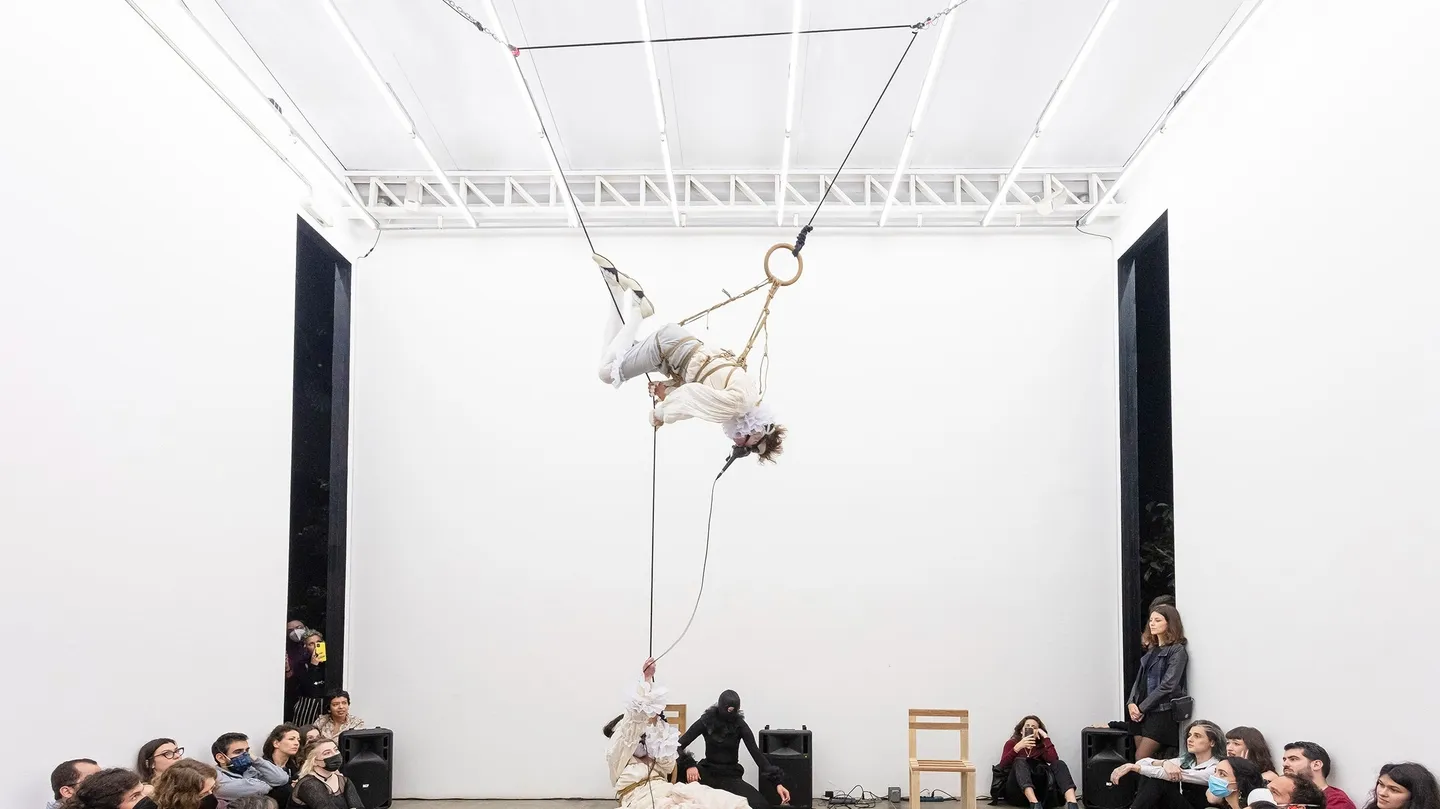
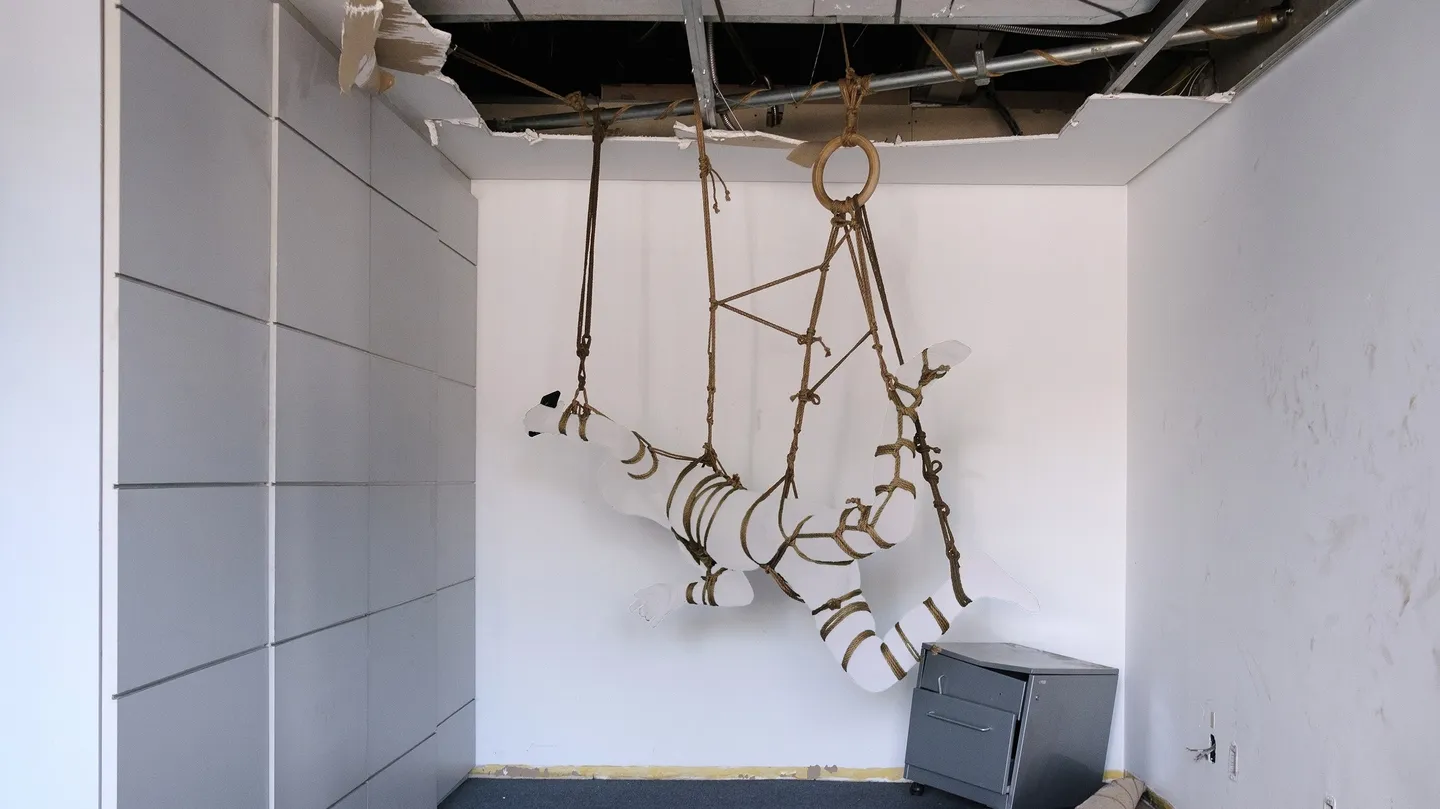
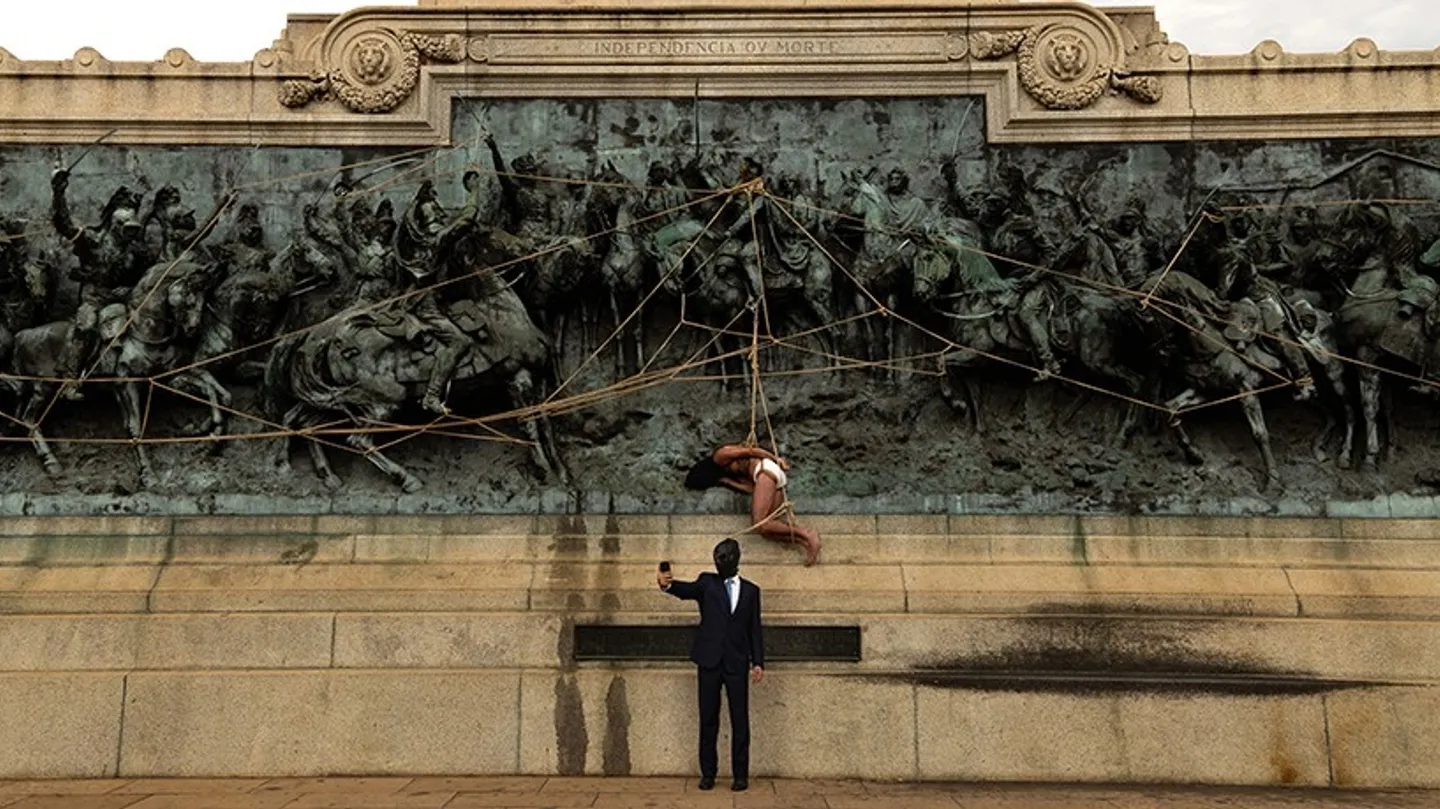
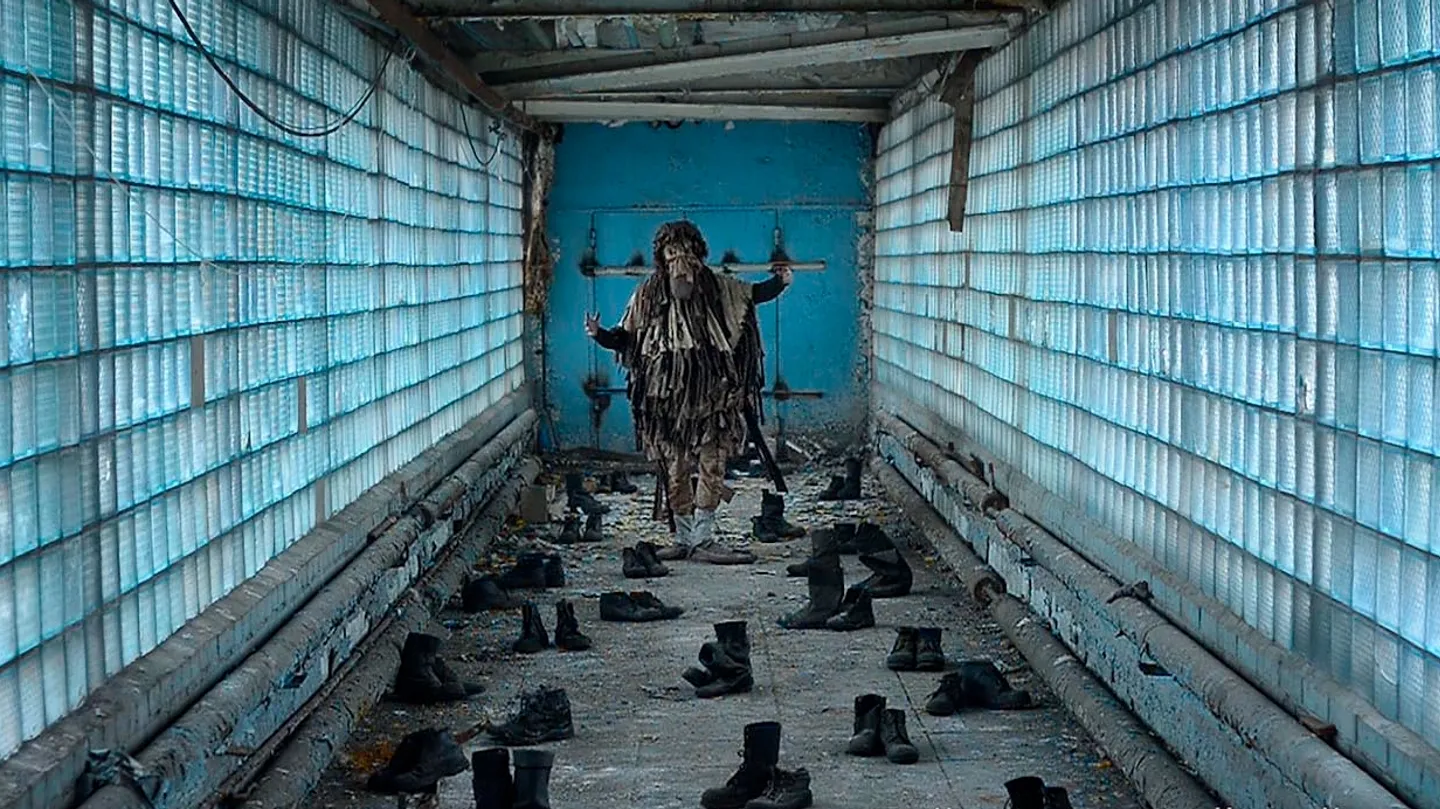
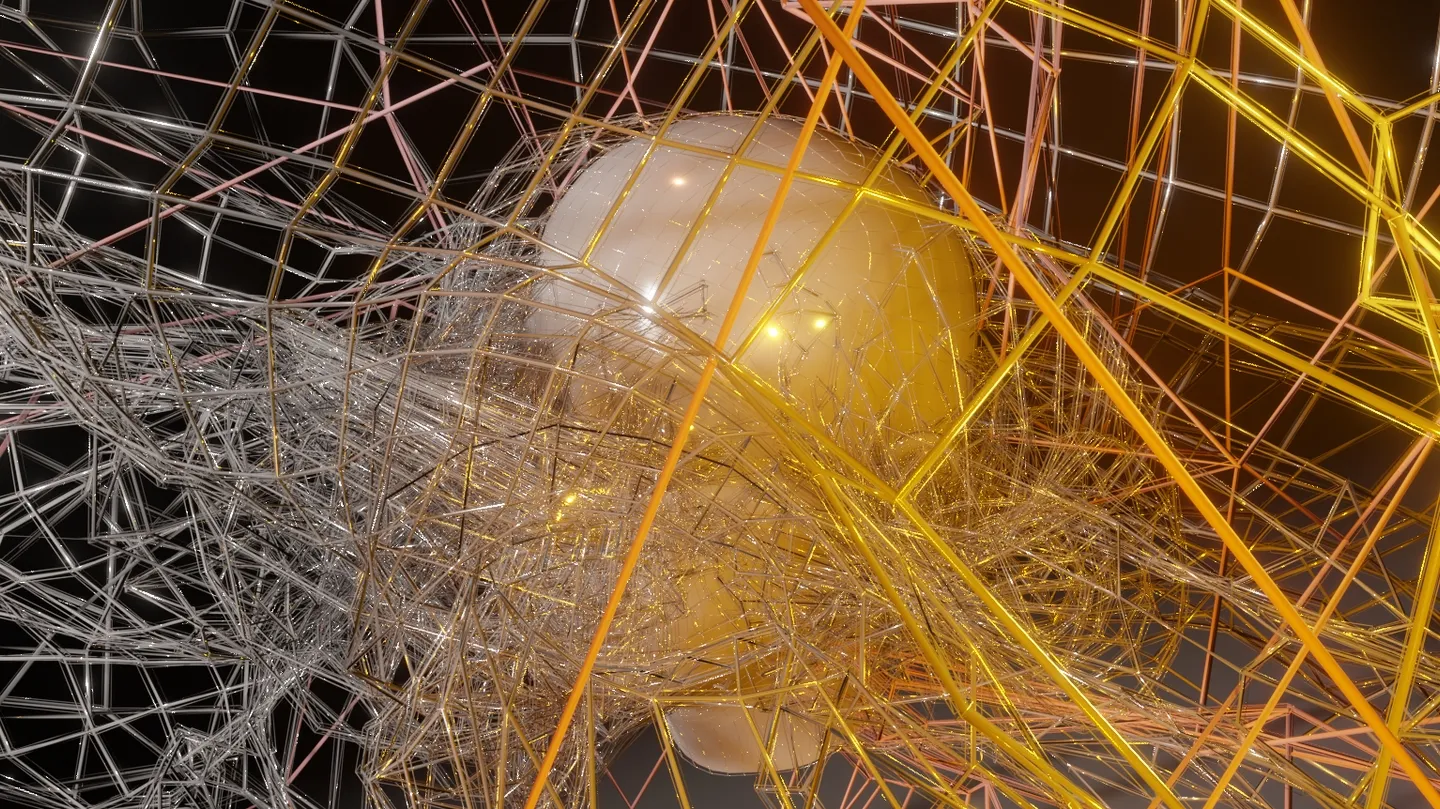
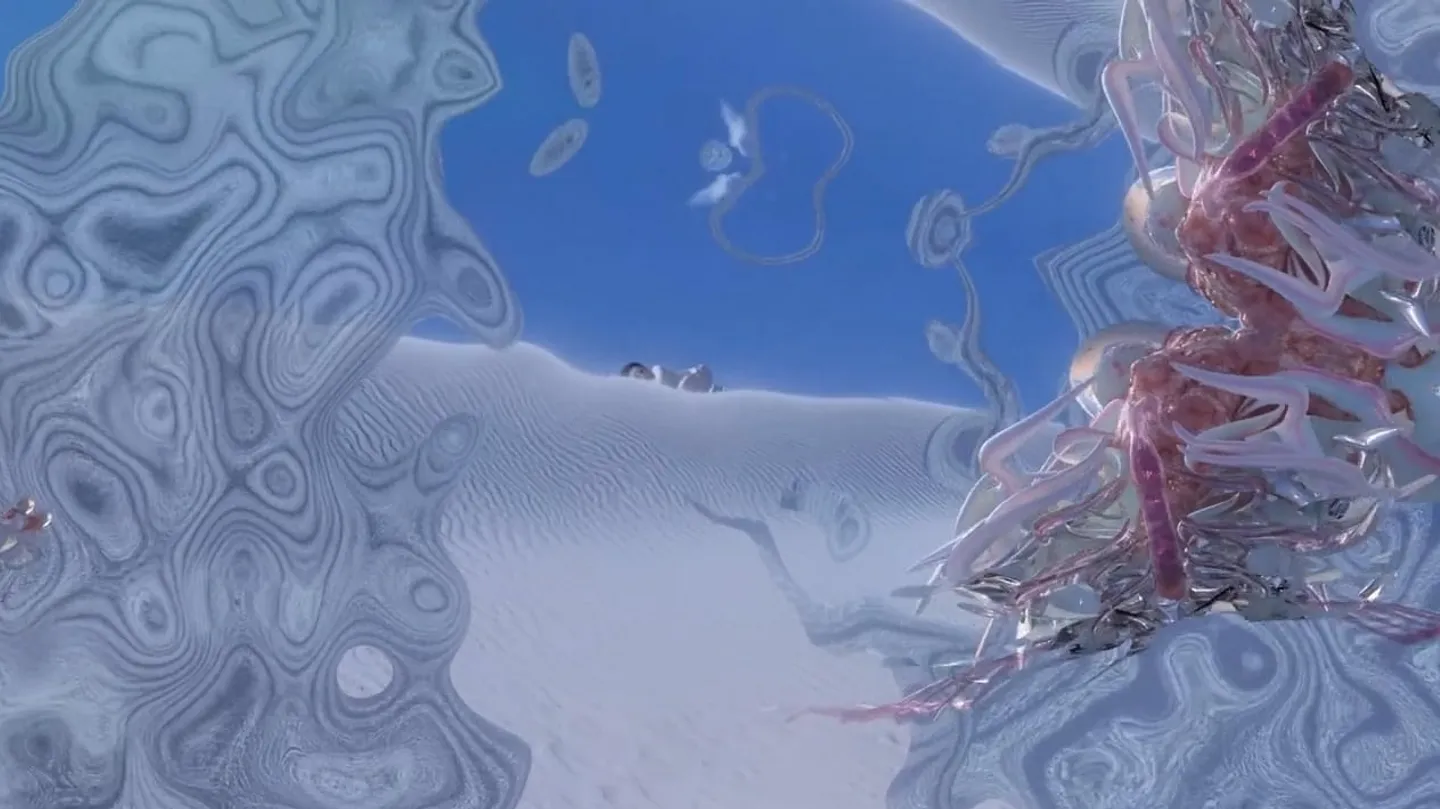
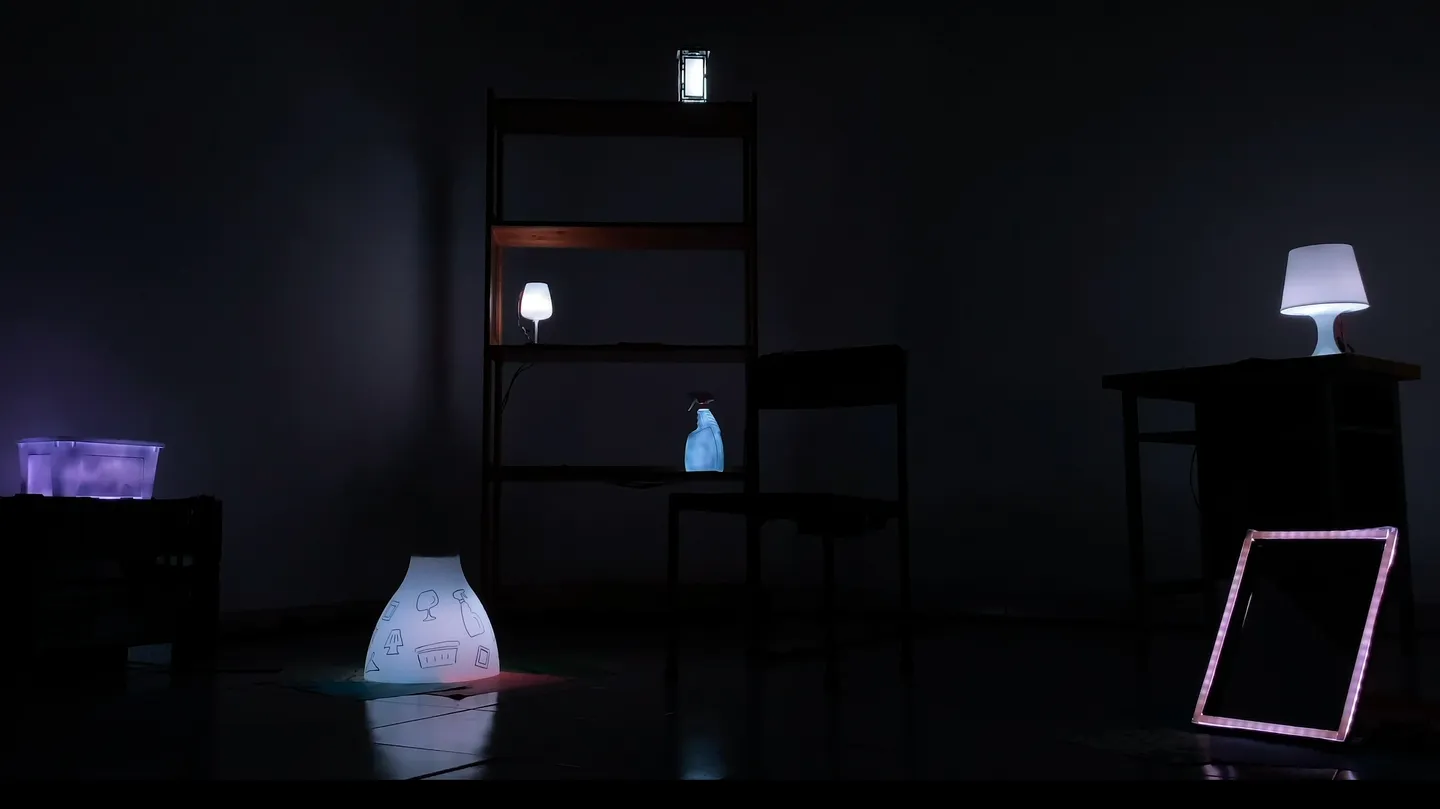
“Attempt to capture narcissistic ghosts”, is a series of videos and photographs in which structures with tied bodies are created using shibari (Japanese tying) techniques. The bodies of the models are digitally erased, leaving only the structure of ties that form the contours of the bodies they support. In all the scenes, the bodies are tied with cell phones in their hands, or with the cell phone as part of the tethering system, with the bodies in poses that appear to be taking a “selfie”.

In this series of works, the bodies are marked by the very structures of restrictions and defined by their absences; movement is eliminated, placing them in fixed poses that suggest the taking of a "selfie", a frustrated attempt at self-portraiture by an invisible body. All the elements that produce identity are erased, culminating in portraits of submissive bodies forced to continually gaze at their empty structures.

These bodies inhabit ruins, destroyed and abandoned spaces, which carry remnants of how they used to be; they are ghostly structures that traverse the invisible bodies, the landscape blends with the figure, incomplete spaces and bodies ruins, creating a mirroring relationship between body and space.

The advent of social media about two decades ago ushered in substantial cultural and societal changes, and, as it becomes clearer, arguably had an even more consequential political impact. More than a mere “circumstantial sequence of changes”,  as even a controversial former Facebook executive, Chamath Palihapitiya, once put it: it really seemed like “the social fabric of our societies [was being] ripped apart by social media”. “Attempt to capture narcissistic ghosts” investigates the impacts of these changes on how we experience our bodies and structure our identities.

Among others, these social networks allowed massive data accumulation and correlate directly with the emergence, more recently, of so-called “Artificial Intelligence” systems (particularly LLMs), which are built on top of datasets largely originating from these new digital modes of communication. Even though that correlation is well established –and privacy concerns and regulation become more commonplace– a clear understanding has not yet been widely accepted on how much of (or even whether) the increasing political polarization throughout the world is indeed catalyzed by profit-driven suggestion algorithms, which fundamentally work on the same basic principles as these AIs. One of our guiding hypotheses is that these AIs are increasingly generated from user data created within specific ideological socialization processes and are, therefore, doomed to the same shortcomings that afflict them.

The more things become decorporified and virtualized, so grows the importance of the body. Notions previously restricted to digital realms seem to overflow into reality, the original solipsist’s conception is reformulated thus: all intelligence is artificial, only simulations can be conscious. The claim is that bodies don’t really “feel” anything, they only seem to because it is  ‘useful’ for any individual to to know (or invent) what it is: it creates a simulation of itself, used to devise its behavior — as if organisms conjured a model in order to plan interactions with their surroundings. Consciousness becomes merely a “simulated property”, simulating itself. By means of this reductive conception, identity becomes a software, a construction, unbound by physical elements and no one is anything more than a simulation: we would be simpletons, trapped in the story that our conscious-bodies tell themselves.

“Attempt to capture narcissistic ghosts” discusses how the intense circulation of photographic images and massive data accumulation shape our relationship with the body. I believe that every form of technology is designed as a prosthesis, an extension of the body that tries to achieve what the body can’t; in this case, I am interested in investigating social networks as virtual prostheses.
Authors
Tags