“Опять в городе разведены мосты” / “The City Bridges Are Open Again”
About artwork
Provenance
Tech info
About
“Опять в городе разведены мосты” /
“The City Bridges Are Open Again”
by Masha Godovannaya, music by Federico Schmucler, 9.34 min., b/w, Russia/Mexico/Austria, 2020.


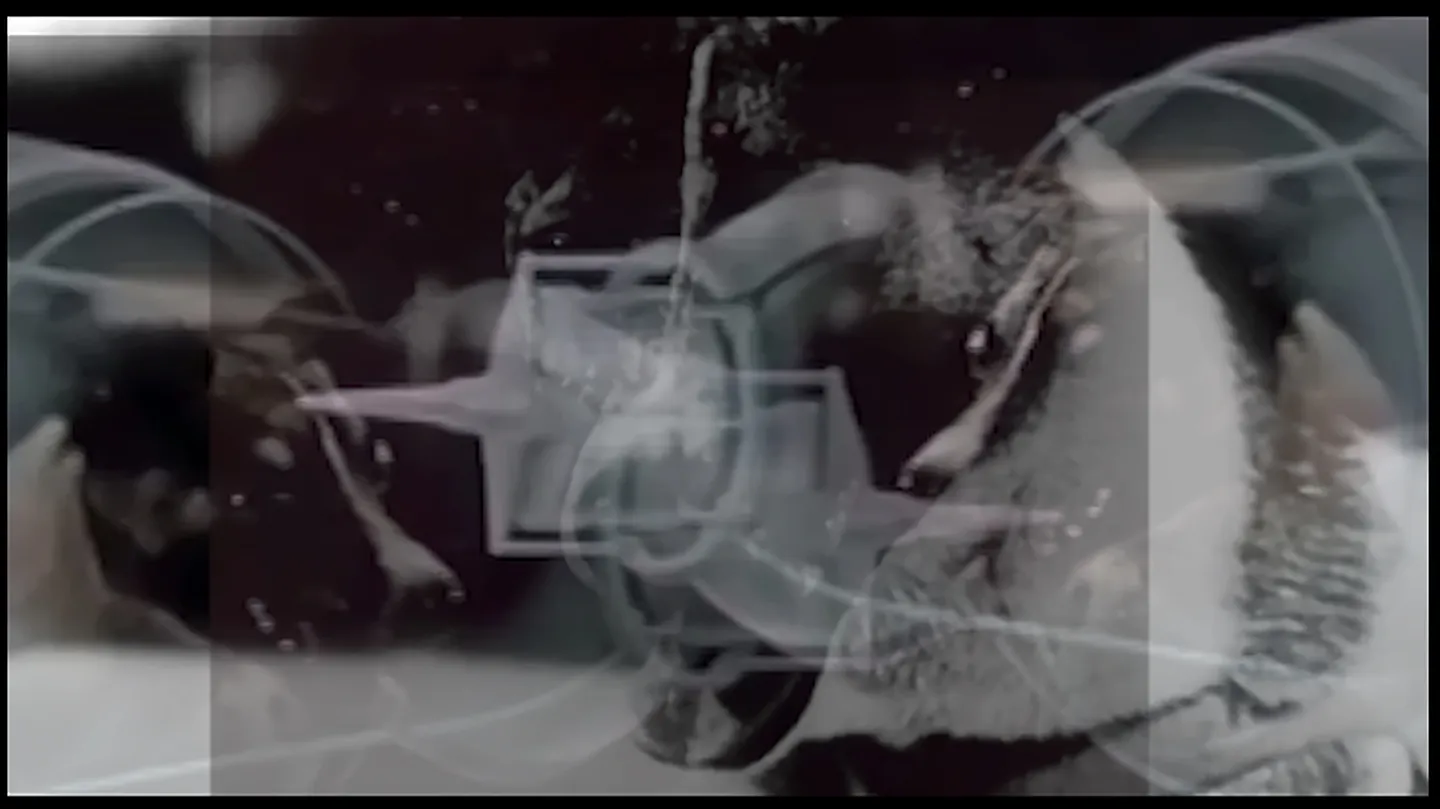
The film “The City Bridges Are Open Again” is conceived as an experimental short found-footage film based on and constructed from films by Sergei Eisenstein “Battleship ‘Potemkin’” (1925) and “October” (1927) as well as from two cinematic improvisations based on his unfinished Mexican project (“¡Que viva México!” by G. Alexandrov (1979) and “Sergei Eisenstein. Mexican Fantasy” by O. Kovalolv (1998)). The film develops along Eisenstein’s principle “thesis + antithesis = synthesis” creating a visual story of a utopic revolution-about-to-happen. Through montage of shots from the films, calls, and proclamations of original intertitles, and a specially designed soundtrack by the composer Federico Schmucler, the film works affectively evoking ghosts, deities, and spirits of the past revolts.
The film reexamines a political – revolutionary – potential of montage as developed and theorized by Eisenstein himself and employs his cinematic language. It’s an attempt to provide a version of his incomplete project, and to bridge Mexican and Russian revolutions of 1910 and 1917 in one cinematic scape as well as create an audio-visual celebration of alternative modernities – Mexican and Soviet, unrecognized and marginalized by the West.
The film serves as a reminder of decolonial historical projects which took place in the past. Many of them were forgotten and silenced, as, for example, the Haitian Revolution of 1791 – 1804. Many of them failed in the long run or were betrayed by social structures they themselves erected, as Mexican and Russian revolutions. A lot of attempts were crashed. Countless - didn’t happen. But regardless of the historical processes, what we have at our collective hands is a hope and desire for a change, a struggle against the structural and institutionalized oppressions; a will to win and be emancipated.
Almost a hundred years ago, Cinema was summoned to assist in the revolutions and rebellions. Today there is a strong need for political-cinema-which-is-made-politically, reciting J-L. Godard’s call, in order to recruit the revolutionary forces. The film is an attempt to concoct a cinematic project in the spirit of the rebellious past with the utopic hope for a better future and invite others to share the excitement and enthusiasm of those “political programs not only as yet incompletely realized but also impossible to realize in their original mode – that nevertheless provide pleasure as well as pain” (Elizabeth Freeman “Time Binds: Queer Temporalities, Queer Histories”, p. xiv).
Authors
Tags