Chijikinkutsu
About artwork
Provenance
Tech info
About
Nelo Akamatsu’s artistic practice is deeply rooted in the Japanese tradition of “suikinkutsu,” a sound installation originating from the Edo period, designed to enhance the auditory experience of traditional Japanese gardens. This delicate interplay of sound emerges from drops of water falling through an inverted earthenware pot buried beneath a stone washbasin, resonating through hollow bamboo tubes. For centuries, the Japanese people have cultivated an acute sensitivity to the natural world, attuning themselves to the subtle sounds of nature, from the rustling wind through pine trees to the melodic chirping of insects.

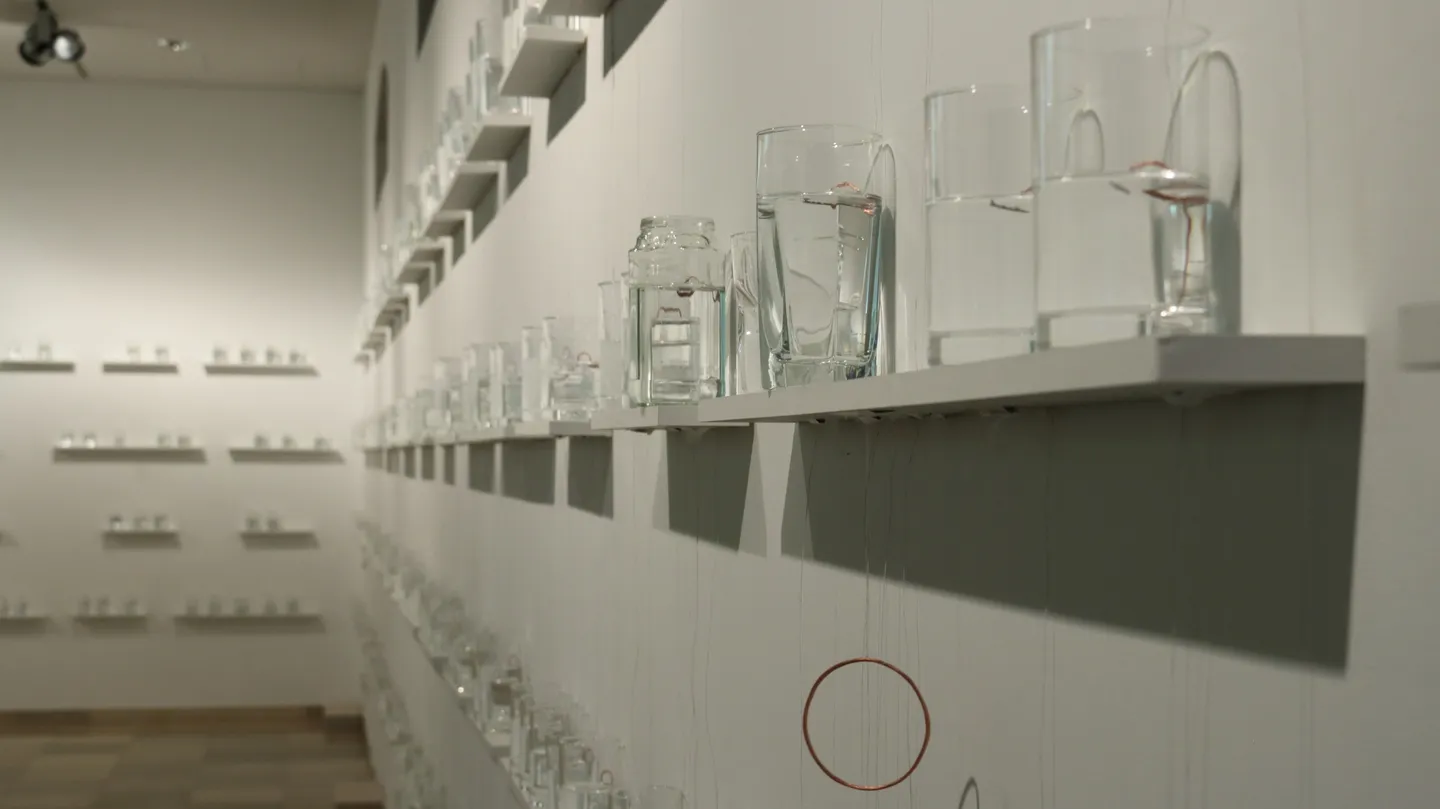
Inspired by these ancient practices, Akamatsu engaged with the profound sounds emanating from underground in the gardens of his beloved Kyoto temple. His installation, “Chijikinkutsu,” manifests as a contemporary exploration of this traditional form, utilizing an innovative array of materials: water, sewing needles, glass tumblers, and coils of copper wire. In this work, needles are magnetized and float atop the water in tumblers, aligning themselves with geomagnetic forces to establish a north-south orientation. When electricity is supplied to the coils outside the tumblers, a temporary magnetic field draws the needles towards them, producing a faint yet resonant sound as the needles strike the glass. The entire system is controlled via MIDI technology.

“Chijikinkutsu,” like the Japanese perspective of nature, emphasizes the subtleties of sound in the environment creating an immersive auditory experience, where the faintest sounds evoke heightened awareness in viewers, prompting them to realize that these sounds originate not from external sources but from within their own consciousness. This reflective engagement fosters a profound connection between the individual and their internal landscape, appealing an exploration of perception and existence.

— Mariano Sardon, curator
Authors

Tags