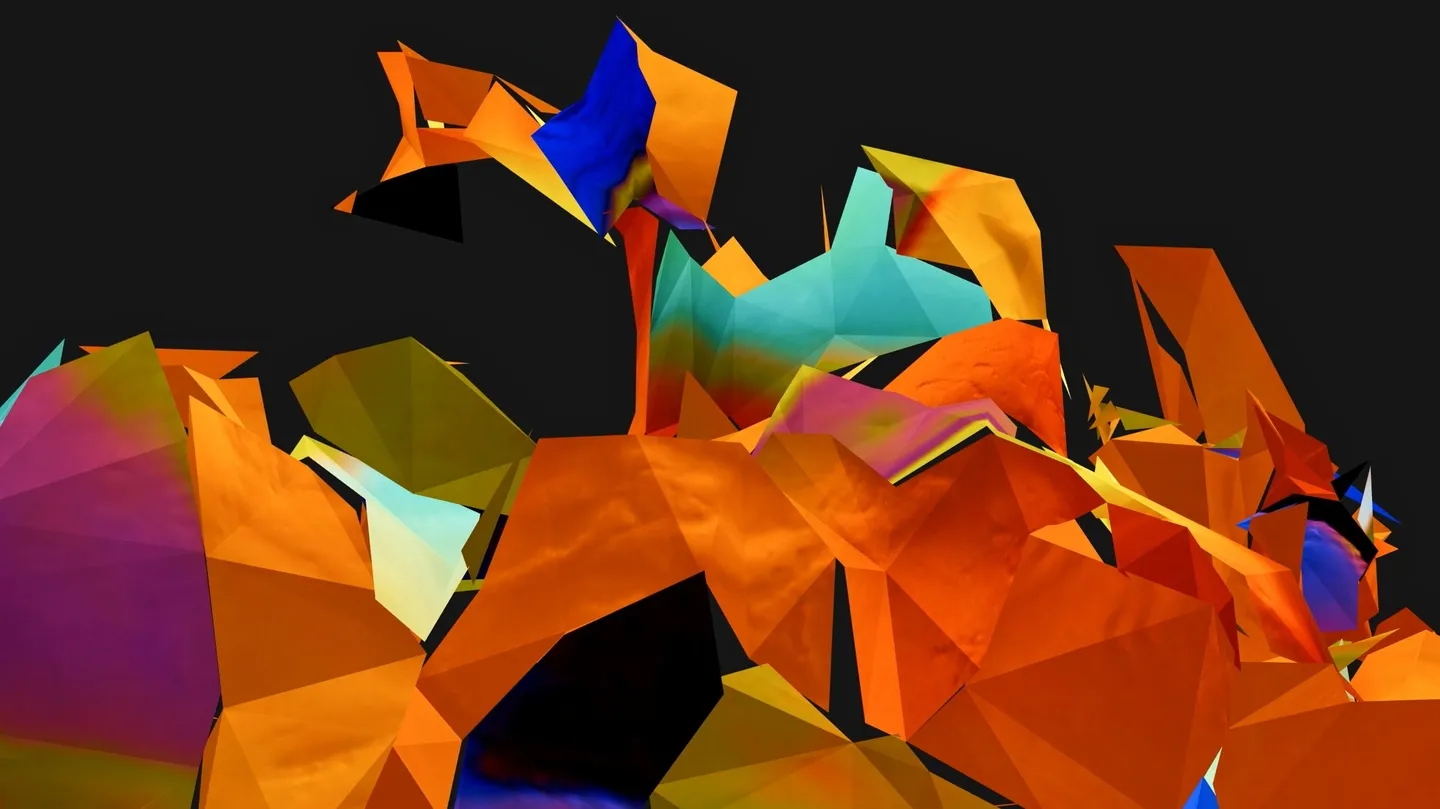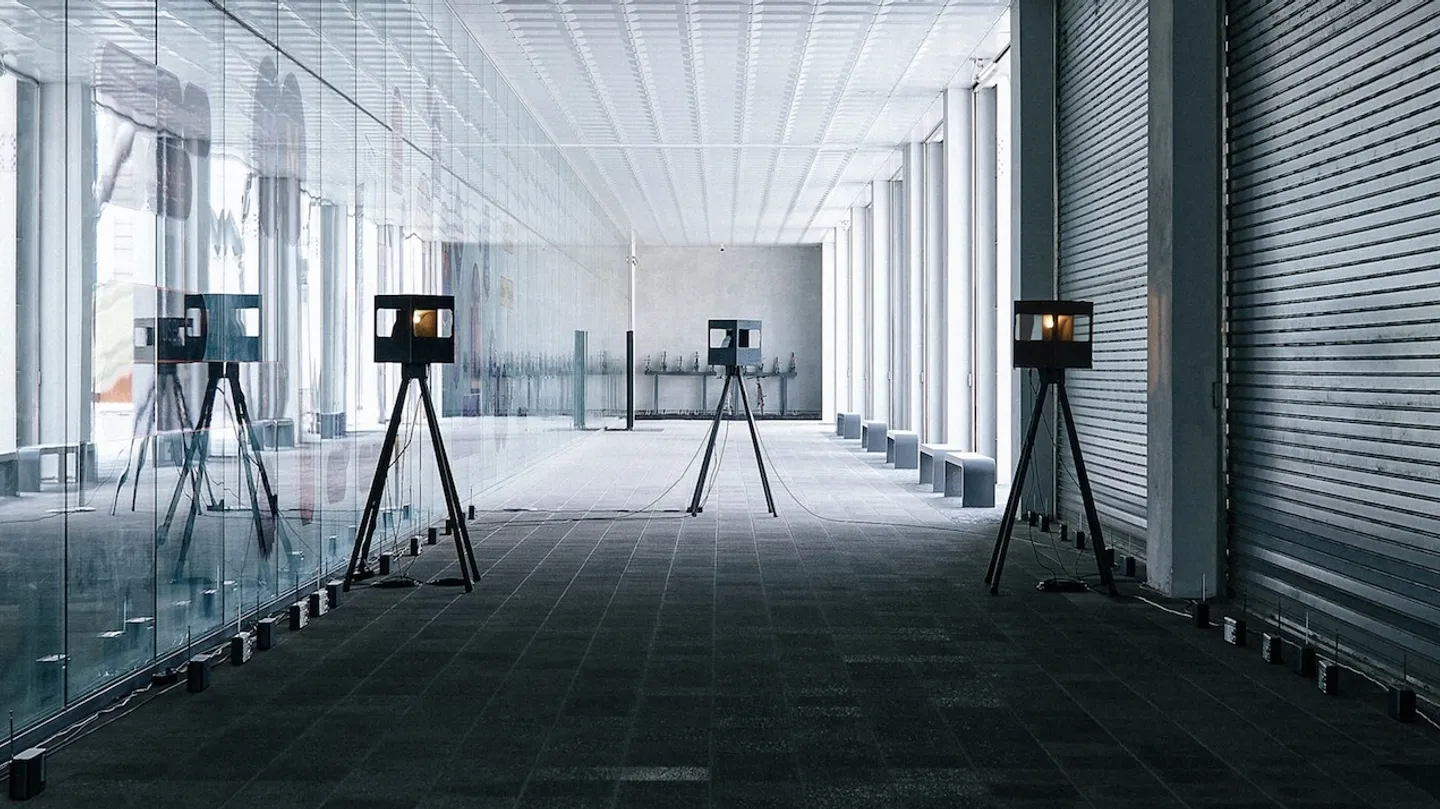
Urban Jaesaeng Device #3: Rotary
About artwork
Provenance
Tech info
About
This work is a data regeneration device that provides experiences of listening to sounds heard at a rotary in the city. A rotary is a point of intersection where vehicles come together, mix, then disperse. It is a place of various changing speeds. While Urban Jaesaeng Device #2: Sound Walk focuses on linear movement and the experiences of viewers approaching sound, this work uses traffic volume data from Cheongju intersections to concentrate on the movement of curved, revolving and cyclical sound coming to us. This work uses the principle of rotary speakers, in which a motor on a central axis turns the speakers in real time. The Doppler effect* created through various changes in speed creates unique tones. Viewers can autonomously hear the different tones converging as the revolution speed increases and decreases according to transit data from Cheongju intersections.

*Doppler effect: A phenomenon whereby the pitch emitted by a sound source (an object or place emitting vibrations) is observed differently from its actual pitch. One example is the way in which the pitch of an ambulance Siren appears to rise as it approaches and the number of vibrations increases, then appears to fall as the number of vibrations decreases.

Team TRIAD(Honam Kim, Minje Jeon, Gwangmin Hong)
Urban Jaesaeng Device #3: Rotary, 2022, Mixed media (3), 170x80x80cm, National Museum of Modern and Contemporary Art, Korea(MMCA), Cheongju
Authors
Tags