Are We Gazing at the Same Moon
About artwork
Provenance
Tech info
About
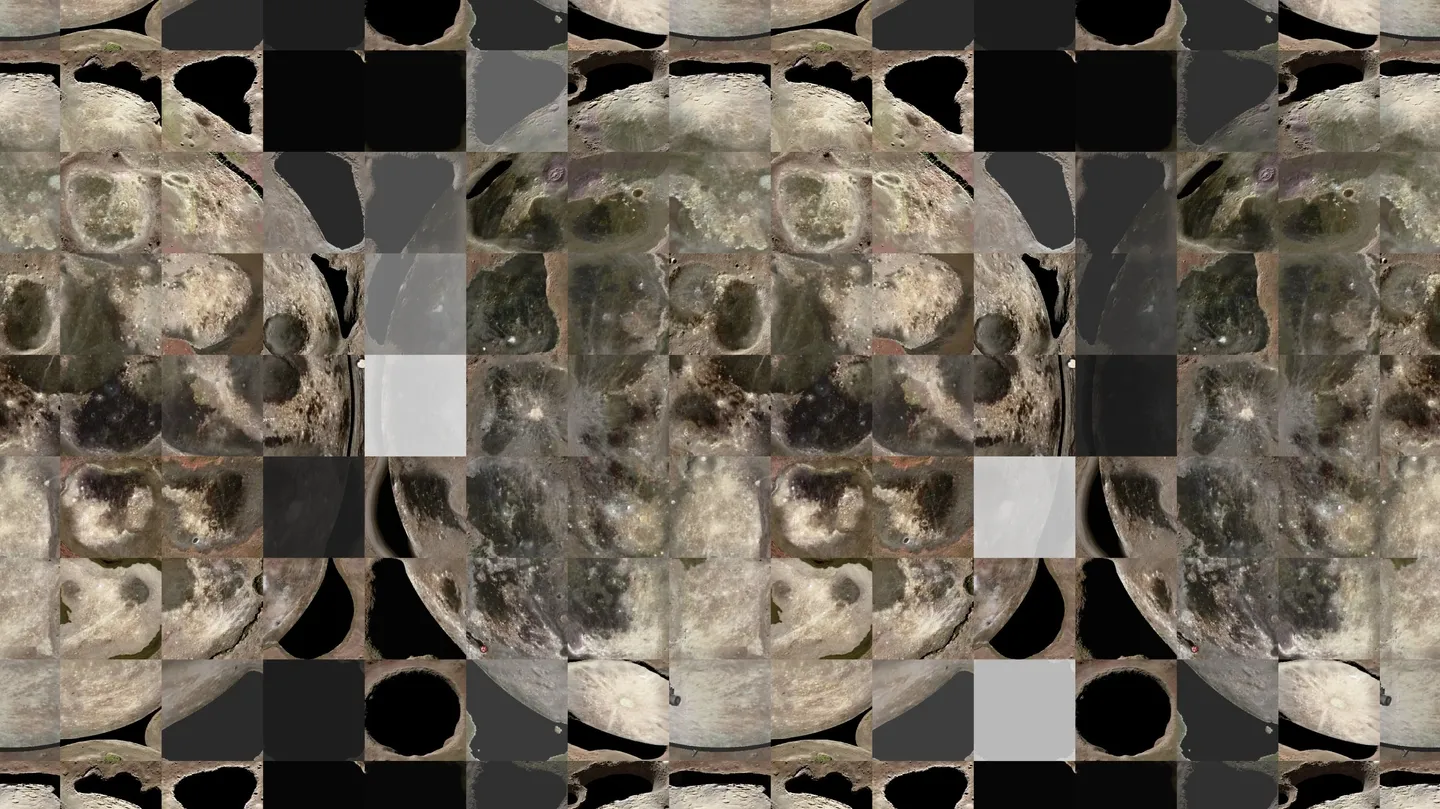
Are We Gazing at the Same Moon? Do we truly observe reality within the same time and space?
The moon has long served as a profound symbol of collective human experience—a familiar presence that unites people across distances, eras, and cultures. Yet, this project asks: how much of our perception of the moon is truly shared? What if, despite our collective memory, the act of gazing is inherently more fragmented and subjective than we realize?

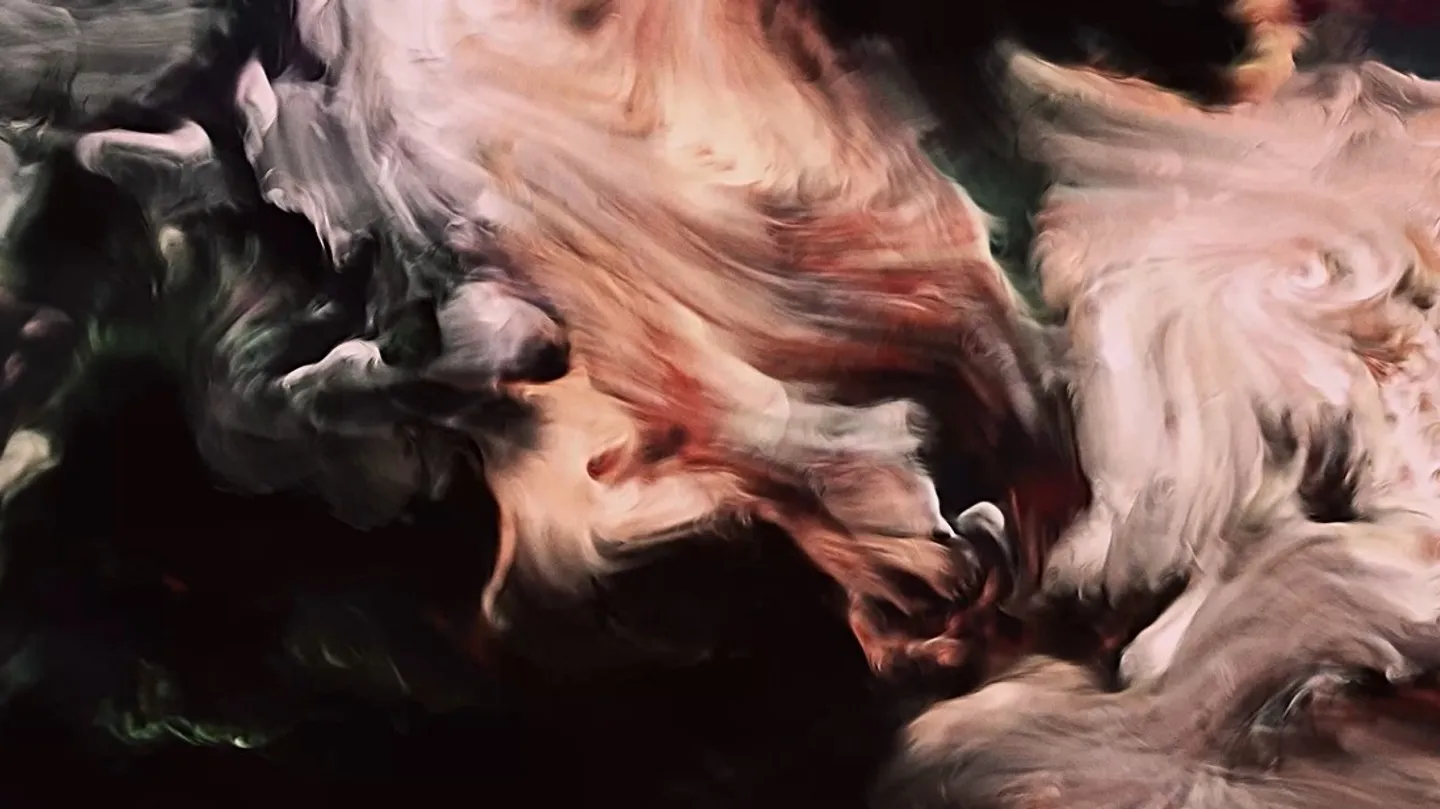
This artwork establishes a ritual of moon-gazing, presenting a massive image of the moon composed of multiple stitched-together fragments. As the camera gradually zooms out, the spaces beyond each fragment are slowly revealed—not as part of a continuous whole, but as different imaginary moons. Ascending through collage of moons, the world fractures into divergent trajectories, scattering and reuniting in an endless cycle of dispersion and convergence. "One thousand people, one thousand moons"—where the boundary between individual emotions and collective memory dissolves into a shared, ever-shifting reflection.

In astronomical photography, the Lunar Mosaic technique is used to construct high-resolution images of the moon by collaging captured sections, each taken at different locations and times. This project is an artistic experiment built upon a moon image captured by NASA’s Galileo spacecraft in 1992. However, the artwork employs generative AI to push beyond the known boundaries of each fragments, imagining the unseen portions of the celestial body, revealing the dislocation and discontinuity within the vast whole. By showcasing the parallel existences and possibilities of the moon, it constructs a surreal and fantastical picture.

This work is part of the "Concurrentix" art experiments and avoids aiming for realistic depiction. Instead, it delves into the concept of Concurrent Reality, using generative AI to showcase the dislocated nature of our collective memory and experience of the moon. In this context, the moon becomes a metaphor for human experience - seemingly unified, yet ultimately disjointed and subjective.
Inspired by the Lunar Mosaic technique (used in astronomical photography to collage moon fragments captured at different times), this project operates in reverse. Built upon an archival moon image, the artwork employs generative AI’s out-painting capability to expand the boundaries of each fragment, imagining them coming from different planetary sources and revealing their unseen portions.

The work applies two key techniques:
1.	Spatial Dislocation: Breaking down the original moon figure into discontinuous fragments and utilizing AI out-painting to expand unique, imaginary moon terrains for each segment.
2.	Temporal Dislocation: Subdividing the linear movie sequence of a dynamic moon journey into multiple timelines by creating several Image-to-Video generations simultaneously from different start and end frames.
This fragmented approach serves as a pioneering creative application of generative AI, exploring its potential to construct multiple variations of a single reality. The moon is presented not as a unified celestial body, but as a disjointed set of possibilities, leaving behind disconnected zones of space that emphasize a fundamental lack of continuity.

Resonating with early art movements such as Cubism and conceptual collages, this project is a research experiment about multiplicity and deconstruction in the age of AI. Focusing on the process of divergence and convergence, it reflects the dual-possibility nature of generative technologies, raising profound questions about the relationship between parts and the whole, and the connection between personal and collective memory.

In a time marked by nationalism, regional conflicts, and global divergence, the project’s theme of dispersal and reassembly is poignant. By translating the segmented Moon artwork across different cultural boundaries, it reminds us that we share the same cosmic vantage point - even when our daily realities seem fractured. The piece ultimately reflects both the fragmentation of the modern world and the ongoing potential for reassembly and common ground.

Featured Exhibitions are available at additional material section
Authors
Tags