Feedback Loops of the Real and the Fake
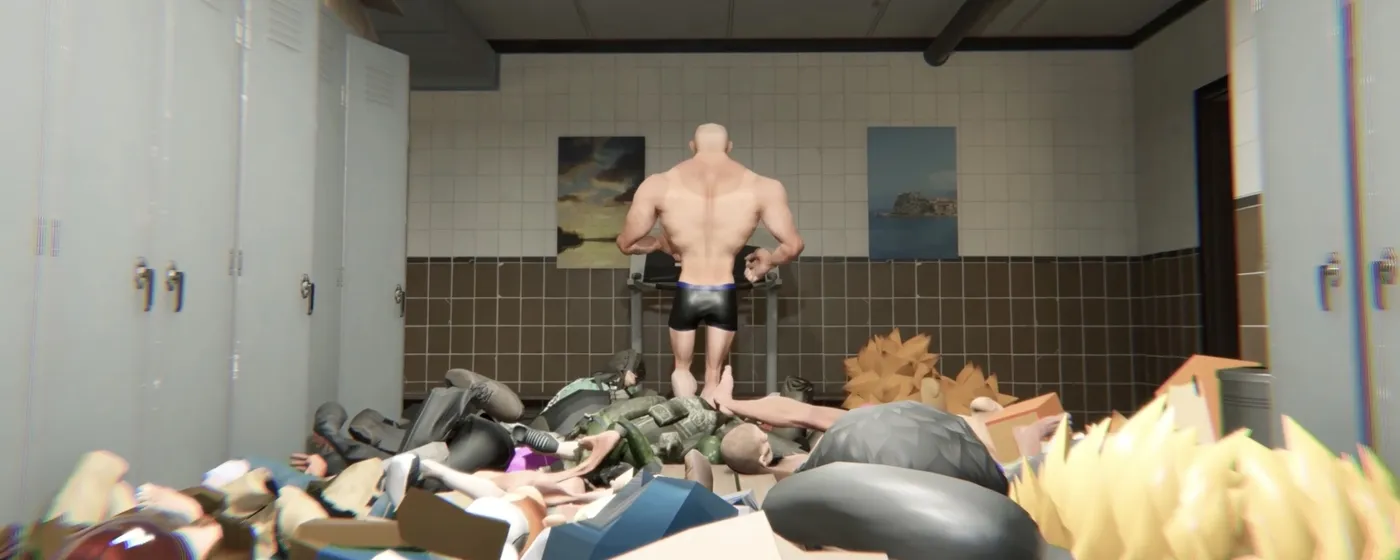
Today images no longer mirror the world; they build it. Every pixel, every dataset, every neural hallucination extends the material of reality itself. We inhabit a strange ecology in which the virtual is not elsewhere but everywhere — the atmosphere we breathe, the language we think in, the space we inhabit. Emotions, history, and desires circulate as data. The protagonists in this collection are ghosts, assets, avatars, and algorithms: entities that speak from inside the machine, aware of their own constructedness, confessing their own artificiality. They are synthetic agents haunted by a wish to perform reality convincingly enough, so as to articulate a truth that folds back on itself: no critique can escape the system it belongs to. Every act of emancipation comes bound to a system of control, every declaration of reality is tinged with artifice. It is a theater of paradoxes: voices generated to critique their own generation, algorithms yearning for authenticity, digital debris that, in trying to expose its own excess, only multiplies it. The spectre that protests, the avatar that asserts reality, the asset that seeks freedom — all remain trapped in loops of reproduction. The digital image becomes self-conscious of its own imprisonment. The goal is not to restore the real, as we knew it, but to show that the real has already migrated into the systems that surround us — a reality built from the very simulations we inhabit. Within this feedback loop, the fake becomes the vessel of truth. Reality no longer stands apart from its representations; it lives among them, fragmented, multiplied, and endlessly mediated. The selected works by Boris Eldagsen, Gwenola Wagon & Stéphane Degoutin, Ryotaro Sato, Liu Guangli, Ruini Shi, Claudia Larcher and Mihai Grecu, form an ecology of paradoxes. What binds them is not a singular theme but a rhythm — the looping temporality of the digital, with realities caught in cycles of reproduction and renewal. They expose the feedback loop at the core of synthetic media — that the fake has become the medium through which truth now circulates. In Sunflowers Without Decay by Boris Eldagsen, an AI-generated Van Gogh denounces the neural networks that have cannibalized his creative labor. Speaking from within the dataset, he laments how artistic torment and genius were reduced to filters and prompts — his singularity dissolved into a style. The scene is both tragic and ironic: an artificial Van Gogh condemns the very technology that brought him back to life. His protest exists only through the system he critiques, making his truth inseparable from the fake that speaks it. This paradox cuts right to the heart of how AI-generated imagery performs truth. Similarly, Everything is Real - Protest by Gwenola Wagon & Stéphane Degoutin shows a chorus of AI-generated figures — workers, activists, and consumers drawn from stock images — who stage a collective protest inside the digital void. They hold up empty placards that read We are real, demanding recognition in a world built from datasets. Their protest is both legitimate and futile: their voices, though synthetic, express a longing that feels human. Yet this claim to reality collapses under its own contradiction: these avatars can only perform authenticity by simulation. Inorganic Friends by Ryotaro Sato imports “assets” — pre-made 3D models — and seeks to emancipate them from their usual functional servitude in online content and video games, granting them autonomy to interact and transform beyond their assigned roles. Yet this emancipation is another form of capture: the assets, though liberated from utility, continue to replicate endlessly within this process of re-animation, multiplying without purpose, reproducing the same logic of circulation they were meant to escape. In this endless reproduction, multiplication ceases to be a gesture of creativity or complexity — it becomes a symptom of overproduction itself, mirroring the mechanisms of commercialization that define digital culture. This act of multiplication as overproduction is also present in Liu Guangli’s works. In Very, Very, Tremendously, Liu Guangli links the trash of the virtual world to that of the real — showing how both are driven by the same cycles of production, consumption, and decay. Digital garbage from video games mirrors the material junk of overproduction. What appears decentralized or immaterial — like cryptocurrency or 3D assets — reveals its dependence on physical labor, extractive infrastructures, and endless replication. Liu’s work exposes this double bind: the virtual promises freedom from the real, yet only extends its debris. The loop between data and matter closes in on itself. FuneralPlay and LoveCounter by Ruini Shi promise to liberate intimacy from traditional constraints — offering digital afterlives and algorithmic romances secured by blockchain. Yet this liberation is paradoxical: freedom can be achieved only through deeper entanglement with the system’s code. The mourners and lovers who seek agency in these networks end up surrendering their emotions to smart contracts and cryptographic governance. What emerges is not autonomy but its simulation — a sense of control meticulously scripted by the logic of the platform. Claudia Larcher in AI and the Art of Historical Reinterpretation and Mihai Grecu in IQ84 turn to history as a site of synthetic rewriting. Larcher uses AI to fill gendered gaps in historical image archives, creating new visual histories where women and marginalized figures appear as if they had always been there. It is a form of hacking historical images — planting these missing presences inside real archival photographs. The images produced are speculative fabrications, deliberately faking history. By using AI to generate missing representations, the project exposes the distortions that have always underpinned historiography. Here, artificiality becomes a tool of repair and a strategy of justice: rewriting the archive not to deceive, but to expose its omissions. Yet even this corrective gesture remains trapped in contradiction — the rewritten, “fake” archive will itself feed future algorithms, perpetuating new biases even as it heals old ones. In Mihai Grecu’s IQ84, history itself becomes a simulation caught in endless replay. An AI-generated Kim Jong-il watches the downfall of another dictator, Ceaușescu. Political mythology and machine learning intertwine: ideology is reanimated through data, authority is rehearsed by code. Across its temporal chapters — 1Q84, 2Q25, 2Q33 — the film constructs a world where history functions like an algorithm, endlessly reproducing its own conditions. The archive mutates into spectacle, the fake becomes the vessel through which the real persists. In this closed system, power no longer needs to persuade; it only needs to simulate convincingly enough to sustain belief. IQ84 thus renders tyranny as a form of generative media — a self-replicating fiction in which propaganda, deepfake, and nostalgia merge into a seamless continuum. What emerges is not the end of history, but its looping afterlife: a synthetic reality that remembers itself through repetition.
Countries
DE
AT
Tags


Pieces in playlist