Infinite Play. Platforms as Performative Space
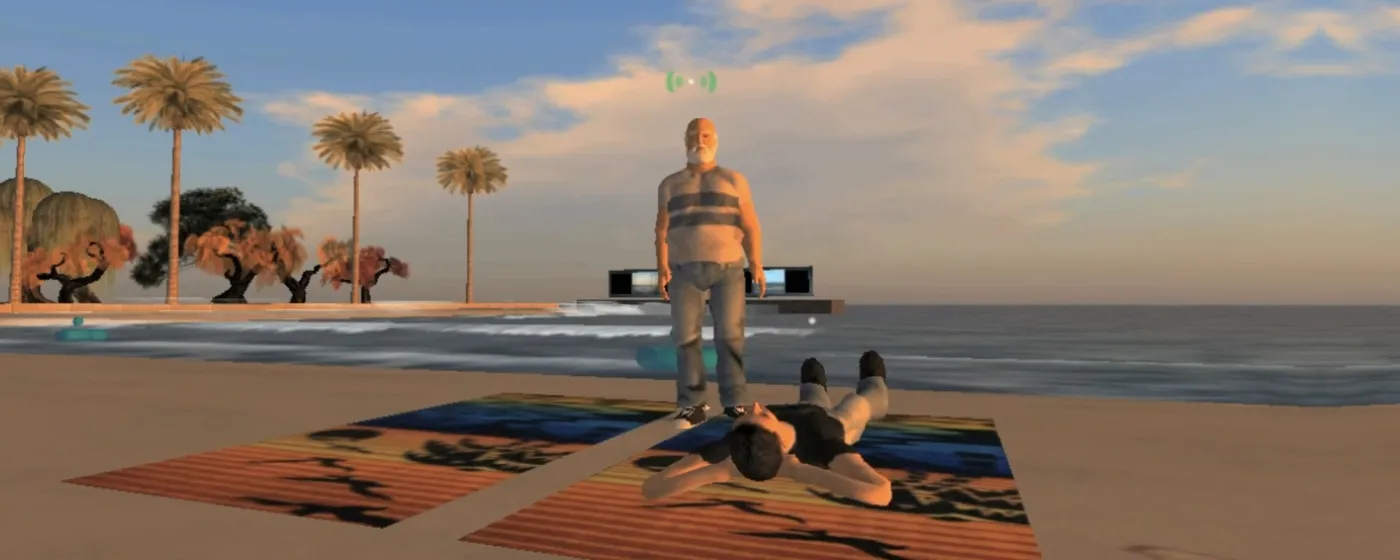
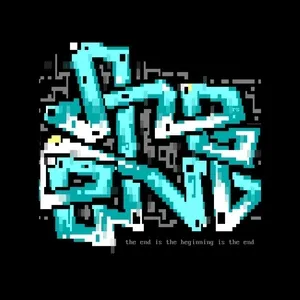
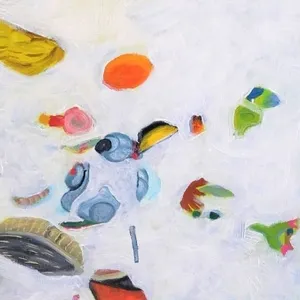
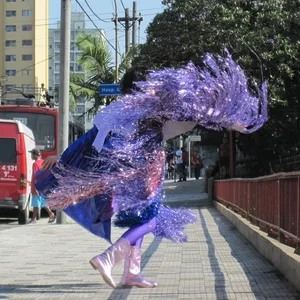
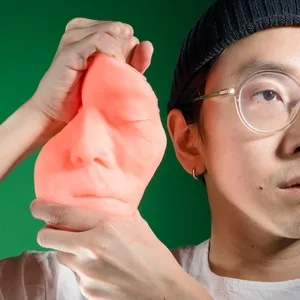
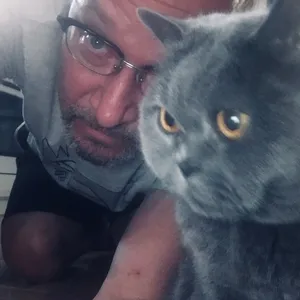
Long before the rise of platform capitalism, artists were already experimenting with information circuits, developing strategies to circumvent institutional mediation and intervene directly in the media sphere. From the earliest video and telecommunications projects to mail art, expanded among others by the transnational collective Fluxus from the 1960s onward, these practices provoked ruptures and created experimental ecosystems, pointing toward the utopia of the World Wide Web in the 1990s and the growing porosity of global communication networks in the decades that followed. From postal networks to digital algorithms, each new communication technology promises decentralization, but open systems inevitably harden into proprietary architectures, and experimental platforms transform into business models. Crossing historical and contemporary relations, "The Adventures of Paulo Bruscky" (2015), directed by Brazilian filmmaker Gabriel Mascaro, is a playful video portrait in which multimedia pioneer Paulo Bruscky reflects on his analog-era practices within the virtual world of Second Life. Through this machinima documentary format (machine + cinema), an animation technique that uses real-time screen capture in video games, Mascaro creates a metanarrative that mirrors Bruscky's own poetics. Born in Recife in 1949, Paulo Bruscky experimented early with electronic recording, projection systems, fax, Super 8 film, video, Xerox, offset printing, and mimeograph. Immersed in various social environments of Second Life, he recounts how he managed to create a network and archive of mail art in the 1970s, connecting underground artistic circuits worldwide and circumventing censorship in dictatorships across different Latin American countries. In a perspective that also brings references to video game dynamics and scenarios, "ᴛʀ@ɴsɪᴇɴᴛ ɴ℮xᴜs" (2023), by Sixin Zeng (NL), is an experimental essay that gathers reflections on the internet as both technological infrastructure and emotional refuge for Chinese immigrant workers. Here, gentrification becomes visible through unequal connection speeds, which trace a cartography of digital exclusion. The playlist also highlights the non-exclusive nature of certain online works, which leave a re-traceable trail offering compelling perspectives on digital performance and media obsolescence. These are works that seem suspended in a loop, such as "Eteinen," a sound piece from the compilation "Cleaning Tape" (2021) by renowned Finnish experimental filmmaker Mika Taanila. Originally a 2015 installation, the compilation presents an approach to noise music based on vacuum cleaner sound recordings. Taanila was active in the Finnish "Cassette Culture" scene from the early 1980s, using the pseudonym Musiikkivyöry in industrial music cassette tape production and circulation networks. "Ancient," a demo created by The End in 1995, is another commentary on media archaeology that tensions the boundary between repetition and improvisation. The collective operated between 1995 and 1997 within the context of the Brazilian Demoscene, a poorly mapped underground scene of digital art and web art that pointed toward the dawn of global communication possibilities. Demoscene teams were formed by programmers, musicians, and designers who created programs conceived to generate sounds and images in real time and from code, pushing the technical specifications of computers of that era to their limits. The demos anticipated both procedural design and generative aesthetics and were presented at competitive events called Demoparties. Oscillating between the physical and the virtual, "Cinematico" is a work in which Mario Ramiro (BR) revisits his 2001 piece presented at the "27th Panorama of Brazilian Art" at the Museum of Modern Art (MAM) in São Paulo. The work shows a robotic arm filming its own choreographed gestures with towers of stacked plastic bottle caps, sometimes reaching for invisible objects. Ramiro is a key figure in multimedia art and was part of the collective 3Nós3, of conceptual and activist character, formed with Hudinilson Jr. (1957–2013) and Rafael França (1957–1991) during the Brazilian dictatorship. In the 2000s, faced with the first excesses of online content production, his practice became oriented by a Flusserian reading of new technologies, understood as apparatuses (apparat, in German): systems that process input information and return output information, concealing the dynamics of transformation. Gabrielle Le Bayon (FR), in "Wheels of Desire" (2015), also investigates the limits between concrete experience and the flow of digital images. Her reflection on the collective, ephemeral, and cumulative nature of online data, contrasted with the silent volumes of a tire depot. This image resonates with platforms as symbolic and material systems that ingest vast data streams and yield information molded by ever more abstract, opaque algorithms, whose interventions in our experience are surgical. "Miliga" (Callme, 2006), by Ricardo Castro (BR), features the artist dancing before the camera in a video performance originally projected at architectural scale, as part of the collective exhibition "I Want to Be Lisette's Friend," held parallel to the "27th São Paulo Biennial" (2006), curated by Lisette Lagnado. Created during the era of platforms like MySpace and Facebook, the work reflects on visibility and media seduction in the art world, ironically alluding to the telephone as a medium already in the process of obsolescence. Guilherme Peters (BR) and Roberto Winter (BR) present the fictional digital persona of Stefan Speer, a historian and art critic created to narrate Yorick's videos. In "alas poor yorick" (2025), Yorick performs within a political docu-fictional framework structured as confession letters. Using legitimately archived material, the work blends political rhetoric with modified video game images to expose hidden geographies of power and control in Brazil. In both “Miliga” and "alas poor yorick", the artists appropriate resources specific to the digital relational sphere to tension the dispute for visibility in the attention economy. "The Story of a Running Horse" (2025) is an animation by Shuree Sarantuya (MN/DE). The work weaves itself as a performative narrative inspired by Mongolia's nomadic spirituality and other displacement experiences. It resonates with "Sieidi" (2023), by Marja Viitahuhta, Ánnámáret, Turkka Inkilä and Ilkka Heinonen (FI), who present the Sami oral tradition of Yoik, indigenous chants practiced in Sápmi (a region spanning parts of Norway, Sweden, Finland, and Russia). In both cases, and although departing from distinct epistemologies, local ancestral cosmologies are rearticulated through contemporary tools of archiving and presence mediation. In light of the Andean concept of "ch'ixi," proposed by sociologist and historian Silvia Rivera Cusicanqui, this confrontation does not seek synthesis. Instead, it challenges the idea of cultural homogenization and the dichotomy between modernity and tradition, proposing an understanding of social complexities in which different elements coexist and interact without canceling each other out. Bringing another temporal friction, "What is a Face" (2024), by Sheung Yiu (FI/HK), is part of research examining how various knowledge systems, from ancient Chinese physiognomy to large image databases, project meaning onto the face, transforming it into the first human interface for interpretation and divination. Through a poetic investigation of identity, technology, control, and visibility, the work points to the face as a sensitive surface impregnated with symbolic and political meanings in an era dominated by algorithmic surveillance. Finally, "Metascale" (2022), by Leonardo Matsuhei (BR), offers a delicate exploration of memory, perception, and the reinterpretation of reality through 3D digitization. The artist uses photogrammetry to transpose objects and landscapes from a collective life experience to an intimate virtual environment, with compositions at different scales that reconfigure the presence of scenes and objects. The interaction between sound and image creates a poetic tension between the observer's distance and sensorial immersion within the digital environment. From the earliest experiments with cassette tape circulation networks to current algorithmic surveillance systems, the infinite mirroring of bodies on platforms continues reshaping our understanding of performance, presence, and the very nature of artistic practice. In this endless flow, the question is no longer whether a performance is live, but how it produces meaning through its possibilities for repetition and transcoding, as well as through the ways in which artists work with various technological interfaces and their obsolescence in environments affected by economic interests and subject to digital race, class, and gender confinements.
Countries
BR
Tags
Authors in playlist






Pieces in playlist