Art Box #1: Unpacking SIREN
Exclusively for CIFRA Club members
Reading time
10 mins
What if one artwork could crack open a whole universe? In Art Box, we take one piece and unbox it like a portal — how it lands, how it shifts the room, how it moves through culture. We trace the hidden stories inside the frame, then leave you with questions, prompts, and small rituals that turn watching into a slower, deeper, more deliberate practice.
WEEooooOOO… WEEooooOOO. The siren wails
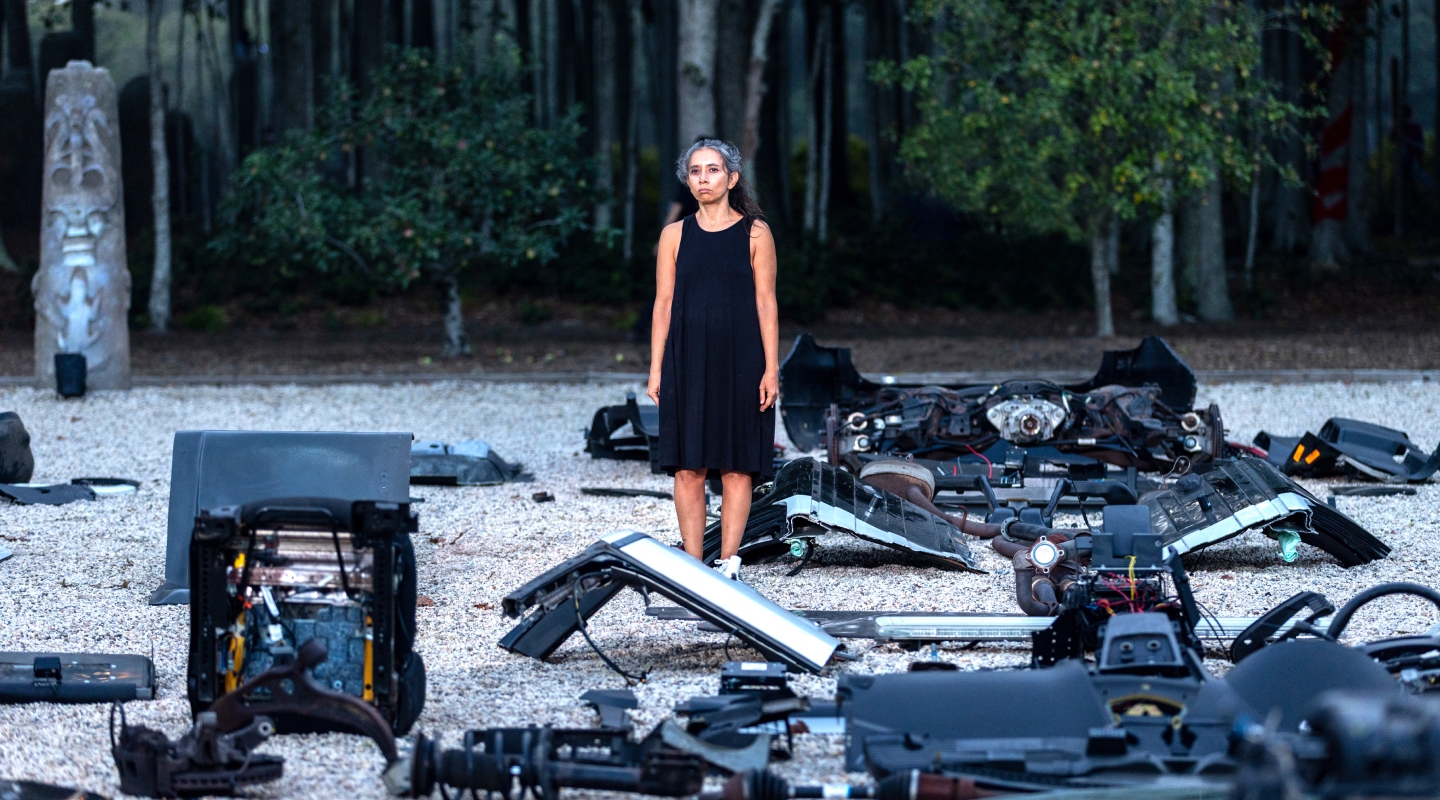
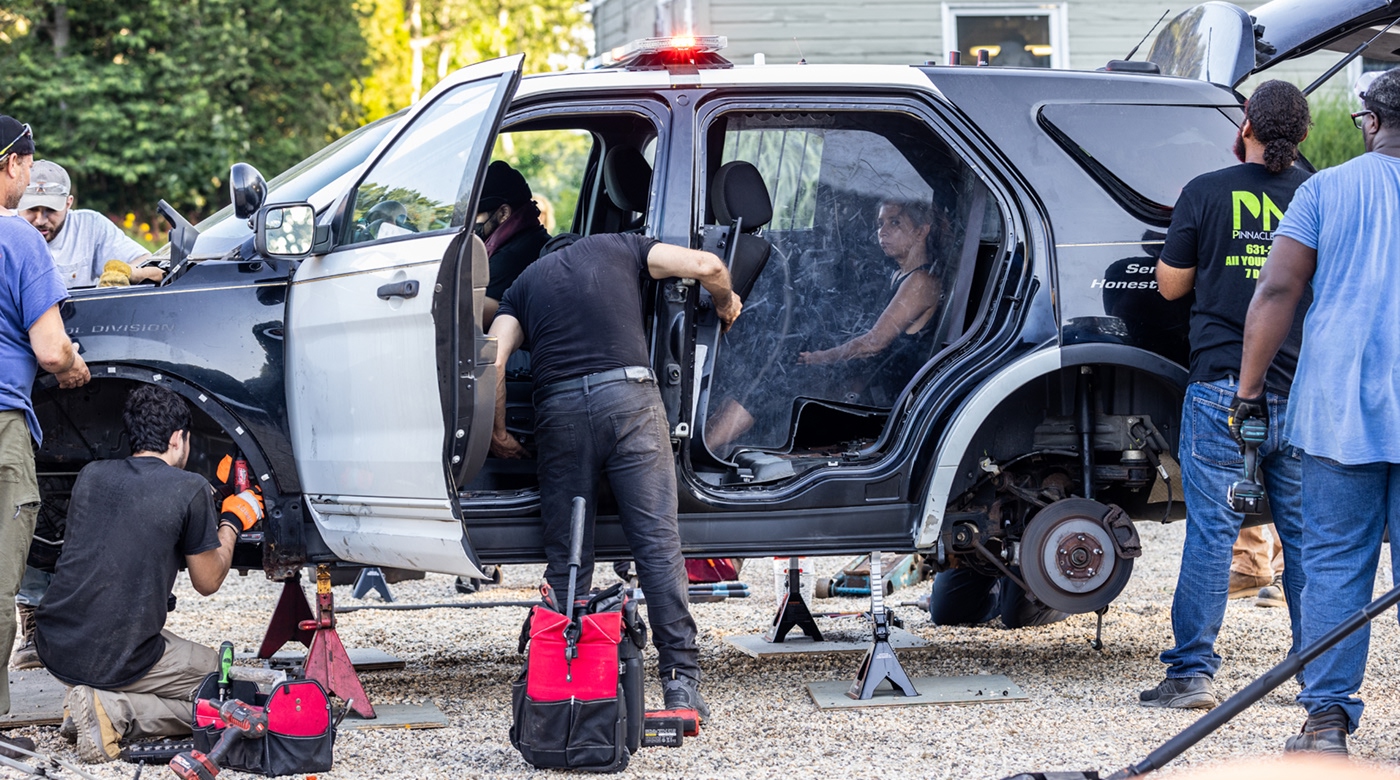
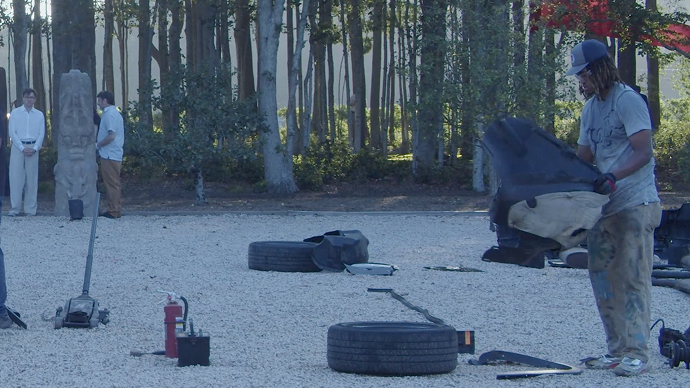
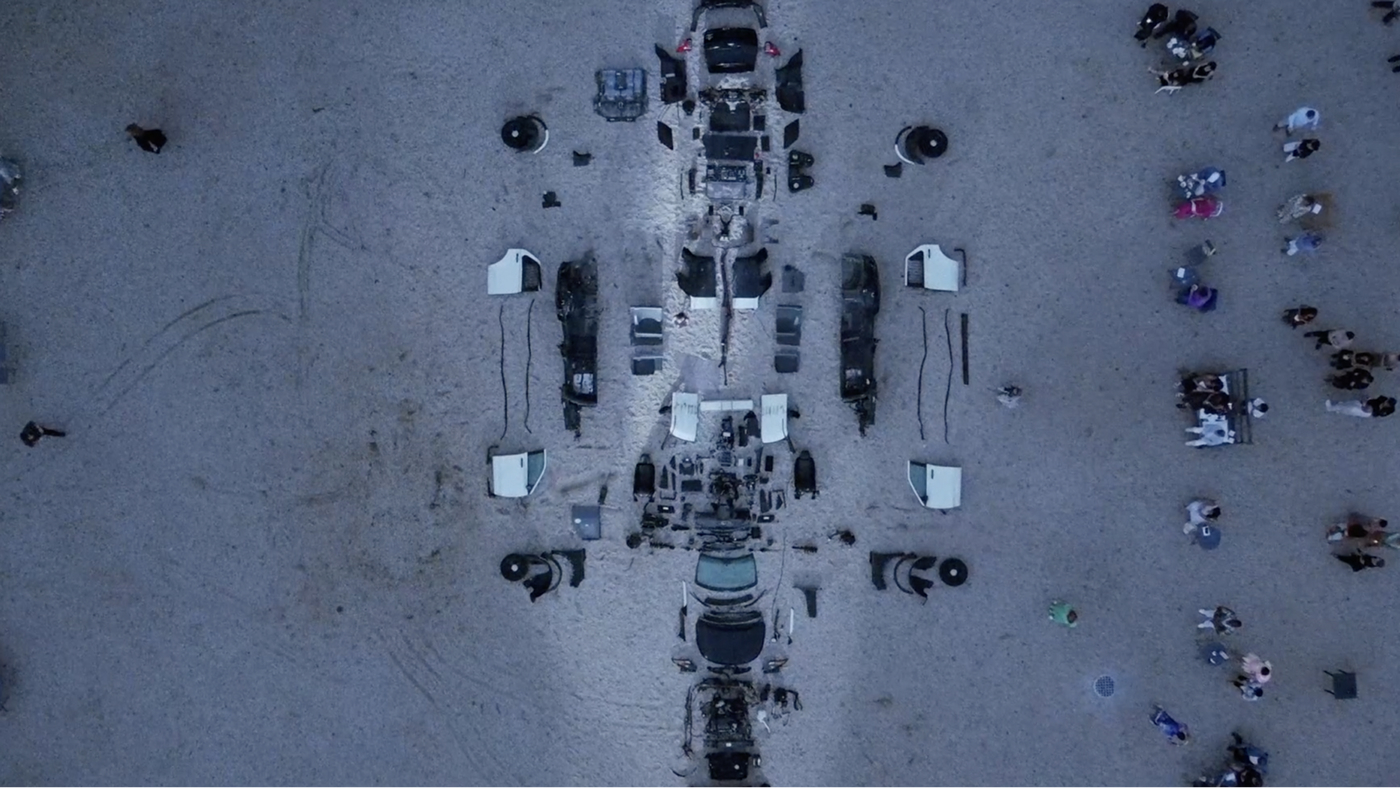
A group of 12 men circles a police car, stripping it apart with crowbars, torque wrenches, car jacks, and angle grinders. Slowly, the body is reduced to fragments. From the backseat emerges a woman who had been there all along: Regina José Galindo, leading Guatemalan performance artist. You’re watching SIREN — a participatory performance where the machine of authority is disassembled in real time. Let’s unpack what this work means and how to experience it yourself. The moment you hit play on CIFRA, your cortisol spikes — lights flashing, siren screaming. But the car isn’t chasing anyone. It’s being taken apart. What’s going on?
Why the Artist Chose the Police Car
The vehicle is a Ford Police Interceptor Utility — the law-enforcement edition of the Ford Explorer, the most common patrol car in the U.S. It’s built for control: reinforced suspension, backseat cages, high-speed pursuit. It even has Dark Car Mode: one switch and the interior goes black, letting officers vanish in plain sight. That’s exactly why the artist chose it: a ready-made symbol of authority, instantly recognizable. As Marx wrote in his Fragment on Machines, nature doesn’t build machines — they’re “organs of the human will.” For Galindo, that will is state violence.
"The police car is a symbol of oppression, of power. By dismantling it, piece by piece, we are playing the game of dismantling a system of oppression"
Regina José Galindo (Art Currently)
Where It Takes Place
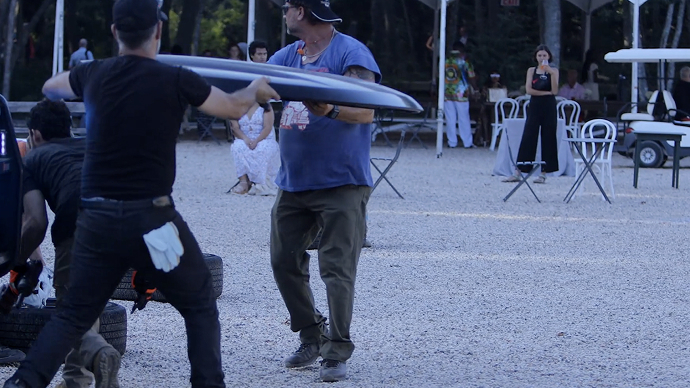
The performance unfolded at the Watermill Center in New York. Around it: guests in cocktail dresses and elegant suits, Aperol spritz in hand, phones raised for photos. The dismantling stretched over two hours. The sun set. People drifted into the trees. By the time the car was nearly gone, only a handful of spectators remained, seated at tables, quietly watching the endgame.
Why It’s Called Siren
The siren during the performance screamed until the wiring was cut, then it collapsed into silence. Did you know that every country codes its siren differently? In the U.S. it’s muscular, cinematic — like a chase scene you never signed up for. In Germany, clipped and bureaucratic. In Guatemala, jagged and unsettled — urgent but distant, sometimes mournful, always cutting.
Meet Regina José Galindo (in Person)
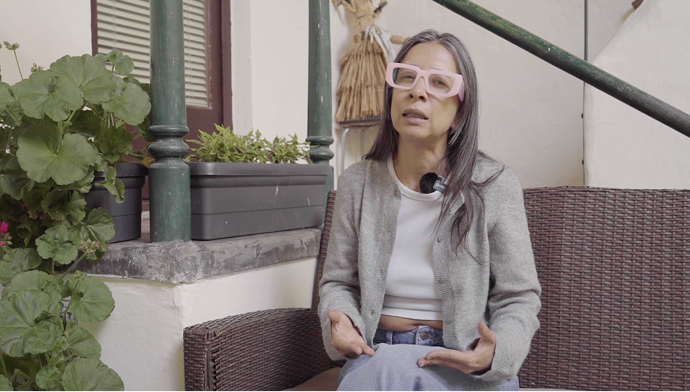
Galindo is Guatemala’s most uncompromising voice in performance art. Her body is her medium: a site where state violence, femicide, and systemic oppression become visible. We met her in Krems an der Donau, where we filmed an interview for CIFRA TV and witnessed her performance El Gran Retorno (the interview coming soon on YouTube — stay tuned). What struck us in person was her presence: calm on the surface, but charged with the same intensity she carries into her actions. On her arm, Galindo carries a tattoo of A-1 53167 — the ID number of fellow Guatemalan artist Aníbal López that he used to sign his actions. López turned everyday logistics into political interventions: scattering coal to block a military parade, dumping books in the street, smuggling empty boxes across borders. Vehicles, streets, borders: not neutral, but tools to disrupt order. Galindo inherits and radicalizes this logic.
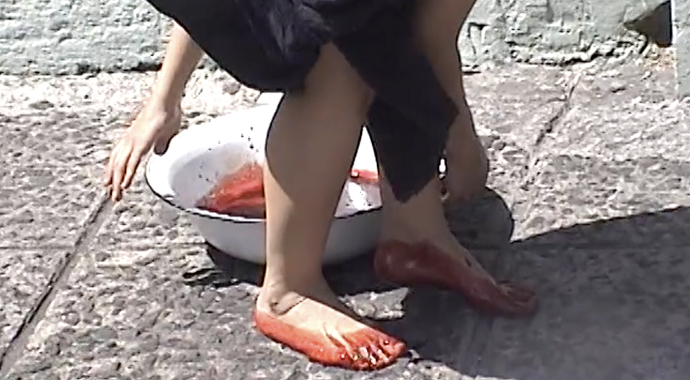
Her works include ¿Quién puede borrar las huellas?, where the artists left bloody footprints through Guatemala City to protest dictator Ríos Montt; La sombra, where a Leopard tank circled her endlessly; and Un metro bajo tierra, in which the audience buried her shovelful by shovelful in a garden, normalizing the spectacle of violence and death.', And there is, of course, SIREN.
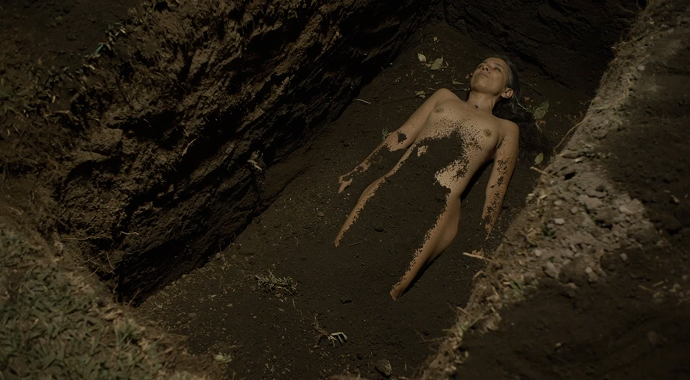
Galindo’s Approach
Galindo always creates performances that are tied to the local context. “For a long time now, my approach has been to arrive in a country and focus on a topic that resonates locally, but also ties back to my own context. I choose situations, anecdotes, and stories that audiences can empathize with. That they feel it is something close to home, but also recognize it’s a topic I have the authority to speak on.”
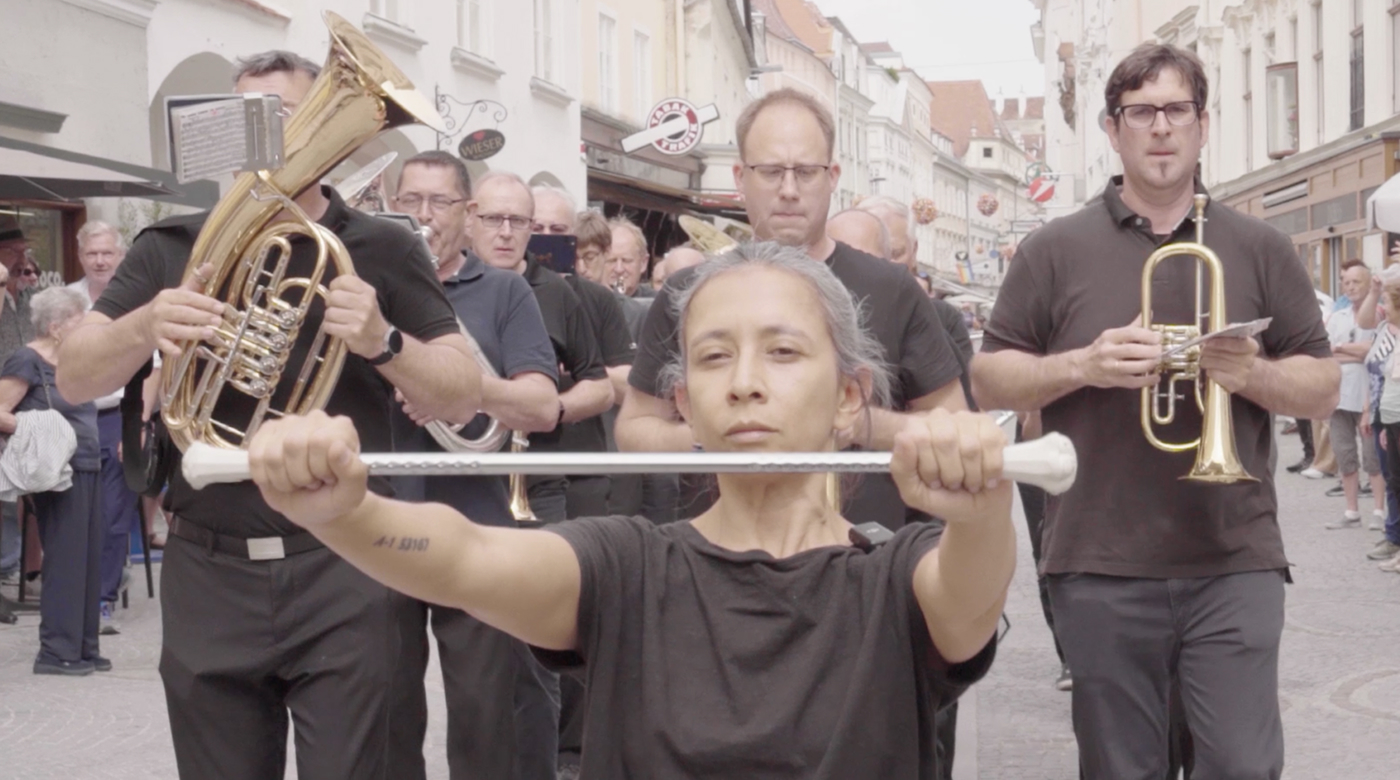
"My approach has been to arrive in a country and focus on a topic that resonates locally, but also ties back to my own context. I choose situations, anecdotes, and stories that audiences can empathize with."
Regina José Galindo (Art Currently)
What Happens After the Performance
Galindo’s work doesn’t end when the siren fades. She often debriefs with a therapist to process what happened — the emotions, the physical strain, the conclusions drawn: “I focus, meditate, and do yoga. Afterward, I always work with a therapist. We discuss the performance so I can process the emotions that surfaced, the conclusions I drew, and the physical and emotional experiences I underwent during the action.”
What’s written on the side of the car, and how does it play against the idea of dismantling? Which tools do the mechanics use? Are they careful, even gentle — can disassembling feel like ASMR? In the credits, everyone participating in the performance is named except one. Who remains anonymous, and why?
Ask yourself after watching artwork
Would it feel different if the police car being taken apart was from your own city? After sitting through the noise and tension of SIREN, how would you want to recharge? Would you walk it off, sit in silence, or talk it through with someone? What kind of ritual helps you process? If the car was put back together afterwards, would that undo the meaning — or add a new one?
A Ritual to End the Siren
After the noise dies, hold the silence. Close your eyes and picture the car in pieces. Assign each part a power you no longer accept. Blow them away like dust.
Subscribe to CIFRA Club to unlock this Art Box and more
Art Box deep dive
Get our monthly digest of top art events
Support artists through royalties
Watch artworks in 4K on any device