Tega Brain and Sam Lavigne: Slow, Wrong, Unfit
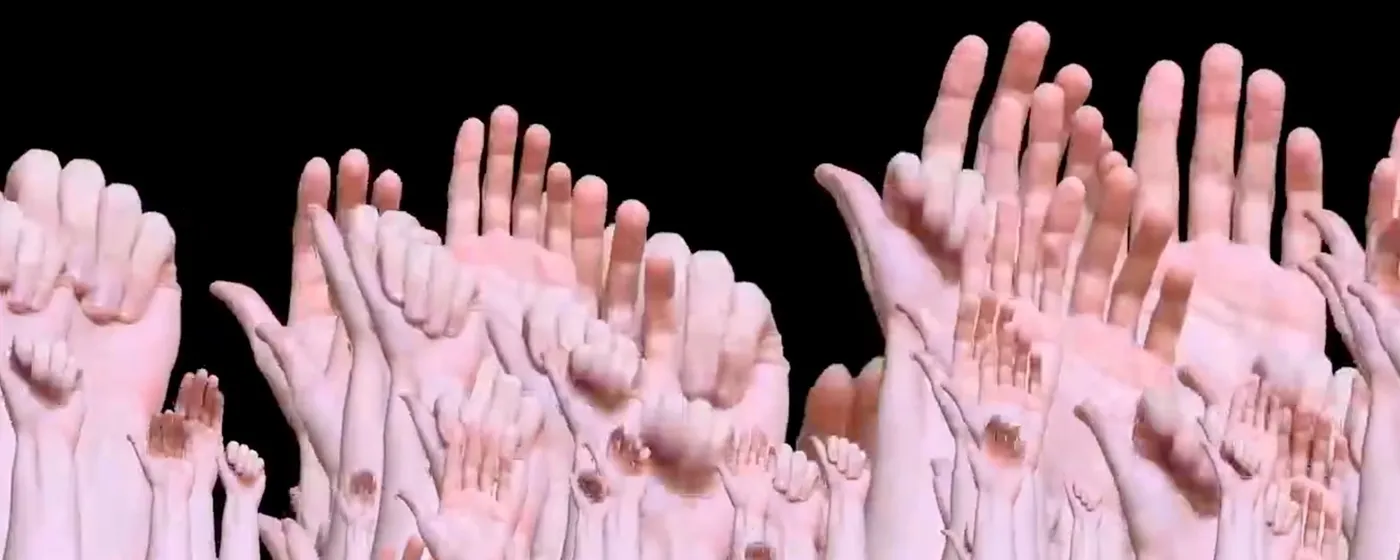
What happens when technology stops helping and starts resisting? “Power ON/OFF” opens CIFRA's new season and brings together works by two artists: Tega Brain and Sam Lavigne. They test what systems do when they slow down, misbehave, or refuse to cooperate. Across software, browser extensions, videos, and manuals, their works assemble a strange toolkit for navigating digital life differently — one filled with instructions you probably don't need, but suddenly can't stop reading. Tega Brain trained as an environmental engineer and now lives in New York. Sam Lavigne works across data, surveillance, automation, and language systems. Together, they build projects that turn digital infrastructures against themselves. Together and separately, they have shown work at the Whitney Museum of American Art, the Smithsonian, ZKM Karlsruhe, SFMOMA, the New Museum, Ars Electronica, and Pioneer Works, and in 2023, they won a Creative Capital Award for their project on alternative carbon offsetting methods. In these works, technology stops working smoothly. It slips out of its assigned role and starts moving in the opposite direction. What was built to manage users becomes a tool users can turn back on the system itself. Is there an app that's intentionally slow? How do you escape a video call for a serious but fictitious reason? Or how do you get the coveted 20,000 steps a day without leaving your couch? Tega Brain and Sam Lavigne tell us all this — with a kernel of truth, as we know, there is truth in every joke. Their works feel related because they operate inside the same systems that organize everyday life. They don't simply criticize technology from the outside: they penetrate it, abuse it, slow it down, mislead it, or make it absurdly literal. We, obsessed with speed, the logic of "higher, bigger, stronger," work optimization, and process transparency, suddenly find ourselves in a world where everything around us feels like playful art — yet carries a vivid political charge. What if refusal isn't a dramatic escape from reality, but a deliberate disruption of everyday life? The works of Tega Brain and Sam Lavigne are stories of personal escape, of systemic intervention, where the disruption of everyday digital habits gradually escalates into sabotage of larger systems of data, labour, wellness tracking, corporate archives, or even climate monitoring. The exhibition is a set of tricks for living within networks. Step one: escape the call, step two: make the AI wait, step three: lie to the fitness tracker. And then it gets less funny: who benefits from all these systems working without a hitch? “Slop Evader”, 2025 Instead of "recognizing" synthetic content, the work simply allows the network to rewind to a point before the November explosion of generative AI. What was it like before? “Slow LLM”, 2026 The promise of an instant response turns into anticipation, sometimes irritation, or even a strange pause, in which speed no longer seems an absolute blessing. “Zoom Escaper”, 2021 Remote work isn't rejected outright here, but it becomes technically unbearable — as often happens in reality. “Slow Hot Computer”, 2016 Here, the computer stops being a friend: it begins to resist — to hesitate and get burned, sabotaging the work process. “The Good Life”, 2016/2017 One of the most famous corporate scandals of the early 2000s ceases to be an abstract case of fraud and becomes a strange experience of being inside someone else's office life — with its routine, language, power, and gradual disintegration. “Unfit Bits”, 2015 A humorous instruction manual for a fitness tracker turns into a question about why we believe the incomplete data about our lives that we see on our screens. “Synthetic Messenger”, 2021 This work depicts a world where the importance of news is determined not by the scale of the disaster, but by how well it flows through the internet advertising economy. All these works act as forms of sabotage. Their purpose is to test what failure might look like from within the system. What is the slowdown when all the logic around us demands acceleration? What does it mean to deviate from written instructions? Is it possible to disobey the logic of the system — or even seize power for a moment? Or perhaps everything around us has long since become a frantic digital looking glass, and artists are simply exaggerating this absurdity. They reveal the underbelly of our digital habits — searching, calling, emailing, tracking, doomscrolling, chatting with AI — and ultimately, life itself, which increasingly operates through interfaces, metrics, and algorithmic decisions. Refusal doesn't always mean abandoning the system. Sometimes it means slowing it down until its hidden logic becomes visible. And then the final question remains for the viewer: how will you live your next day? At the mercy of systems and algorithms — or with your own small glitch in this unequal battle?

Countries
IT
JP
PL
GR
Tags
Authors in playlist


Pieces in playlist