Regina José Galindo: You Cannot Erase
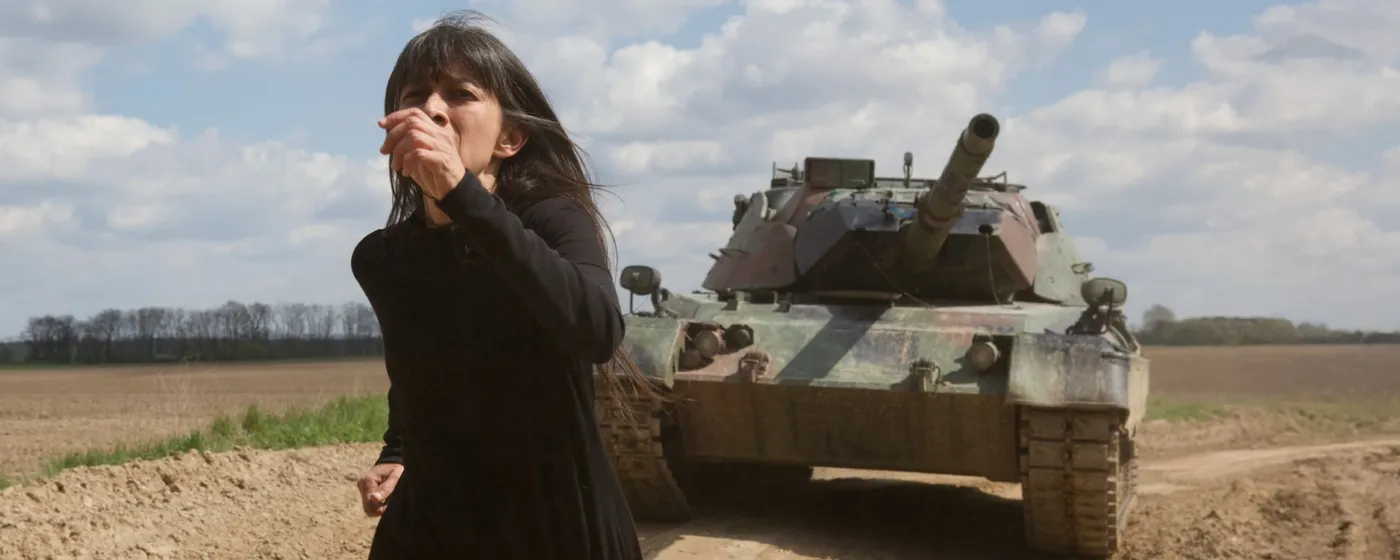
This exhibition was presented at CIFRA from September 2 to October 30, 2025, and may now be accessible only through trailers, documentation, or fragments rather than full artworks. The solo show focused on performance works by Regina José Galindo, an artist from Guatemala, in which her body becomes a site of action, testimony, and resistance. The art of Regina José Galindo emerges from Guatemala—a country where history refuses to settle into the past and continues to shape the present. Its streets carry the memory of political killings, its soil conceals mass graves, and women’s bodies remain sites of systemic violence. Within this context, Regina transforms her own body into a field of action. It becomes document and evidence, stage and archive, weapon and voice. Each gesture is a direct intervention in a society where silence often feels safer than memory. Voice and Protest In Regina's artistic practice, the body is not only a witness—it is also a voice. Her performances amplify silence into sound, protest, and refusal. In "Siren" (Siren, 2024), Regina sits inside a police car as mechanics dismantle it piece by piece, while the siren wails without pause. The sound cuts through urban space as an alarm, signaling the danger embodied by the very institutions meant to protect. In "No Aceptamos sus Disculpas" (We Do Not Accept Your Apologies, 2019), Regina and a group of women smash a BMW with hammers. The act rejects the politics of empty apologies that substitute for justice. The car becomes a symbol of privilege and social “normality” built on violence; its destruction declares that accountability cannot be replaced by words. In "La Sombra" (The Shadow, 2017), Regina is pursued across an open field by a military tank. Trauma takes the form of a shadow that never leaves, tying personal experience to global structures of militarization and the arms trade. In "Oveja Negra" (Black Sheep, 2014), she gets down on all fours and grazes among real sheep. In Latin America, the phrase “black sheep” is a stigma marking those excluded and unwanted. Yet in this performance the animals accept her as part of the flock: they do not stigmatize or exclude. The paradox emerges that sheep appear more humane than humans. In "Lo Voy a Gritar al Viento" (I am Going to Shout It to the Wind, 1999), suspended from a bridge, she speaks into a microphone, her amplified voice echoing through the city. Her hanging body embodies risk, while her words transform urban space into a stage of protest. In these works, Regina forges a language of protest where scream, silence, and refusal become forms of freedom. Vulnerability itself turns into resistance. Body and Power Another dimension of Regina’s work lies in her exploration of how power is inscribed upon the body. Vulnerability becomes a public image of coercion, but also a mirror of the systems that attempt to dominate it. In "Culpable" (Guilty, 2015), Regina sits before a tribunal while a chorus endlessly repeats the word “culpable.” The scene becomes a ritual of public condemnation, exposing how judicial and social systems manufacture guilt. In "Object" (Object, 2010), she lies naked, silent, and motionless, transformed into an exhibit. The sound of sirens fills the space, intensifying a sense of alarm and control. The work reveals how easily the female body can be stripped of subjectivity and reduced to an object of observation. In "Limpieza Social" (Social Cleansing, 2006), she stands naked under the force of a high-pressure water hose. The image evokes both police brutality and the brutal practice of “social cleansing,” in which states eliminate those they deem disposable. Regina remains silent; her voice is denied. Yet her body itself becomes a mute document of violence, recording what power seeks to erase. These works reveal the body as a site of power, but also as its witness. In her extreme vulnerability, Regina exposes the cruelty of systems and reclaims the body as a mirror of truth. Memory and Traces One of Regina's central concerns is memory—the struggle against erasure and forgetting. Her performances turn the body into an archive that holds the traces of violence and resists oblivion. In "Un Metro bajo Tierra" (One Meter Underground, 2024), Regina allows others to bury her body one meter deep in the earth—like in a grave. The act evokes the national trauma of forced disappearances: even when a body is hidden, its presence remains undeniable. In "La Tierra no Esconde los Muertos" (The Earth Does Not Hide the Dead, 2023), together with participants, she forms 13 earthen mounds under which bodies are partially buried. The number 13, in Mayan cosmology, refers to cycles of time and spiritual force, underscoring that the dead are not erased but remain as unrelenting accusations. In "Tierra" (Earth, 2013), her body lies in a freshly dug grave while a bulldozer moves around it—a stark image of the nameless victims of war and the clandestine graves of Guatemala’s civil conflict (1960—1996). In "Hilo de Tiempo" (Thread of Time, 2012), Regina’s body is enclosed in a black sack that spectators slowly unravel thread by thread. As the fabric vanishes, she is left naked on the ground. The work transforms time into action: truth does not disappear but gradually surfaces, like memory that refuses to stay hidden. In "¿Quién Puede Borrar las Huellas?" (Who Can Erase the Traces?, 2003), she walks barefoot through the streets of Guatemala City, her feet dipped in human blood, leaving behind a trail of red footprints. The gesture confronts collective amnesia: the traces cannot be erased, just as killings and disappearances cannot be forgotten. In "El Dolor en un Pañuelo" (The Pain in a Handkerchief, 1999)—one of her earliest works—the key thread of her practice already emerges: the personal body as a document and archive of social trauma. Regina appears naked, her body serving as a screen for the projection of newspaper clippings about violence and social injustice. The white handkerchief symbolizes intimacy, tears, and mourning, but in Latin America it also resonates with women’s protests, as with the Mothers of Plaza de Mayo. Here, earth and body merge as vessels of memory. Regina shows that the past cannot be erased— it returns through traces, absences, and voices that persist in the collective imagination. Taken together, Regina’s works form not an archive or an exhibition, but a living chronicle written with the body. In it, streets bear witness, the land becomes an archive, and a woman’s voice turns into a siren of resistance. It is a chronicle of memory that refuses erasure; of power revealed in its brutality; of protest where fragility becomes force. Regina does not represent—she acts. Her art unsettles, intervenes, and makes indifference impossible. It reminds us: to forget is to consent, but to remember is to resist. In this sense, her performances extend far beyond Guatemala—they speak to all of us.

Countries
IT
JP
PL
GR
Tags
Authors in playlist

Pieces in playlist