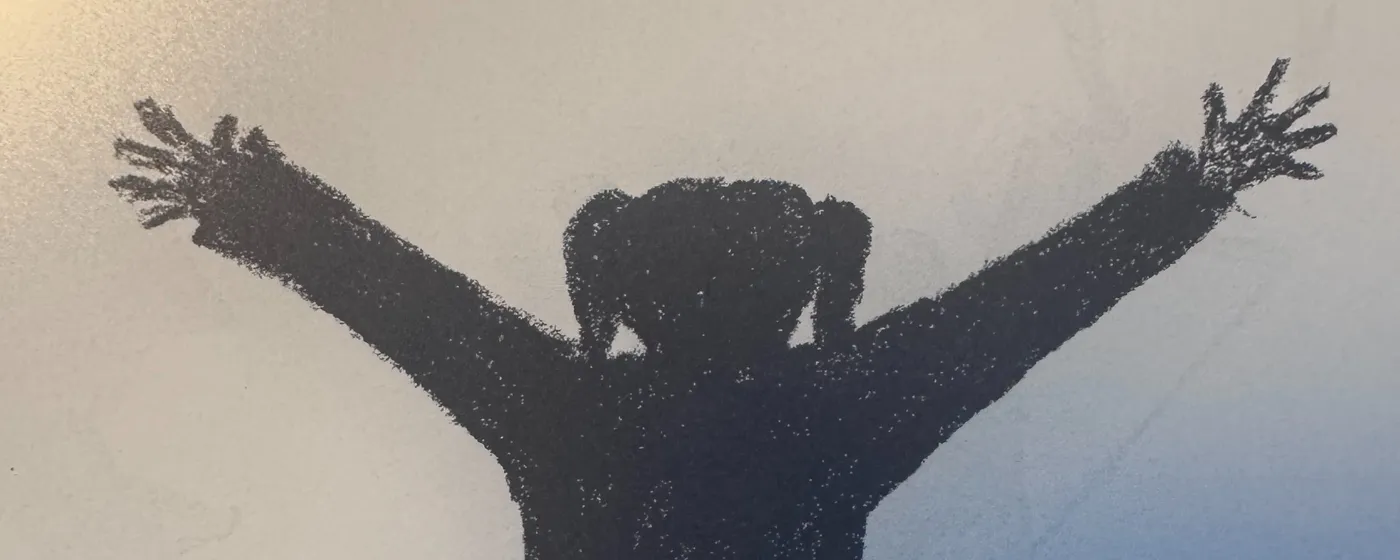
human sub:version, by Martin Honzik
By CIFRA Presented as part of CIFRA’s season "Power ON/OFF" dedicated to human subversion, this online selection by Martin Honzik explores how automated systems increasingly shape perception, decision-making, and everyday life. Bringing together artists who investigate algorithmic infrastructures, data economies, and shifting forms of agency, the project asks what forms of human action remain possible within increasingly system-generated realities. Rather than offering definitive answers, the works in this selection examine how artists navigate, interrupt, and reconfigure the systems that structure contemporary experience. By Martin Honzik HeyHey, I do have the honor to be invited from CIFRA to create a playlist of artists and their projects and also curate a CIFRA season topic, AND select a featured artist. Reflecting on these questions for CIFRA, I realized how closely everything is connected. The theme I am interested in revolves around human subversion — which I see as one of our fundamental human capacities, and perhaps even one of the key qualities that enables us to position ourselves in times of radical transformation. In the following text, I share some thoughts on how I understand this idea, as well as my perspective on the role that artists and art can play within it. I hope these reflections are useful and provide a meaningful starting point for further discussion. And finally, I hope the length of this text is not too subversive — and that my perspective and approach spark your interest. All of these artists represent for me not only exceptional artistic quality, but also a broader culture of artistic practice whose concerns extend far beyond the boundaries of the art world. And certainly wonderful humans that I personally respect and like/love a lot. They deliberately move outside the art bubble, seeking dialogue with science, technology, and society, and from this develop new forms of thinking, acting, and mediation. Their work opens up topics of high relevance and renders complex interconnections accessible in ways that are both intellectually challenging and approachable. What they share is an attitude that is not driven by profit. The purpose of their work lies not in economic exploitation, but in appropriation, exploration, and critical reflection on the world. The true value of their practice emerges in its societal impact: in the form of knowledge, discourse, new perspectives, cultural participation, and the ability to question established assumptions. Their "gain" is absorbed into society and unfolds its value as a public good. In doing so, they generate a form of cultural resilience. By experimenting with new ways of thinking, developing alternative visions of the future, and making complex developments visible at an early stage, they strengthen society’s capacity to deal constructively with uncertainty, technological disruption, and profound transformation. Their work provides orientation without offering simple answers, and fosters the cultural competence to understand change as a process that can be shaped For me, they stand as exemplary for an art that offers something to an open society: the opportunity to rethink the world, the role of humans within it, and one’s own actions — questioning them and, where necessary, changing them. Their work creates spaces for insight, empowerment, and responsible agency. Although it is not their task to produce comprehensive societal solutions or political programs, many of their works nevertheless contain concrete conceptual models, possible courses of action, and alternative visions of the future. Precisely because these are not presented as finished solutions, but as artistic experimental setups and open propositions, they hold the potential to trigger societal innovation. At the same time, they embody for me prototypical forms of what subversion in art can mean. Here, subversion is not mere provocation, but a productive method of critically questioning existing norms, systems, and self-evident assumptions, and of making alternative perspectives visible. In this sense, I understand subversion as a specific human capacity — a gift that makes it possible to imagine change in the first place. Art and artists play a central role in this process: they develop new images, new narratives, and new forms of understanding that do not merely comment on societal transformation, but create the conditions for it to become imaginable, discussable, and ultimately shapeable. In this role, they are not only observers of societal developments, but active co-creators of a resilient, open, and learning-oriented culture. Artistic Portraits Tega Brain Tega Brain is, for me, one of the outstanding artists working at the intersection of art, technology, and ecology. Particularly striking is her culture of collaboration: through working with other artists, scientists, and experts, she continuously expands and deepens her thematic fields. Her key strength lies in translating highly complex technological and societal developments into exceptionally precise artistic articulations. She does not view technological change in isolation, but always in relation to its social purpose and future scenarios of use. Her work consistently operates in the space where technological innovation enables — or already produces — profound societal transformation. Quadrature Quadrature is a German artist collective that connects computer science and art in an exemplary way. As passionate "data lovers," they work critically, creatively, and with technical virtuosity using existing datasets and digital infrastructures. Their projects demonstrate how seemingly ordinary or conventional data can be transformed into concrete insights. Central to their practice are self-empowerment, digital autonomy, and data literacy. They create a playful yet deeply reflective access to technology and open up new possibilities for education, creativity, and societal participation. Vladan Joler Vladan Joler combines investigative research with exceptional aesthetic quality. His large-scale visualizations of digital power structures possess a rare didactic precision while simultaneously unfolding a poetic force. His work can be understood as a form of techno-critical poetry in which one can get lost. He renders visible the complex systems of the digital economy, surveillance, and platform society, thereby opening up new ways not only to understand technological infrastructures, but also to critically reflect on them. Dorotea Dolinšek Dorotea Dolinšek develops an exceptionally rational yet artistic approach to the human being as a biological organism and as a habitat for multiple other organisms. Her work challenges established notions of the human body and formulates new questions about its limits and possibilities. Through the existential sharpening of her scenarios, alternative perspectives on technological development and its societal consequences emerge. A particular focus lies on the role of women in technological futures. Dolinšek questions technological norms that are often shaped by male-dominated imaginaries of the future, transforming deviation, minority, and subversion into productive spaces for innovation and societal transformation. Špela Petrič As a trained biologist and artist, Špela Petrič possesses an exceptional capacity for reflection. She does not merely combine art and science, but understands art itself as a form of scientific inquiry. Her work makes highly complex biological, ecological, and technological relationships tangible through poetic imagery, subtle humor, and irony. Particularly remarkable is her associative form of knowledge transfer: without appearing didactic, she opens up new ways of thinking and creates an artistic alternative to conventional scientific communication. Simon Weckert I understand Simon Weckert as an activist performance artist whose practice is strongly rooted in participation and empowerment. Similar to Quadrature, he develops an intuitive and playful approach to digital technologies, while adopting a distinctly performative methodology. His work critically interrogates technological systems, their purposes, and societal effects, while simultaneously developing concrete counter-strategies and alternative modes of action. In doing so, he enables people not only to consume digital infrastructures, but to understand and actively appropriate them. VTOL VTOL has, for many years, been for me a significant presence of international media art. His work consistently operates at the technological and artistic limits of what is possible, addressing themes closely aligned with my own interests. Particularly impressive is the consistency of his aesthetic language. Material choices, formal vocabulary, and technical execution are directly shaped by his personal living conditions. From the practical and material constraints of everyday life, a unique artistic language has emerged — one defined by uncompromising clarity and authenticity. This fusion of technological precision, poetic depth, and existential materiality gives his work an exceptional quality.
Tags

Pieces in playlist