Ranbir Kaleka: Between What We See and What We Know
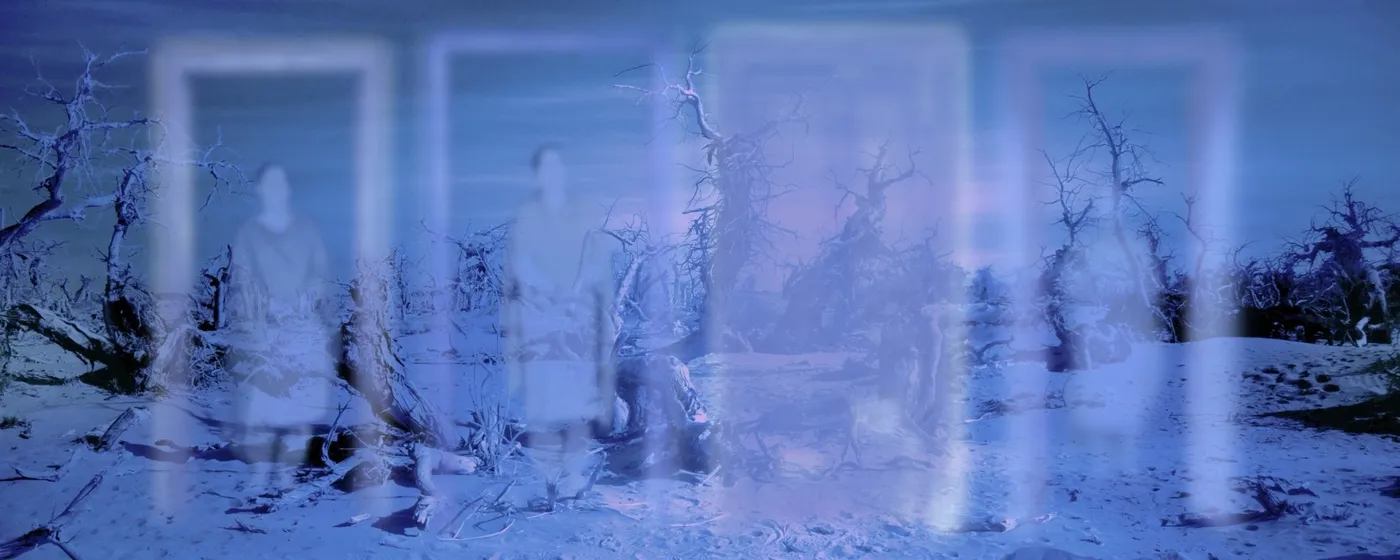
The solo exhibition "Between What We See and What We Know" opening CIFRA’s 2026 program presents works by Ranbir Kaleka, an artist who has worked at the intersection of video, painting, sound, and light for more than three decades. Born in India and living across multiple cultural contexts, Kaleka was among the first to approach video not as a carrier of images, but as a space for experiencing time and the act of looking itself. The exhibition takes place on the CIFRA platform from January 15 to March 2, bringing together works from different periods of the artist’s practice. Rather than following a chronological order, the exhibition is conceived as a single field of presence. Ranbir Kaleka turns to what is always close at hand yet often overlooked: light, air, movement, the pauses between events. His works do not show what happened; they create the conditions in which something may happen — quietly, almost imperceptibly, on the level of sensory experience. Today we are accustomed to understanding images quickly or scrolling past them just as fast. Kaleka’s works propose a different rhythm: to stop, to hold one’s gaze, and to allow oneself not to know. What matters here is not the answer, but the experience of the moment itself — what stays with us even when it cannot be put into words.Here, the image stops asking for a response and begins to breathe. The exhibition can be experienced in different ways — as a walk rather than a fixed route. There is no required beginning and no clearly defined end: the viewer moves from one state to another, changing pace and direction along the way. The sequence of works remains open, allowing for returns, pauses, and moments of retracing. The "How far" (2023) opens the exhibition and sets its rhythm. The viewer follows a figure — almost ghost-like — moving slowly forward, yet the distance never seems to close. In the final moment, the path leads to four doors, introducing a moment of choice: which way to go, and how far. In "Abstruse Revelries of a Repast" (2013), we find ourselves on the other side of a choice, entering a magical space where light and movement follow different rules — as if one of many doors has briefly opened onto another realm. "Music Room" (2002) introduces a different door altogether: a black-and-white room of waiting, where music and color appear intermittently through other openings — animals, musicians, fragments of nature — only to disappear again. These doors do not lead out. What unfolds is not a passage forward, but a state of suspension: we remain inside a silent cube, facing multiple possible worlds that cannot be entered. The work "Not Anonymous — Waking to the Fear of a New Dawn" (2017—2018) is assembled from fragments, like a patchwork quilt. Black-and-white images appear and disappear, catching the eye only for a moment — some are noticed, others slip past. Gradually, the viewer dissolves into these moments, and a sense of unease emerges not from a narrative, but from the act of looking at itself. In "Man with Cockerel" (2004), a man holding a cockerel remains in the frame as the image unfolds through sound and the steady flow of water. Small actions and subtle shifts in sound create a sense of slow drift, as if we are carried along with the image itself. This movement continues in "Man with Tiffin Turbulence Veiled, Unveiled" (2018), where a man looks at himself through a doorway or a mirror. His calm — or quiet sadness — appears alongside charged details: a glass, a parrot that looks back at us and occasionally blinks. These intimate moments are set against images of turbulent water, a ship struggling with the sea, followed by sudden nocturnal stillness — between a private gaze and the vast, indifferent movement of the sea. In "Consider" (2007), the exhibition begins to move out of the black-and-white space as the gaze slows and becomes attentive observation — of life, movement, and forms of presence. This attentiveness unfolds further in "Fables From the House of Ibaan" (2007), where a painted domestic scene becomes a living threshold. Through a looping sequence of gestures time bends back on itself. Interior and exterior, care and loss, childhood and adulthood are not opposed but continuously exchanged, forming a quiet allegory of return and renewal. In "Sweet Unease" (2011), color gradually enters the space, carrying with it a rising tension. Unease does not disappear but persists, pushing against the sense of life and movement. We are no longer suspended in waiting, yet we do not arrive at calm: as observers of the world, we remain within its contradictions, where breath and struggle coexist, without explanation or resolution. In "House of Opaque Water" (2012—2013), the exhibition sinks into a dense, shifting environment. A real story of a submerged house and a vanished village dissolves into images, sound, and movement. Sound surrounds the viewer — an engine, a horn, a human voice — not explaining what unfolds, but drawing us into it. Here, reality is neither fixed nor clarified; it is felt as an unstable state in which past, dream, and present coexist. "He Was a Good Man" (2008) closes the exhibition with a moment that seems almost to slip through our fingers. Time appears to pause — like the instant of threading a needle — suspended, precise, and fragile. Everything feels still, yet everything continues to move. This is not an ending, but an infinite moment caught mid-breath. The works in this exhibition relate to one another like sounds in a musical composition. Each has its own tempo and density, yet together they form a shared rhythm. At moments attention accelerates; at others it slows down; sometimes a pause emerges and it is within these transitions that a sense of wholeness appears. Kaleka's work invites a circular walk around meaning. One moves in concentric paths — sometimes closer, sometimes farther away — but never quite entering the centre. This way of viewing allows for richness rather than resolution. The work stays alive, not by offering conclusions, but by continuing the possibility of meaning making. After leaving the exhibition, what may remain is the residue of an image, a thought, moving with the way meaning continues to register as rhythm, pause, or a shift in light. Each viewer moves through this experience in their own way, without a single route or shared conclusion. This exhibition allows for multiple paths — and none of them is mistaken.

Countries
IT
JP
PL
GR
Tags
Authors in playlist
Pieces in playlist