Time To Tech Up
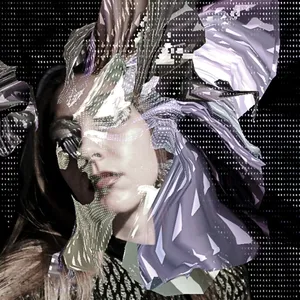
What does the future of technology hold for us? And who will shape the future of technology? We cannot imagine a world without the internet, our tech-tools and gadgets. Our society is driven by technology, we connect over it, we inform ourselves over it, and we put our trust into it. We have to understand that technology is a tool of power. In that sense we often associate power with a cis-male world. Reading the news, we barely ever hear of female leaders in technology. We see Mark Zuckerberg, Elon Musk, and Tim Cook on the cover of tech-magazines, and we know that they have the power to shape the future of technology - which means, they shape our future. But this is not because there is no female leadership in technology, women have influenced the path of tech for centuries. The world’s first programmer, Ada Lovelace, was a woman. YouTube and IBM both have female CEOs, and did you know that Facebook and Microsoft both have female CFO/COOs? There are females in tech, and they are thriving - so let’s put a spotlight on them. Let’s imagine a future, where power does not have a gender anymore, where female leadership is not a term of rarity, but associated with responsibility, positivity, and an impactful future. Welcome to the world of broken glass ceilings, where “female” does not apply to women only, where the world is constantly glitching between power and empowerment. Flora Miranda visualizes such a future by playing with different symbols related to female power. What would a female future of technology look like? And how do the dangers of power translate to a female world? Both leadership and technology, especially when thinking of ways to use AI, are prone to be misused - may a balance of genders lead to a balance of power? Are women not willing to take the risk to do bad in this world with their potential power? With those questions in her head, the designer created an imaginative world, where the future is female - and where female nerds are the coolest. Created digitally first, the dress is made to carry cover dummies of a fake tech-magazine called “Die Führerin”. The magazine covers are headlined with mash-ups of programming language and “real” newspaper titles, such as ‘BASH she did it again’, ‘Becca stuck in while loop’ or '#MeToo: My users'. Just like the headlines, the cover faces feature women online - the tech-executives in ‘Die Führerin’ reference female nerds from popular culture. Playing with the german translation of ‘leadress’, the magazine’s name is a conscious reference to the paradox of power, as well as symbol for female leadership. The covers itself reference the Ascii code aesthetic of computer screens in the 1980s, green pixels on black screen, each of the 6 covers was created manually as a vector file by the designer. The basic structure of the dress is a classical, body-fitted couture silhouette, made of hand-sewn black silk velvet. It exemplifies the beauty of the manually made couture dress, it represents the pure beauty of handcrafted fashion garments. While being imminently beautiful, it is tailored to hold the graphical panels, which float in front of the dress like a veil. The panels themselves are manually embroidered with green glass bead, creating the look of green ASCII particles on the black panel. Singular beads seem to grow from the underground, due to an embellishment of neon green silk flakes. There are 15 ‘news cover’ panels in total. The whole dress is an illustration of excellent manual craftsmanship, making the garment an artisanal masterpiece. Charged with the power of 650 hours human handwork. The video production, in which the dress is presented in motion, was filmed by Laetitia Bica, the dress is worn by Gala Moody. To accentuate the eerie feeling of the dress, a combination of electronic music and overtone singing, produced by Idklang and Natascha Nikeprelevic, is underlying the visual presentation.