Noise For Burnout
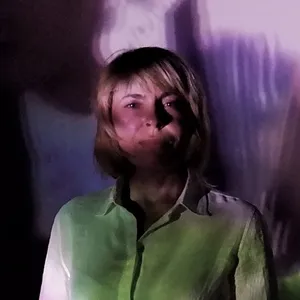
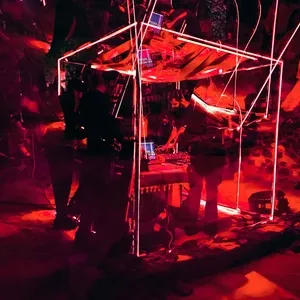
Noise for Burnout is a moving-image work examining how control becomes internalised through attention, repetition and bodily behaviour. It focuses on forms of power that operate without explicit commands, shaping responses through continuous stimulation, self-monitoring and the demand to remain available, responsive and functional. The work follows a body caught within a circulation of impulses whose origin becomes increasingly difficult to locate. Performer Karolina Kraczkowska moves through repetitive gestures, muscular contractions, interruptions and somatic glitches. Reactions occur before they can be consciously interpreted; micro-gestures precede reflection and decisions appear to take place at a level that does not require consent. External rhythms are gradually absorbed and reproduced as if they were the body’s own. Ceramic fragments inspired by votive offerings recur throughout the film, extending the body into a set of fragile external forms. Historically associated with healing, protection and bodily vulnerability, the votive becomes here an ambiguous object: both a material trace of damage and an attempt at repair. The physical body repeatedly encounters its digital representation: it is scanned, duplicated, fragmented and reconstructed as a shifting field of data. Monitoring and measurement frame subjective experience as something that can be observed, classified and evaluated. Within this system, repetition functions as a form of synchronization. Behaviour adapts to rhythms that originate elsewhere until they become familiar enough to be perceived as internal. Obsessive repetition becomes one possible trace of this process: a feedback loop between the body and an environment designed to sustain attention and continuous engagement. Noise for Burnout also questions the individualisation of overload. Exhaustion, distraction and compulsive behaviour are often framed as failures of personal self-regulation, while the structures that continuously produce the need for such regulation remain less visible. Glitch, interruption and failed synchronization expose the limits of seamless adaptation, creating moments of friction in which these mechanisms can briefly become perceptible. At the same time, repetition is not treated only as a symptom of breakdown. The body remains in a continuous process of recalibration, attempting to regain stability within conditions it cannot fully control or exit. Returning to the same gesture, impulse or thought can produce a temporary and paradoxical sense of relief. Obsession therefore occupies an ambiguous position in the work: both a trace of the pressures acting upon the body and an attempt to survive them. Repetition becomes a form of improvised repair — a way of maintaining continuity when adaptation itself has become exhausting. The work asks how external rhythms become experienced as internal, how systems of control are reproduced through the body, and what becomes visible when that process begins to falter. Video: Aleksandra Ołdak Performance: Karolina Kraczkowska Choreographic collaboration: Oskar Malinowski Sound: Piotr Bednarczyk (Loufr)