Naked as Trans
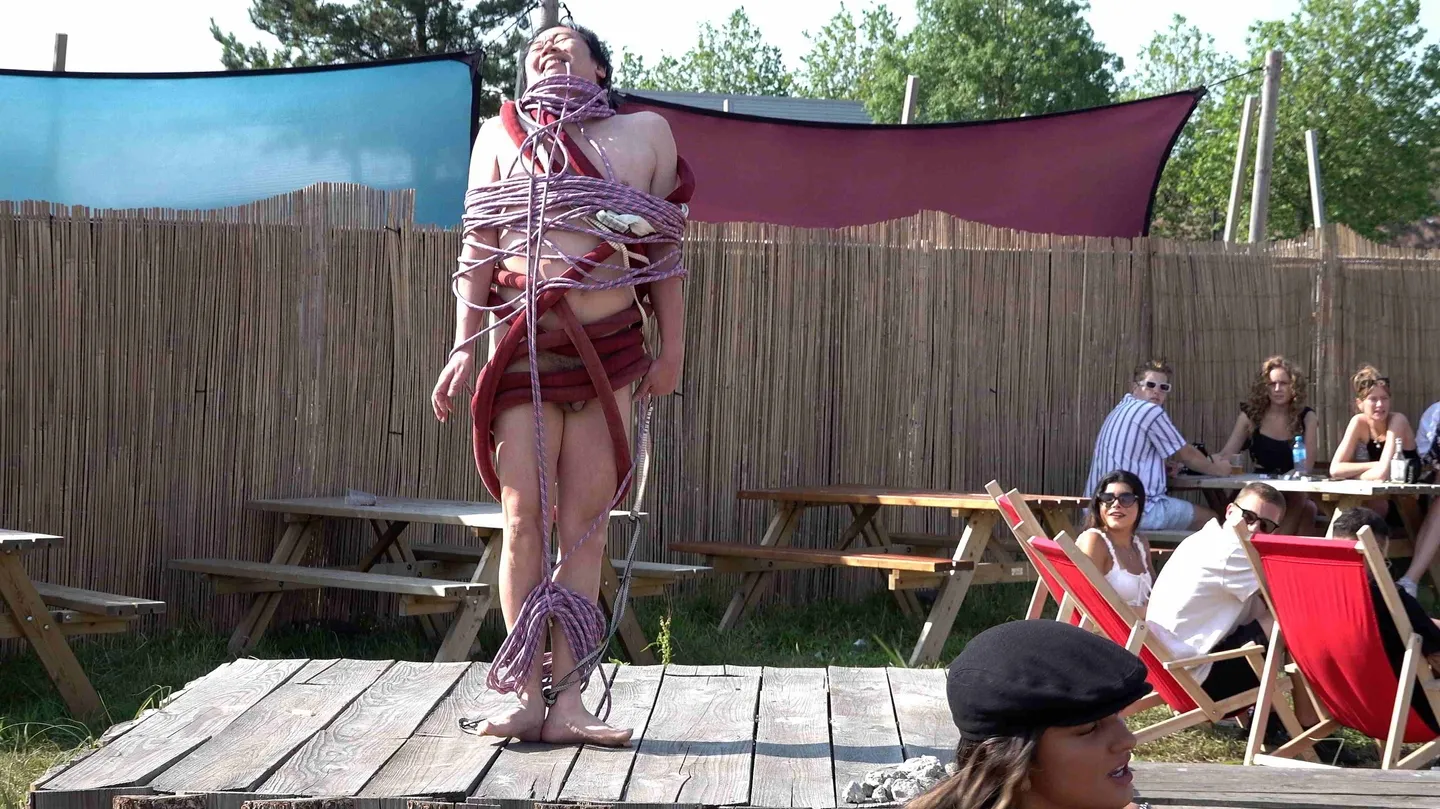
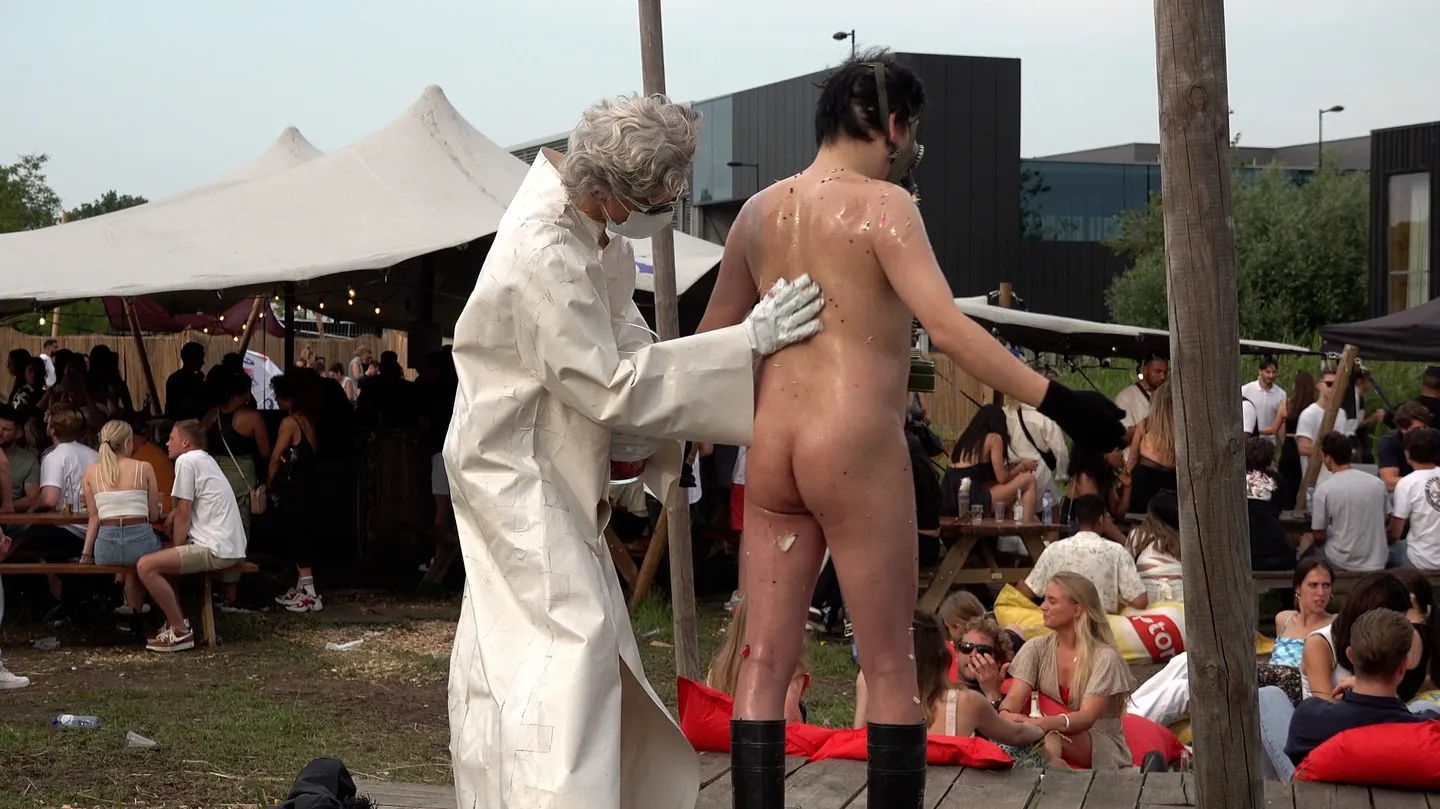
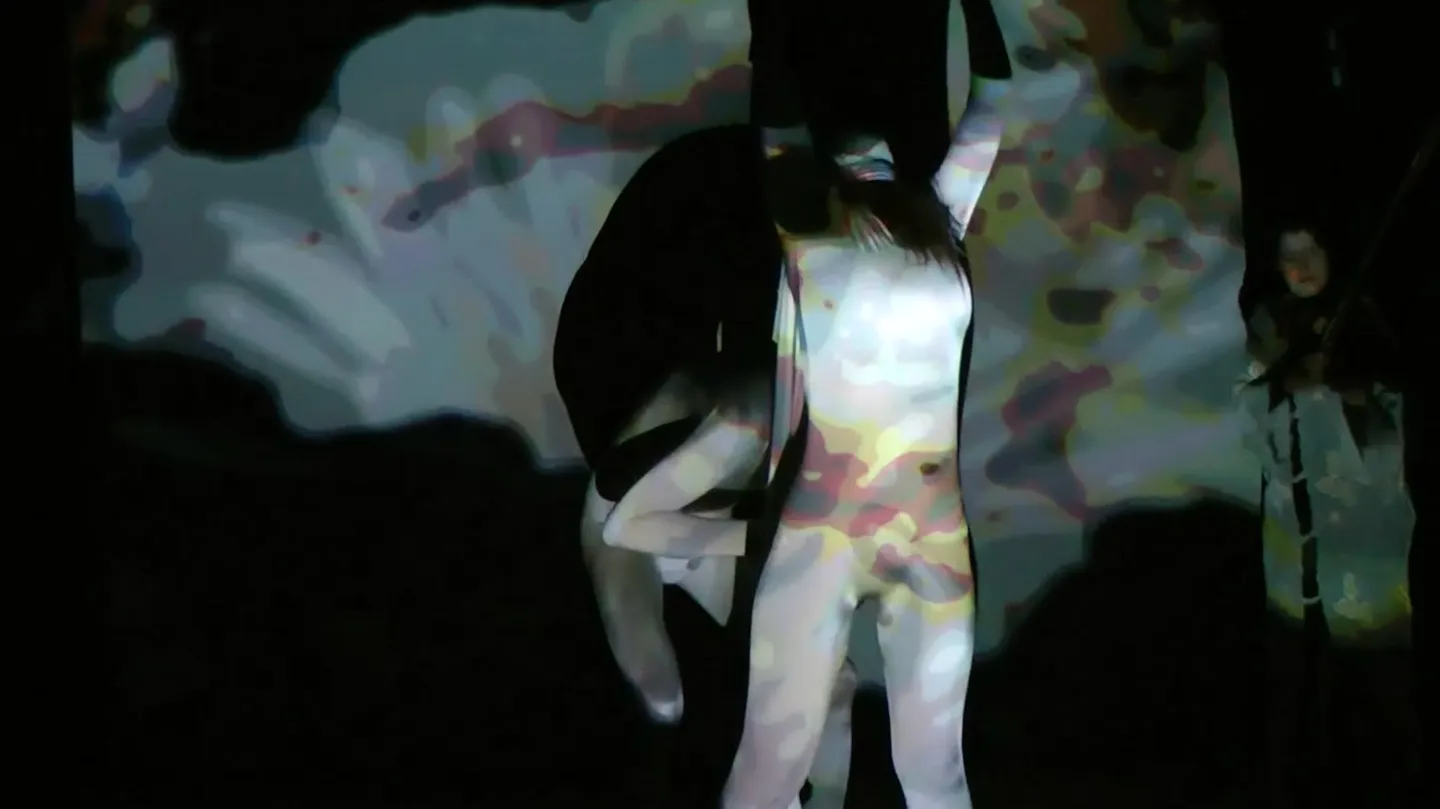
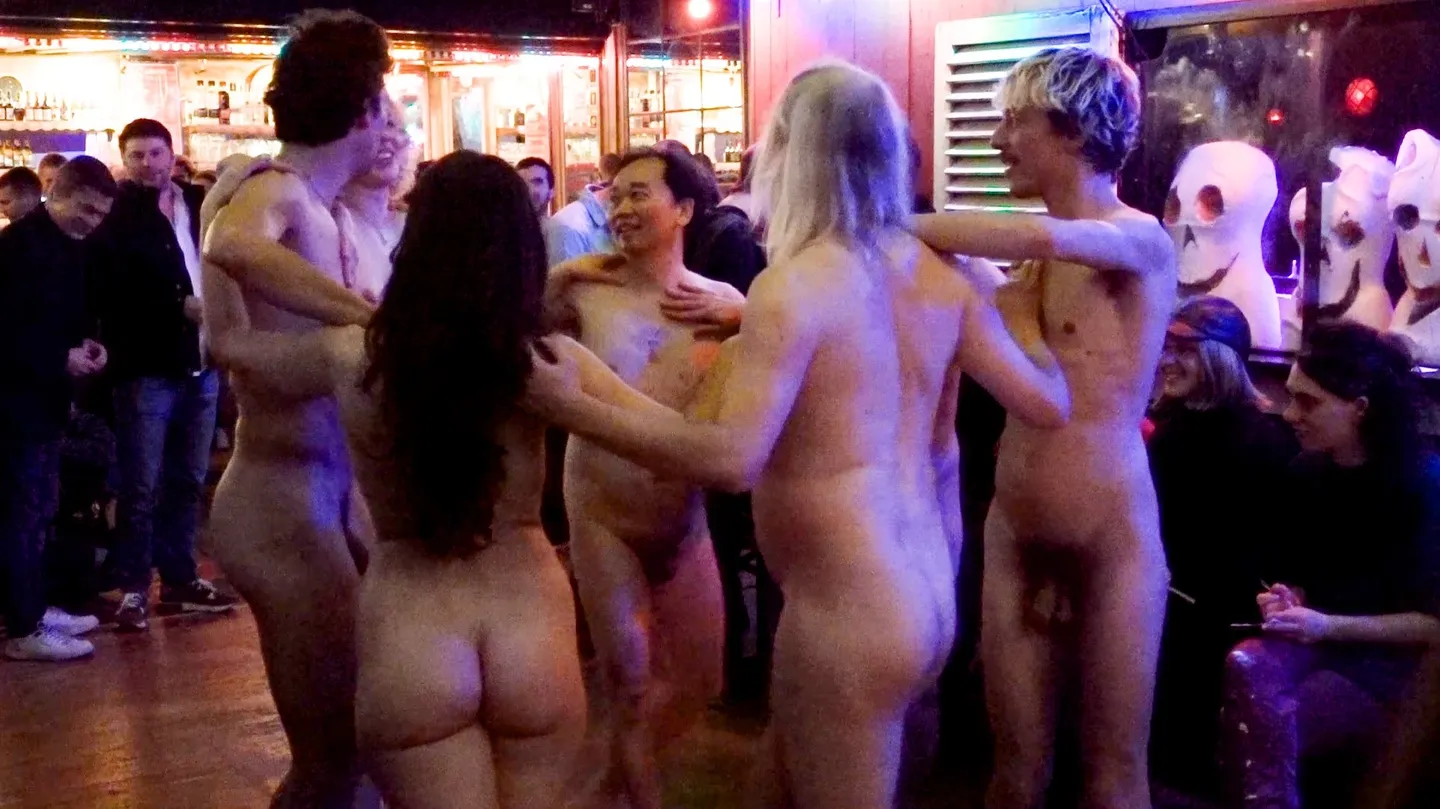
The concept The concept of the festival was Nudity as trans, which aimed to support all beings who have gone through any transition. The curator of the festival, Lenka Klodová, explained that the moment of transition is a moment of pure nudity in the sense of the requirement of absolute honesty with oneself. Nudity is also a transition since the biblical interpretation, where the recognition of one’s own nakedness is the moment of departure from the heavenly state to the human destiny. Nudity as a reference to an extraordinary personal relationship with God is also part of the religious trance, whether in the Eastern tradition of the Jurodivis or the Czech tradition of the Hussite Adamites. Trance also means a state where the state of consciousness changes, which is close to the definition of performance art. The performance location The performance location was on an abandoned industrial site near the boat Altenburg 1964. The site offered a contrast between nature and industry, as well as a variety of materials and objects that could be used for the performances. The site also provided a sense of isolation and intimacy, as well as a challenge for the performers and the audience. The performance ‘Nudity as trans’ Mukarno’s performance ‘Nudity as trans’ was one of the most striking and memorable performances of the festival. He used his naked body as a tool to create a powerful live art and symbolic expression of his personal journey and transformation. He collected all the materials for his performance at the location, such as thick iron wires, stones, black soot, and iron rods. He started his performance by entangling his body with thick iron wires, which felt very oppressive and heavy. Every movement caused pain due to the iron wires. He then tried to make a Christian cross out of the stones that were piled up there and then lay on the cross. This gesture evoked the image of crucifixion and sacrifice, as well as the idea of death and rebirth. He then moved to an altar made of thick iron rods that protruded upwards. He tried to wriggle into the altar, which looked like a cage or a trap. In the altar, he underwent a transformation by smearing black soot on his body. The black soot covered his skin and gave him a new appearance and identity. He then moved to the holy mountain, which was a mountain of piled stones, and he disappeared into the mountain. This gesture suggested a final ascension and transcendence, as well as a connection with nature and spirituality.