Future Practice
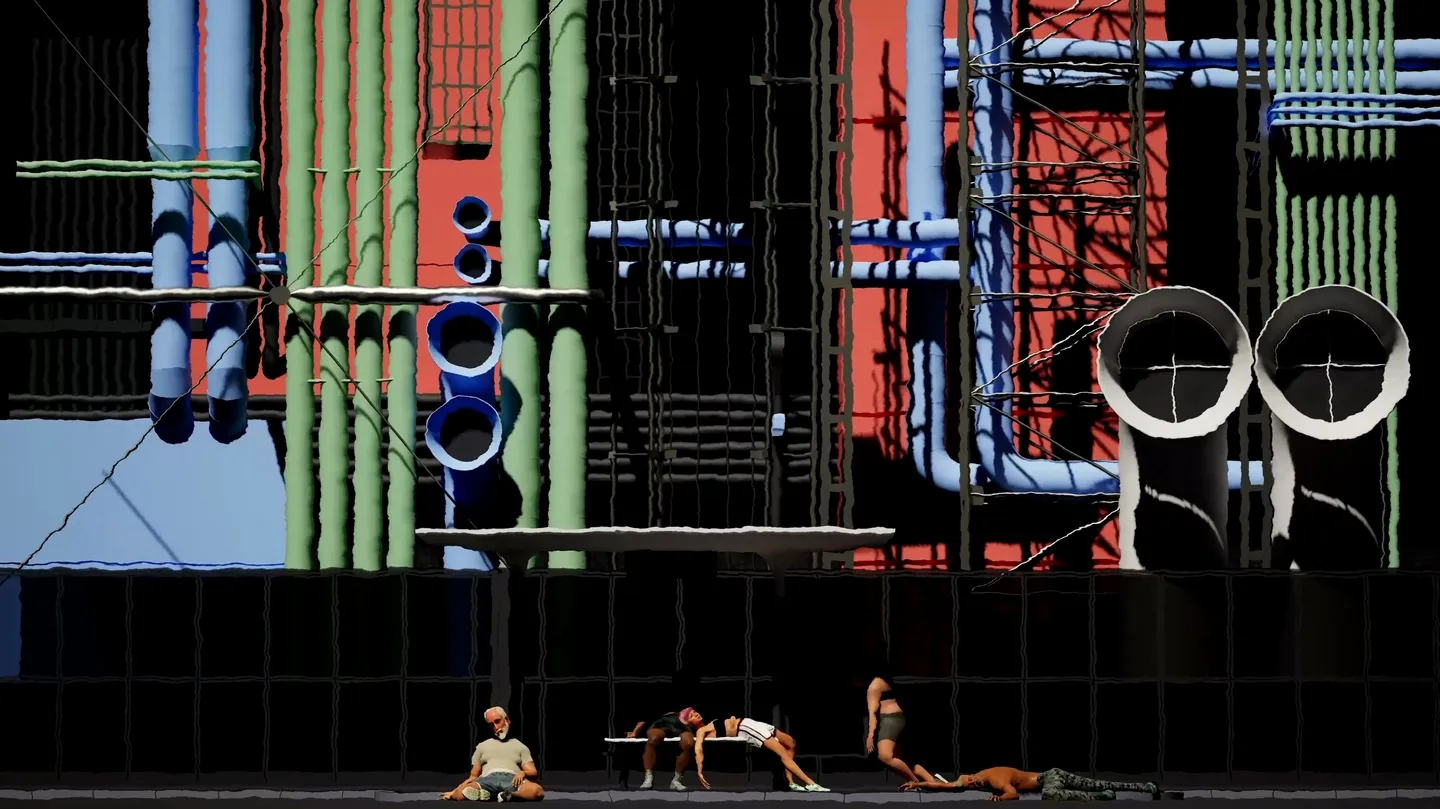
<Future Practice> documents a disaster-response drill in which people act out a catastrophe that has not yet occurred. Under the scenario of a fire breaking out in a large shopping mall, participants evacuate in haste and play the injured. Staff continuously generate smoke, jets of water shoot into the air, and students scream on cue. The scene begins to resemble a theatrical performance, with bodies acting on a stage and special effects intensifying their gestures. Yet the measured movements of soldiers and firefighters, along with an announcement reassuring visitors that they may continue shopping, repeatedly remind us that the emergency unfolding before us is not real. Reality and fiction do not simply oppose one another here; they become strangely entangled. An event that does not yet exist is first written as a scenario, and bodies follow its rules to bring a possible future into the present. The drill therefore does more than imitate reality. Through institutional protocols, prescribed gestures, images, and bodies, it constructs a situation in advance and organizes how people are expected to respond to it. Rather than asking what is real and what is staged, <Future Practice> considers how reality itself is produced and performed through scenarios, rules, and systems of representation. Gestures that represent an absent event allow a future that has not yet arrived to take temporary form in the present. Through repetition, fiction ceases to exist outside reality and becomes one of the mechanisms through which reality is anticipated and organized. What precedes the future, then, is not the future itself, but a scenario written for it. If the future is enacted by following such scenarios, imagining a different future may also begin by rehearsing it differently.