Computational Self Rhizome
Contains AI-assisted elements
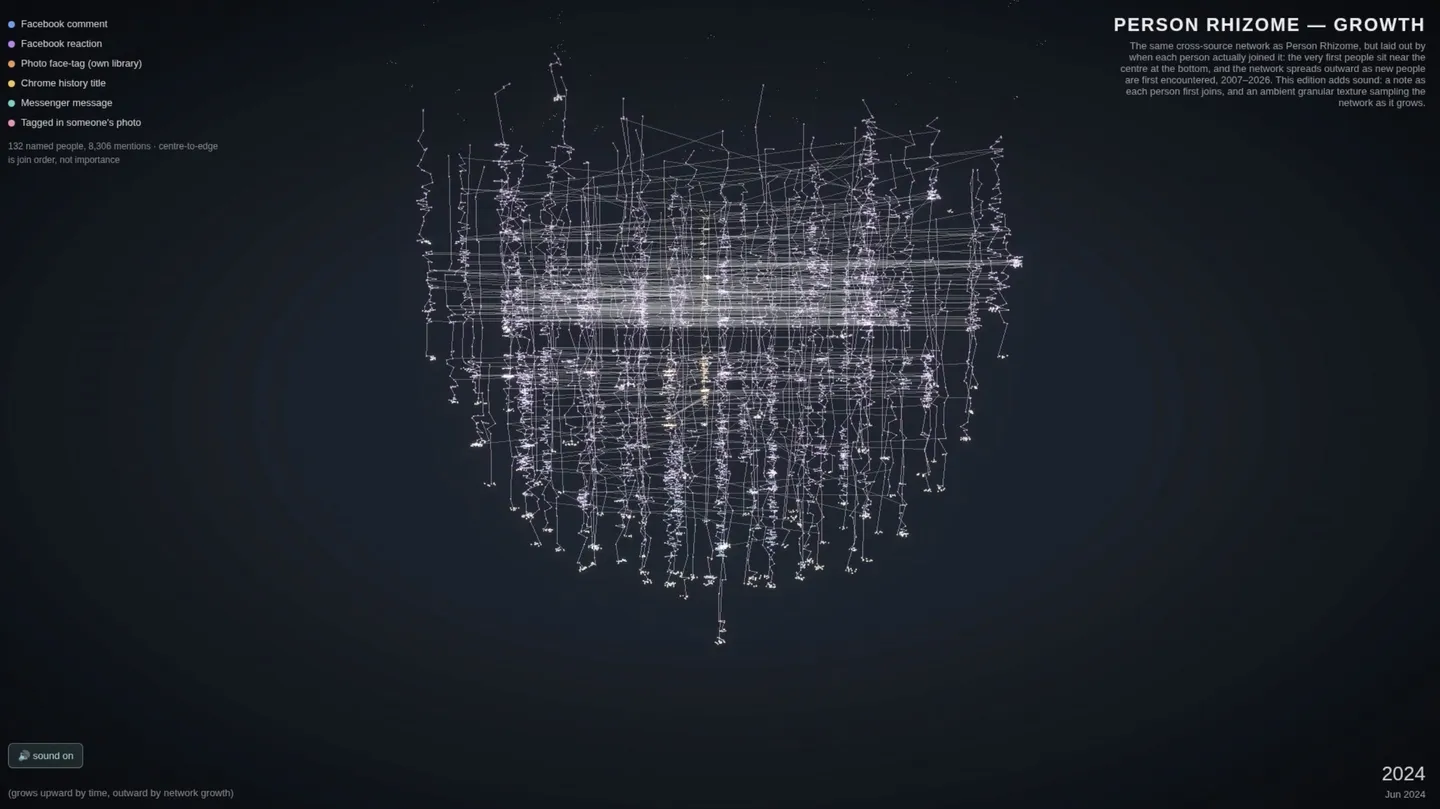
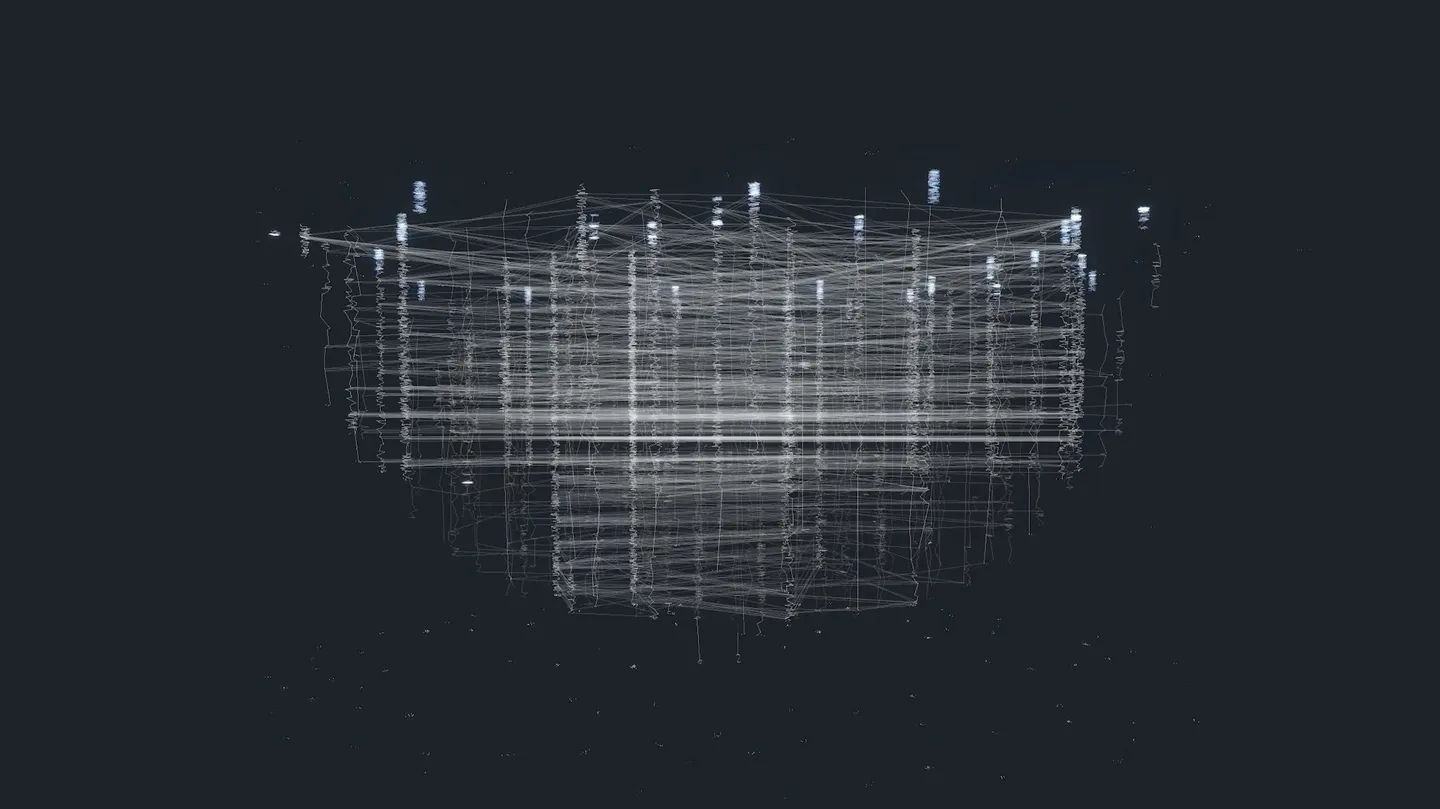
Computational Self – Rhizome turns the structure of Person Rhizome on the artist himself. Where that work mapped the people in one life, this one maps how the platforms saw that life. Every point is a behavioural or interest category drawn from his own Google and Facebook data exports: not who he knows, but what the systems recorded him doing and what they decided he is. Categories join a spiral the first time they appear in the record, and the structure spreads outwards as new ones emerge between 2010 and 2026. Before any of this dated activity begins, pale points are already scattered across the space. These are the root system: categories the platforms inferred without dates, a profile already in place before the record of a life has grown over it. The sound follows the same rules as Person Rhizome: a note as each category first appears, over an ambient granular texture sampled from the network as it grows. A work in progress from the practice-based PhD project Persona in Machina (University of York), it asks what remains of a person when they’re described entirely in the platforms’ terms.