Augmented Capitalism Rhizome
Contains AI-assisted elements
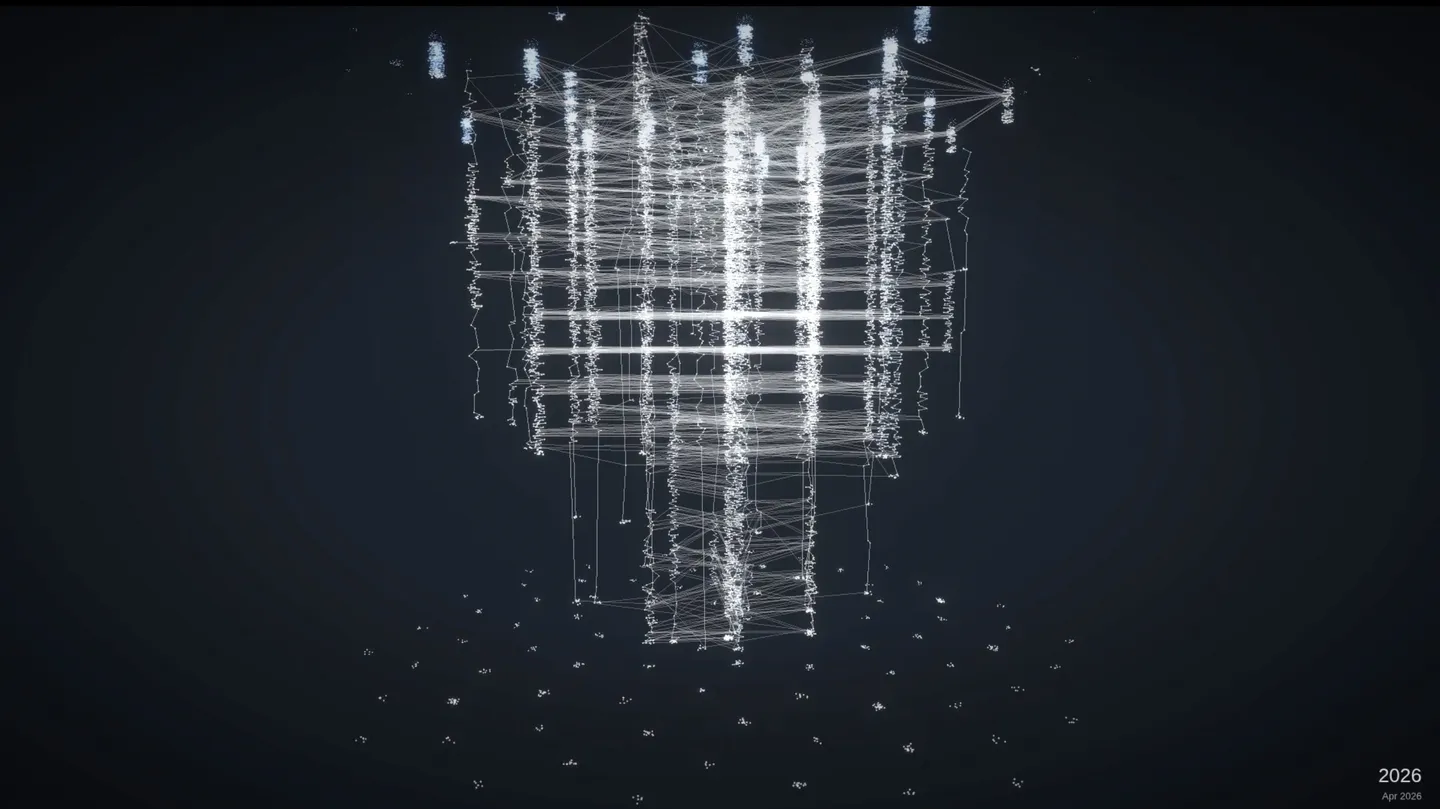
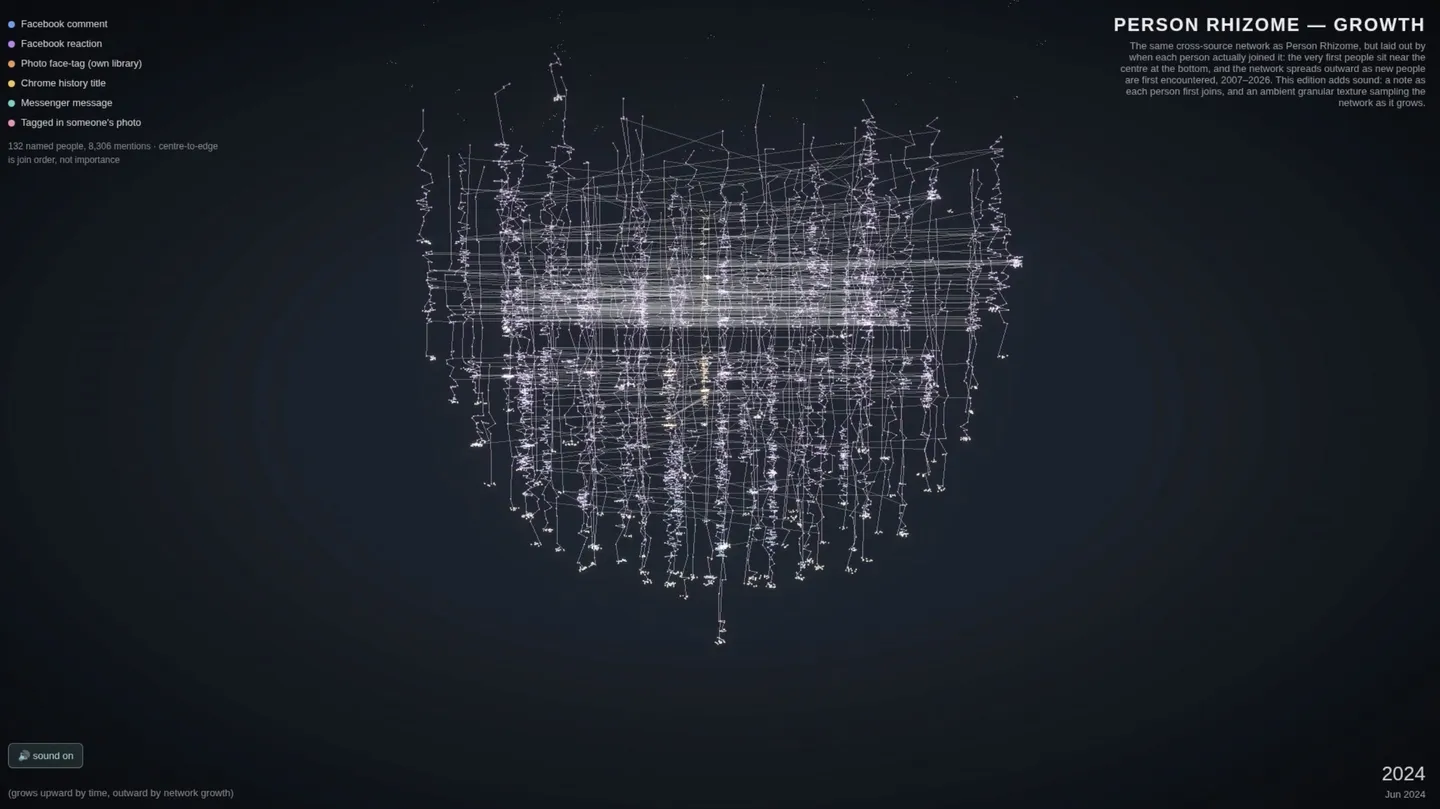
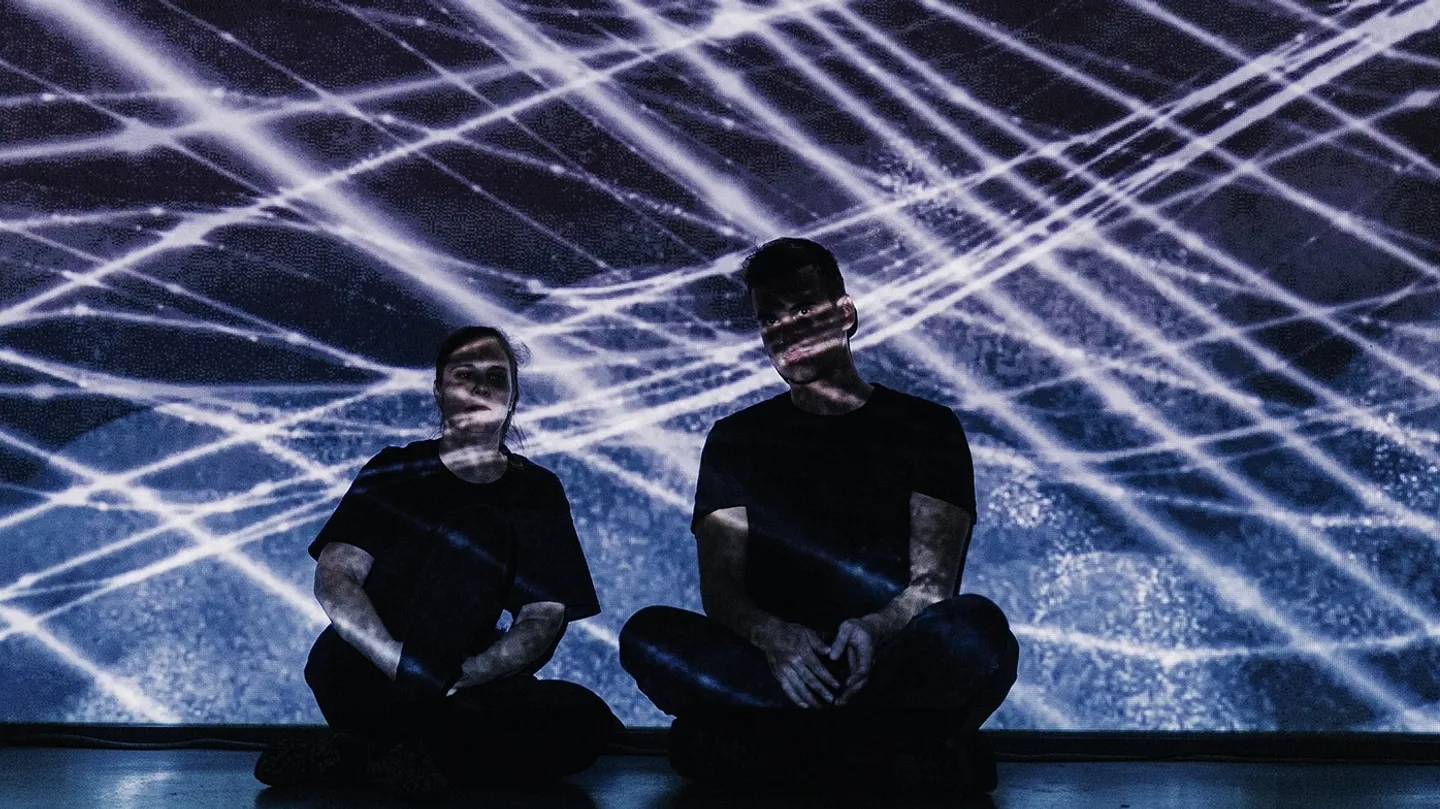
What does a life look like to the systems that record it? Augmented Capitalism Rhizome is a data visualisation built entirely from one person’s own Google and Facebook data exports: the archives the platforms hand back when you ask what they hold about you. Nothing in it is invented or simulated. Every point, date and category comes from that returned data. The work joins two networks into a single spiral, plotted in true chronological order. The first is a network of people: the family, friends and colleagues who make up one real life, appearing as they enter it. The second is a network of inference: what Google’s and Facebook’s systems recorded and concluded about that same person’s behaviour, including searches, interests and the advertising categories Facebook assigned. Following the French philosophers Deleuze and Guattari, both are rhizomes: networks without a centre or a fixed hierarchy, growing outwards from many points at once. For the first part of the spiral, only the people are there. Then, in June 2010, the computational record begins, and from that moment the two networks are bound together by a single rule: the denser the platform’s record at any point in time, the less visible the people become. When the systems are recording intensely, the people in the life fade back. When the record thins, they return. Nothing is erased, only dimmed. This is an authored argument, not a measurement. The rule is a decision, made to show something that is otherwise hard to see: under the conditions the artist calls augmented capitalism, a person becomes visible, or legible, through the apparatus that records them. The relationships that make up a life are still there, but they’re seen through the density of the data. A second layer makes something usually invisible visible: value extraction. Dotted lines of light leave the structure and travel outwards past its edge, fading as they go. There’s a faint, steady trickle from everything already on screen, because all recorded activity has value. Then come brighter, more frequent bursts from two specific sources: Facebook’s inferences about which advertising audiences this person belongs to, and the dated record of the adverts they clicked. These are the points where a life is most directly turned into revenue. When the spiral is complete, the extraction doesn’t stop. The lines keep flowing, because extraction never does. The sound is synthesised live from the same data. Each person and each category is announced by a plucked note at the moment it enters the record, so the soundtrack is the rhythm of a life being recorded. Beneath it, a continuous granular texture samples whatever part of the structure the slowly rotating camera is facing. The audience hears the data as it is seen. The work comes from a wider body of practice-based research on the platform self, including the essay film Persona in Machina. It asks what returned data can and cannot tell us. The exports reveal a great deal: relationships, routines, interests, the shape of years. But they don’t include the models the platforms built from that data, the inferred person they keep and act on. What the user is given back is the record; what the platform keeps is the model. Augmented Capitalism Rhizome works with what is returned to make the gap visible. The visualisation was built with an open-source toolkit the artist developed for working with personal data exports. It’s released under a GPL licence so that others can explore their own returned data.