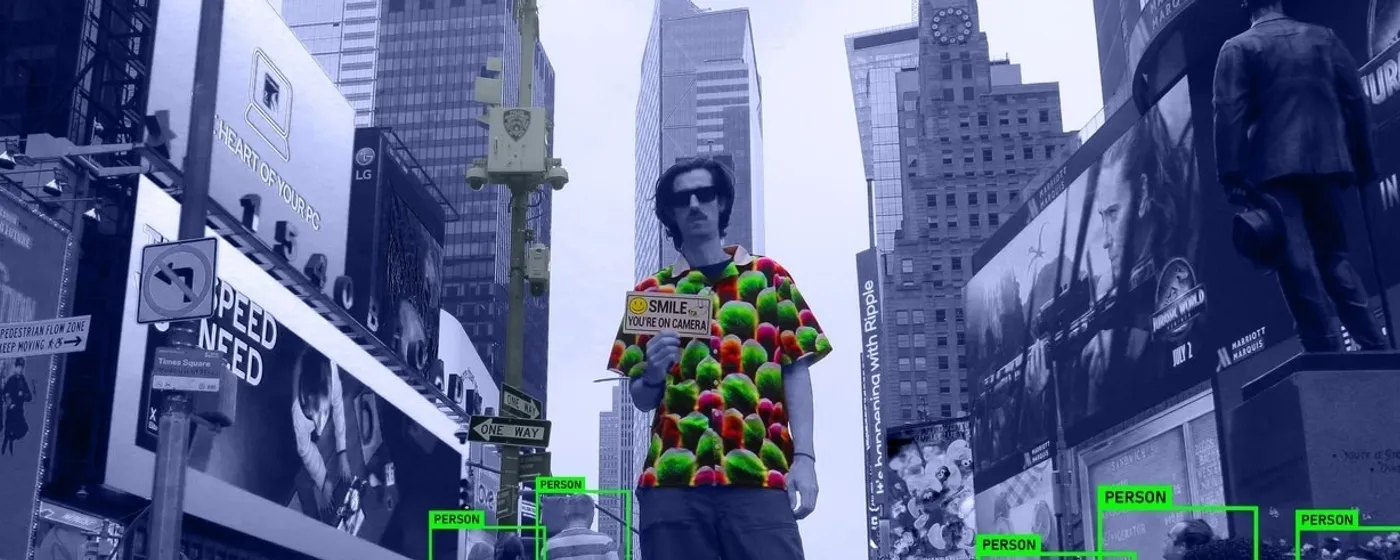

Simon Weckert: 99 Smartphones on a Walk
What happens when technology fails and why do we so readily accept its version of the world as objective? German artist Simon Weckert, born in Karl-Marx-Stadt, now known as Chemnitz, studied New Media Art at the Berlin University of the Arts and lives in Berlin. He has worked as an AI researcher at ART+COM, is a member of the Chaos Computer Club, and teaches at the universities of Linz and Vienna. His work has been shown at Ars Electronica, V&A Dundee, Vitra Design Museum, Bauhaus Museum, CCBT Tokyo, Shanghai's chi K11 artspace, and other institutions. Simon Weckert calls himself a "modern digital wizard and mischievous inventor." Code, electronics, generative systems, and physical devices are not just tools, but a medium for ironic commentary. He doesn't treat technology as something inaccessible and omnipotent; on the contrary, he tries to get close enough to it to discover the strange assumption, hidden rule, or vulnerability that makes it appear trustworthy. He's less interested in the practical value of the latest device. What fascinates him is how future generations might look back at our digital habits: endlessly pressing buttons, refreshing pages, and trusting interfaces more than their own experience. In an interview with Ö1, Simon Weckert said he wants to show not only the ease of creating different versions of reality, but also the power of the companies that control the data necessary to construct them. Therefore, his practice exists somewhere between art, hacker culture, social research, and sitcom. At the same time, Simon Weckert doesn't oppose technology or propose a return to a pre-digital world. He's more interested in learning to argue with the system in its own language: changing the rules, intentionally producing errors, and turning failure into a way of thinking. In recent years, he has increasingly turned to the idea of machine unlearning — not just teaching a machine, but also making it forget, abandoning learned connections, and discovering its own biases. The artist uses AI not to speed up the production of beautiful images, but as a system that needs to be dismantled, reconfigured, and stripped of its illusion of neutrality. Humour is essential here. Simon Weckert doesn't explain digital power through grim futurology or attempt to frighten the viewer with the complexity of algorithms. He makes the system a little absurd — forcing it to doubt, contradict itself, or make illogical decisions. And it's precisely at this point that technology ceases to seem natural and inevitable: it becomes clear that it was created by people, based on specific interests, and could very well be designed differently.