IN THE SHADOWS OF PARADISE…
The online exhibition keeps unwrapping the POWER: ON/OFF season on CIFRA

by David Elliott
Paradise, Hell’s opposite, is a place of luxury and perfect rest that figures in many religions as the ultimate desired endpoint where, free from suffering and worldly hardship, the soul may face eternal peace. Back on Earth, political ideologies and other constructions of power have appropriated this idea as an incentive which also entails strict conditions of belief and compliance for admission. Taken to extremes, such unnuanced frameworks allow little personal space — to think, dream, imagine, act, or argue. Artists, for the most part, refuse to think in this way and many frequent the Shadows of Paradise as a possible point of departure.
The Shadows of Paradise shown here imply an expansive model — an untrammelled range of ideas and creative structures — through which artists and others, may critique, dream, live and work. Not confined to art, this idea spreads further as many of us search for sustainable paths between extremes of desire, pleasure, abjection, and terror. Paradise here, should it exist, may also imply a relative, aspirational, anti-Darwinist model: one made in a spirit of critical circumspection where the fate of the individual is tied to the survival of all. Such synergies and tensions are presented here in a collection of 14 works by 12 artists and collectives from Africa, China, Europe, Japan, Russia, and Singapore. To watch the selection without interruptions, please click ‘Watch now’. At the end of the work, press Escape to return to the content page and continue.
From up close and far away, Yoshida builds up a visceral impression of the island. He films its roiling seas, driving mists, clouds, heath and rocks in sombre shades, and records its unknown languages in the buffeting splutters of the wind. Almost as if he were a shaman, he makes this film an act of atonement for the prisoners who once lived there and as a restitution of “the voices of their souls through the roaring sounds of waves and storms.” Now in the “paradise” of a popular tourist venue, Yoshida seeks to record for the present and future “the pain, hopes, and lingering emotions of those who once lived there.”
They seem happy. Nothing much happens: a passing boatman attempts to sell them some fish, but they demure and, with a line, catch and grill some themselves. In the process, their line gets snagged and one of them has to jump in the water to unscramble it. Looking into the depths of the sea, it seems to be animated by a vital electrical energy from another world where nothing can be predicted, and even people and fish are equal. As night draws in, the boat accelerates, and we see the mainland with its few colonial dwellings devoid of human trace. At the same time, a running text informs us that the boat has just passed “the former house of the famous paleoanthropologist Richard Leakey whose team had recovered the remains of ‘Turkana Boy’ — our most ancient ancestor…, a hominid who died in these lands more than 1.5 million years ago.” As we slowly absorb this solitary fact, a melancholic impression of mortality, sadness and wasted time, stirs in the shadows. Embedded within this, Eshetu has produced a film about the spaces in between events that encompass history, culture, and the right to happiness. Politics governs neither their images nor characters but, should you be looking for it, an untrammelled paradise is present.
The multiple images categorised in her film Mind Rehearsal (2018) reflect aspects of China’s changing cultural climate and are also concerned with disciplines of concentration, meditation, rhythm, and meaning. Each of its twelve parts is a vignette, introduced by an enigmatic, written caption. The first is an instruction for how to view the work: “Roll [your] head backwards and forwards gently; lift up or press down your feet as if there were a pedal controlling your balance of suspension.” Its initial images — a shot of an isolated, uninhabited, misty island, still evolving in the distance — emphasise the primordial energy of the sea, as well as the age of the rocks that stand within it.
Each section has its own starting point: staring at the giant fur features a series of close-ups showing the unfamiliar, hair-like texture of prairie grass that with a rapid change in focus morphs into a wide heath. Summer is watching me like a tiny helicopter has an abstract “blinking” quality and sound, as if the flat landscape were being filmed through beating blades, Tightrope walker views its protagonist from below, recording how the perilous difficulty of ascent is replaced by a swift, streamlined sweep downwards, sliding between different peaks. In the laconically descriptive Fish with money, the camera peers into a scenic pool in which Koi-Carp, pressed closely together, have to avoid the falling coins thrown in by people hoping for good luck. Breakfast, the film’s final instalment, depicts an item of food within the orange-defused light and sound of a time-cooker. When the bell rings the clock stops, the lights go out and the film ends. Taken together, the different viewpoints and attitudes revealed in Liang Yue’s two films reveal both a mischievous and respectful delight in the rich diversity and uncanny likenesses of life as she sees it, embedded within the shadows of the everyday.
Much of the local reconstruction and industry seems chaotic, especially when viewed by a western eye, yet there is something attractive about the disjunctures of life there — between its exotic image and location and the harsher reality that outsiders find difficult to describe. An expat speaks out to fill this gap: compared to life in the Netherlands, he enthusiastically explains “This is magic.”
Interlaced throughout the film, in both sound and image, are the actors of a travelling Peking Opera company. Their rendition of the traditional romantic tragedy Farewell my Concubine in the ruined buildings strikes a timeless note of honour, love, and regret as it is intercut with the continuing bustle and life of the river.
In a series of more abstract works based on dance, of which With Light with Shadow (2019) is one, Chen had moved away from place and memory to collaborate with contemporary dancer and choreographer Zheng Yuanyuan,and local dance students, in filming simple actions, interactions and movements. For the artist, their simplicity raises powerful questions “about identity mapping, physical distance, and the need for independence in contemporary society.” Although initially, the dancers’ movements appear to be alienated, strange and awkward, through a process of exchanging clothes and other objects as they progress through the film, they establish an unexpected, unbalanced harmony by ending up entangled, merged together.
Loong’s two-channel video installation Wind Bell (2021) poetically illustrates this disquieting point by showing how the process of phytoextraction enables copper to be “mined” from wild plants and other organic bodies that have been contaminated by electronic waste. It also documents how she has extracted copper from polluted reeds in Guiyu, Guangdong Province — widely considered to be the world’s largest site for processing electronic waste. In a form of aesthetic alchemy, using phytomining technology (recycling copper from plants that accumulate it), Loong has extracted enough metal to cast a small ceremonial bell. Playing at the end of the film, this solitary bell reverberates through nature amid the timeless rustle of wind in the reeds. As a potent symbol of recuperation, vulnerability, and warning, it evokes not only the alienation and contamination of the whole environment but also the enduring resilience of nature and humanity in the face of pollution. But, most strikingly, it highlights the stark contrast in temporal scale — between the seemingly indestructible form of minerals, and the pollution they can cause, and the fragile, fleeting span of organic and human life. (This work has been shown in the form of a single-channel video, a two-channel video installation, and an environmental two-channel video installation.)
The prelude introduces us to “a Solitary User,” a man sitting at a table in a large, otherwise unfurnished, room going through his media feed and links. In front of him a “Greek chorus” of four figures is dressed in identical orange boilersuits, each identified by a particular emoticon; their task is to both communicate and manipulate the news as they push it through on a large extending “news scroll” that illustrates incidents as they occur... images of Vladmir Putin, kittens, torture and football flash by. Beneath the table, lurks an “Internet Troll”, a roughly dressed, bearded, Russian man, with an accordion and fur hat, who not only filters what comes before him, but also sings wry musical comments about life, the news and those who consume it.
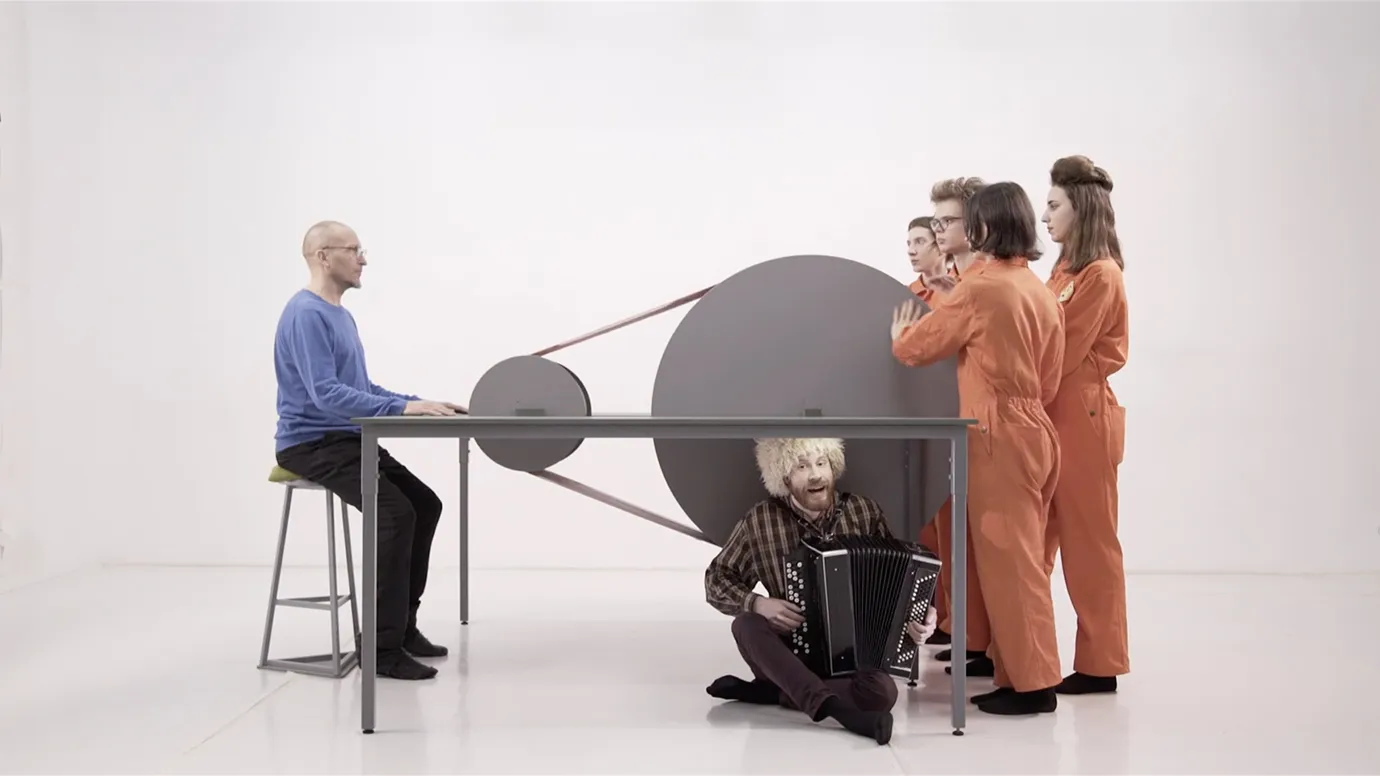
In Act 1 of the Opera Farce, it is the evening of 29 May 2018 and bad news has been announced: Arkady Babchenko, a well-known Russian print and television journalist and strong critic of Vladimir Putin, has been murdered in Kyiv! The User reaches for a cup of tea and a sad emoji. Each one of the emoticon chorus reacts differently according to the various political viewpoints they represent. The User switches to a live CNN News report of the incident that states that because Babchenko had been reporting only on Russian, rather than Ukrainian, criminal activities, the finger of suspicion must be pointed at Putin. Many positive stories appear on Babchenko’s work and life, and an article written in German describes “How Putin is Systematically murdering his Critics” — the User signifies this with 2 sad emojis. A Ukrainian news station now reports that there is actually very little information about the crime and there are unconfirmed reports that Babchenko had been seen shopping. But the news cycle continues with stories about his murder and other Russian atrocities. As speculation runs riot, the Anxious Emoticon sees trouble ahead: free speech and movement are under threat, there is a possibility of even more war and a return to the Gulags. Together all the Emoticons chant “scary”.
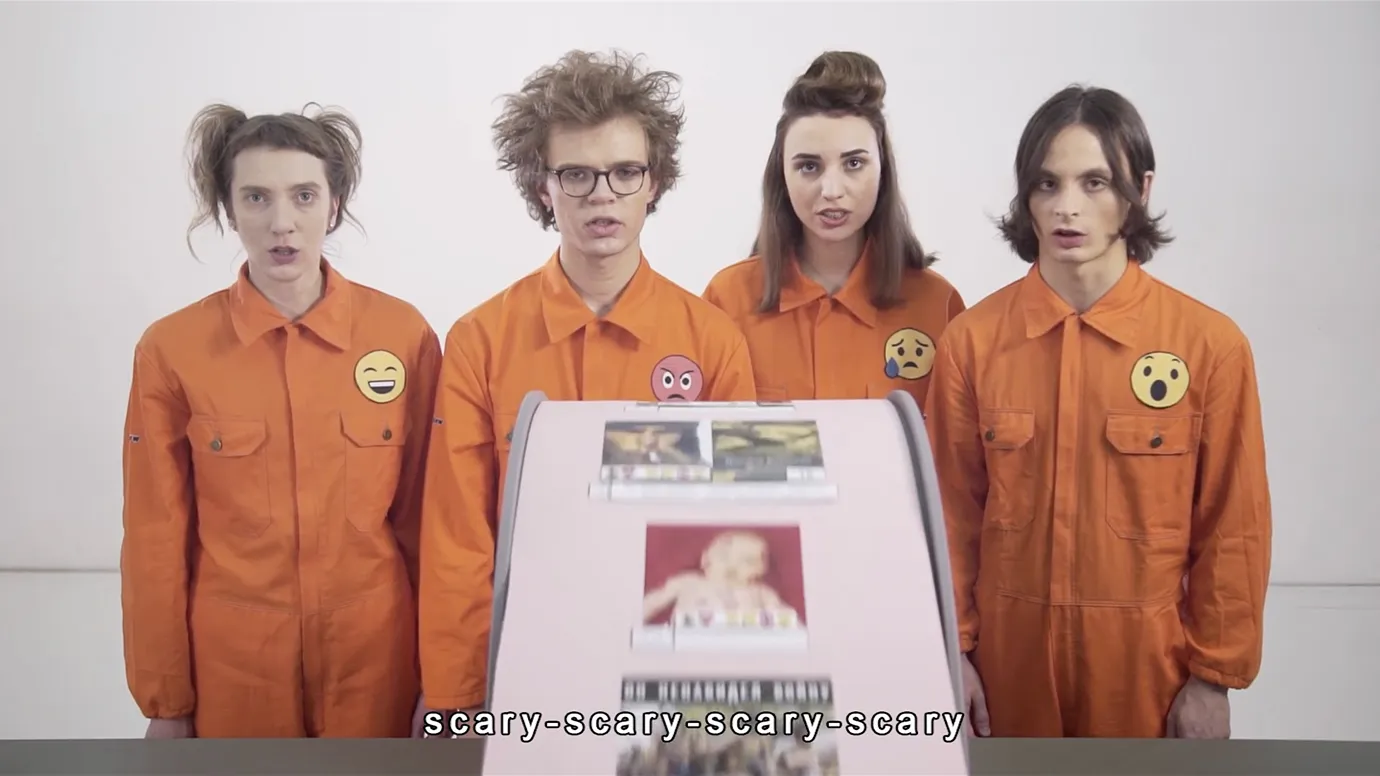
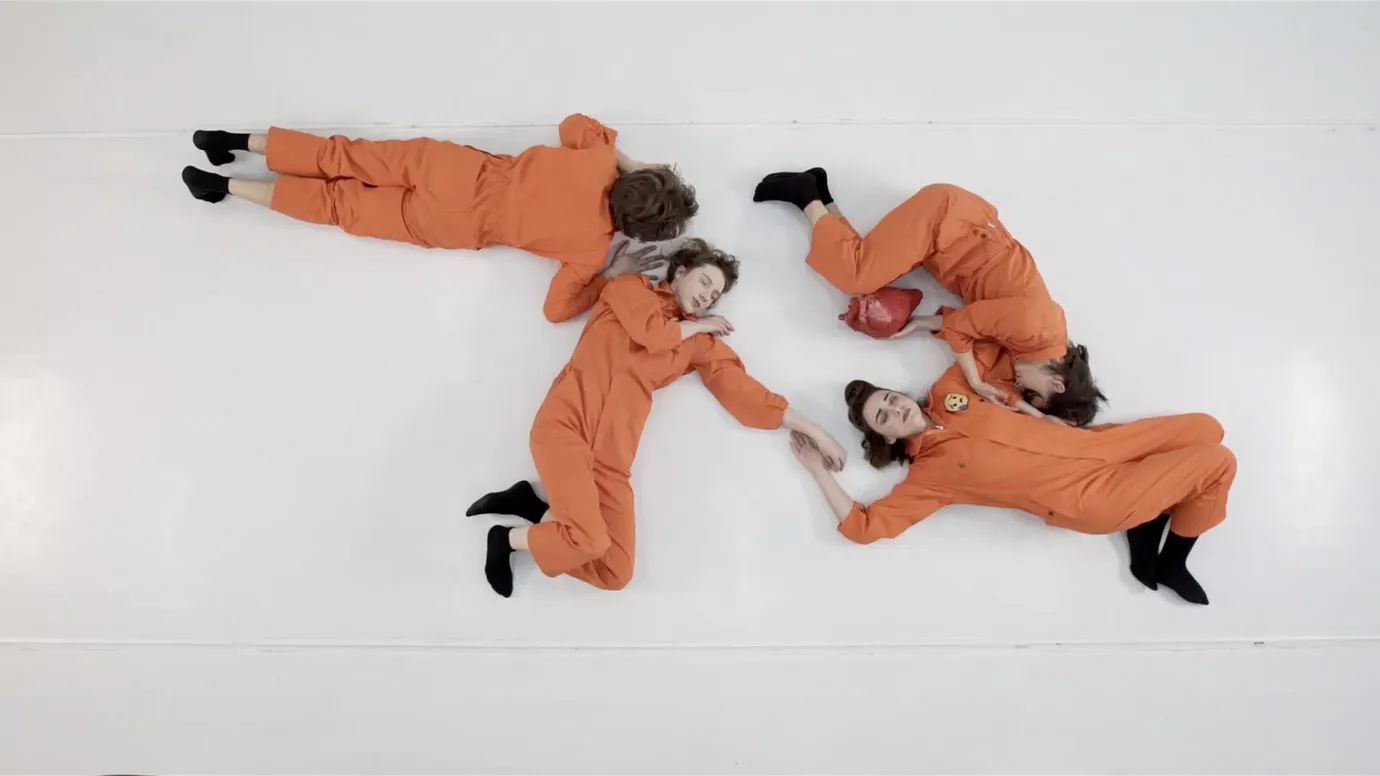
In Act 2, It is still night time and the music is more serene although the images continue to be intense. Pictures of the dead journalist are still circulating, including close-ups of his spent blood. The emoticons chant “Why do we need all this Blood?” but it is then announced that Babchenko is alive and in his apartment. The Happy emoticon sings a song while the User tucks into a large plate of sushi. Babchenko then appears in an interview about an unrelated matter — his complete lack of sympathy for the victims of a plane crash over the Black Sea; this causes confusion and prompts a response from the weeping Sad Emoticon who sings “The world is so full of violence, maybe it’s time for me to see a psychoanalyst... I’ve even sunk into depression...”! All four emoticons are now lying flat on the ground.
In Act 3, without any explanation other than the suspicion that it might have been a provocation, the News Cycle picks up the story of the resurrected Babchenko. When a Ukrainian journalist asks him how he imagines his homecoming to Russia, he replies that he sees himself handing out rations to the starving Muscovites outside the Kremlin who would all then say that “they had never supported Putin and did not know anything about what was happening”. The Troll quickly posts film of this “event” on the news feed. The response of the Angry Emoji is negative, and the Troll posts angry threats of retribution from different political extremes on the News Feed, as well as scenes from a popular computer war game that all show Babchenko in a poor light. This is reinforced by the pseudo-serenity of a Russian newsreel of an angry Putin talking about his contempt for and punishment of different kinds of “traitor”. The final word here is an interview with the Happy Emoticon who, repeating the accusations that Putin had made before, laughs hysterically at the end of each one.
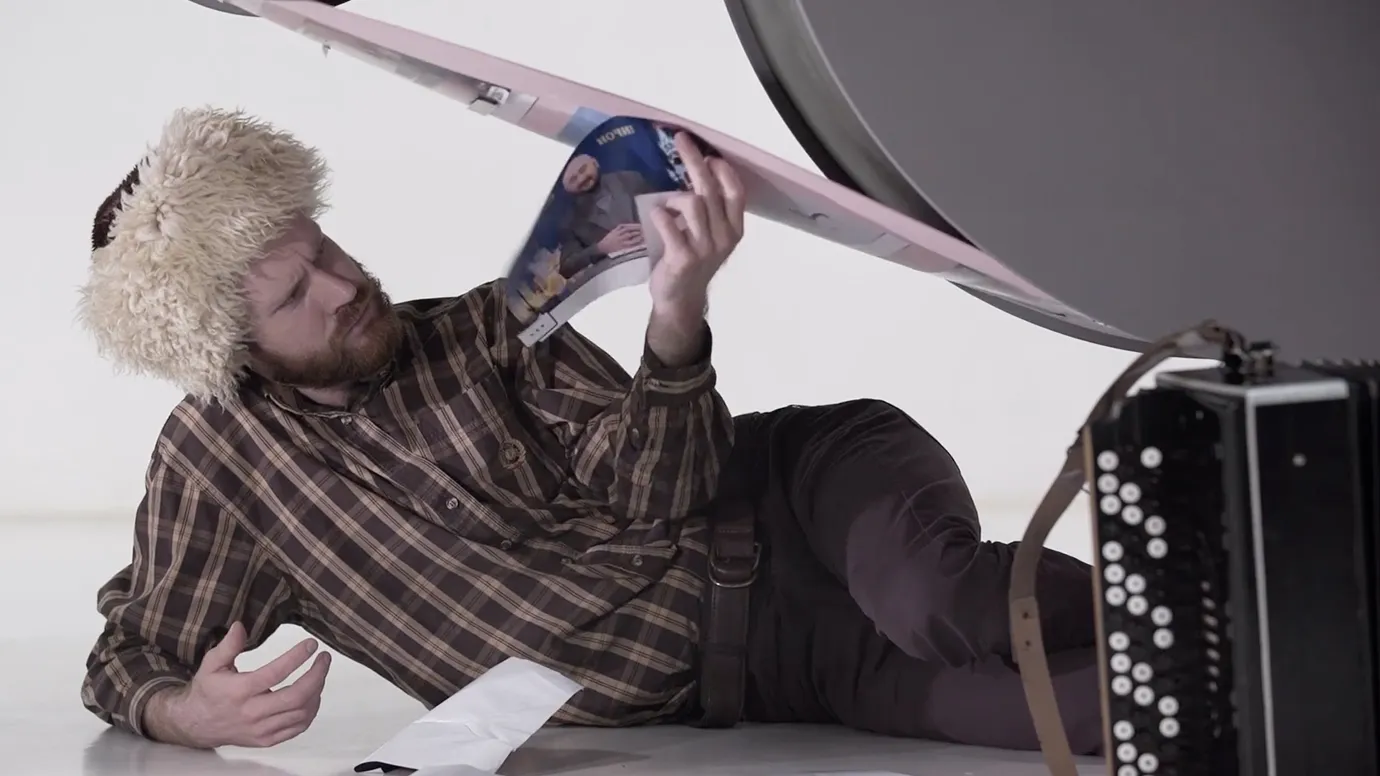
In Act 4, the film returns to the remorselessness of the Wheel of News. While it revolves quickly, the Troll reflects on the ugliness of the internet, on the amount of “bad news” it spreads, and on the difficulty of being an emoji who has to absorb it all; he urges them all to do their jobs well. We return to the story of Babchenko and learn that, in fact, he had gone out to buy some bread before he went missing and that this was the last time his wife and family saw him. The emojis are not sure how to react but become more sympathetic when they learn from a Facebook post about a failed assassination attempt on him in a helicopter four years previously. To a rhythmic drumming sound, the emojis pass a silicone facsimile of a human heart amongst themselves. A miniature icon and related jewellery appear on the screen — it is a perfect gift that “comes with ceaseless prayers on their account”; a revived, ostentatious religiosity has become a feature of the Putin era. The Surprised Emoji now comments on the whole Babchenko Affair, looking at its different aspects, but he still cannot make any sense of it. In the Farce’s Epilogue, the wheel becomes overladen with multiple, conflicting images. Suddenly it stops at a photograph of Babchenko with “He’s Alive!” emblazoned across it, and images referring to other attempted political assassinations by the Russian government also appear. The Wheel of News now turns at breakneck speed, but the message “Babchenko Resurrected!” is clear. The Confused Emoji utters an angry, incoherent cry; the other Emojis turn in circles until they collapse.
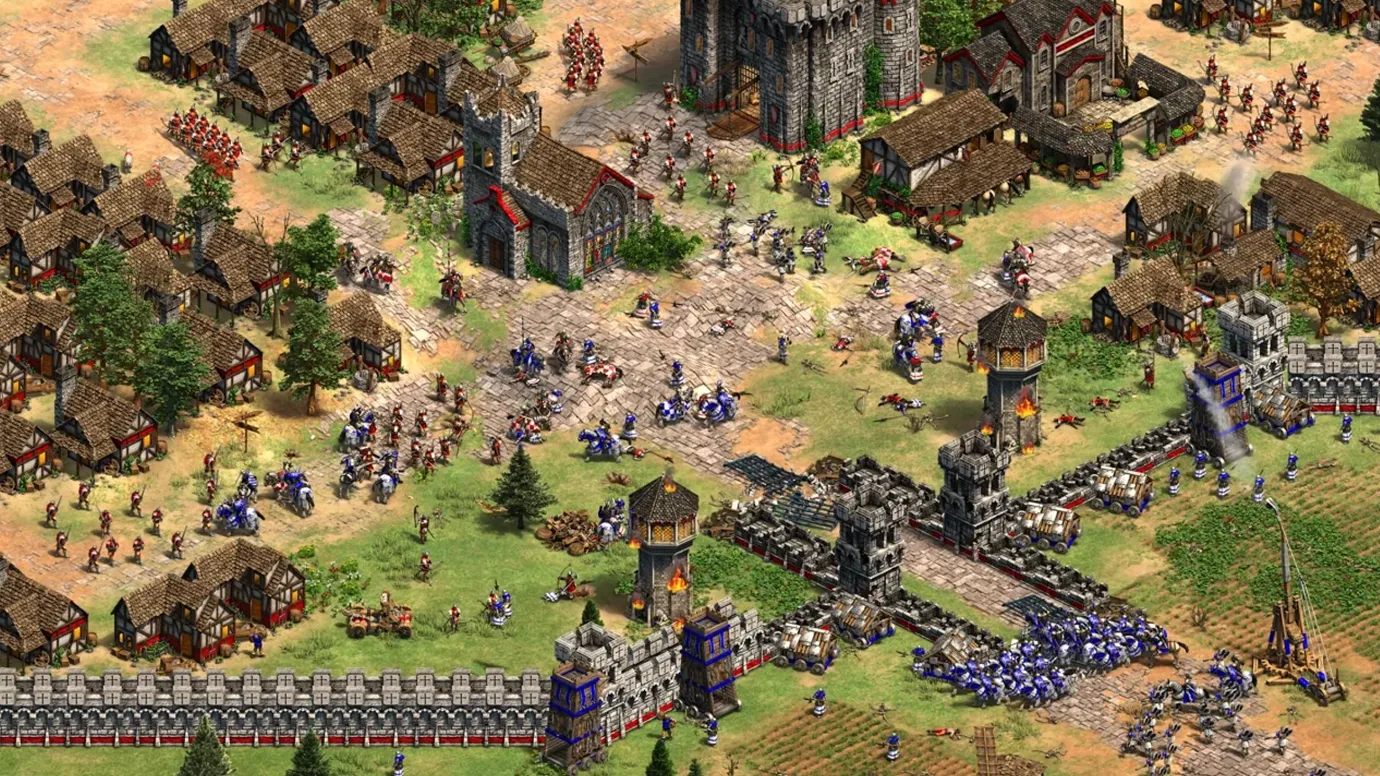
This video and the still photographs related to it were shot in Yangjiang over several months during the late summer/autumn of 1994, with the editing continuing into the following year. The video begins under the artificial light of the busy city centre at night and opens with a blurry hand-held shot of the protagonist, a homeless man, from a distance — a half-naked figure resting beside some bushes by the road. The camera zooms in until it loses focus; the sound is ambient: passing people, motorbikes, and other traffic. The age of the video equipment, as well as the quality of the light, render the image grainy but far from unintelligible, and this creates a patina that runs throughout the film. The man is unkempt but obviously happy, wearing shorts and sometimes a t-shirt, living literally in the shadows of the commercialised paradise that China was starting to become; his demeanour was so open and serene that he attracted people towards him. At times, he walked around aimlessly, illuminated by the lights of the cars, often carrying a branch in one hand that he could use to signal, dismiss unwanted attention, or just brush away dust. One evening he was tucked comfortably on the edge of a flowerbed, shielded by the plants from the glare of the store windows but not from the noise of the traffic; some passing trucks saw him and hooted but the more this happened, the more he seemed to relax. One morning we see him clearly for the first time, illuminated by the sun; he seems shy but smiles warmly, his face is scarred, and one front tooth is severely disfigured. In this video and its related series of photographs Zheng revealed himself as the pupil of a “homeless person” — an eloquent statement about personality, status, appetite, wisdom, and consumerism that many people found impossible to understand. Zheng had graduated from the prestigious Guangzhou Academy of Fine Arts two years earlier and this major film project marks an assertion of his provincial roots as well as a rejection of his previous formal learning. Zheng explained “[this man] seemed to have reached a blissful state — something we are all trying to achieve” that he likened to “a state of Nirvana [or paradise]... something that could not be found in school or at work, but only on the street,” and that if he “could make art in this spirit it would mean a breakthrough.” In his subsequent work Zheng has moved through many different genres and media including the building of large architectural and horticultural environments and a museum. One of these, begun in 2000, inspired by the popular computer game Age of Empire, was based on the idea of turning “the wonder” that lay at the core of the game into different forms of reality. As part of this he purchased a 44,000 sq. m. plot of land and began to translate buildings, shapes and ideas from the Game into a form of utopian reality that purposely had no master plan so that it could grow and change spontaneously. Ultimately, he found that an infinite number of administrative rules and restrictions made it impossible for him to continue, but not before he had completed a number of buildings, spaces, gardens and structures. In 2012, as a result of official disapproval, the Age of Empire project came to an end, soon after to be replaced by The Liao Garden that incorporated what he had already produced as a base. But now he worked on a completely different idea in which art is inseparable from all life forms, including the earth, nature and the cosmos. Zheng laconically described his new departure into the sensual and natural world as “A Move from Semiotics to Energetics”. This was a turn of which his Master would certainly have approved as Zheng had now become the creator and master himself of a realisable utopia, or paradise, in which the making and displaying of art and spaces without any restriction or regulation continues to expand.
Recently, in response to the intensifying consumerism and commercial trends that he had seen in Hong Kong pop culture magazines, Zheng set up a computer controlled by a pig’s brain that can create virtual painterly images that may be freely accessed by anyone or, if sold, be transferred to leatherette canvas. In this form some museums have already collected them.
In an environment increasingly under threat, more so now than when the work was made, the danger of violent upheaval of any kind, whether by war or by human or natural disaster, has become an ever-present means of control. Fine words about equality and democracy mask a condition in which vast wealth is increasingly accumulated into the hands of smaller minorities. In a world that rewards realpolitik, distinctions of left, right and centre have become so evidently blurred, blinkered, professionalised and self-serving that its protagonists can no longer be endorsed by their ability to govern equitably or judiciously. As implied in AES+F’s other major works, The Feast of Trimalchio baldly states that the present has become a time of slaves, masters, and smouldering social discontent that is intermittently relieved by riots, bread and circuses. In its contemporary exposure of nouveau riche consumption, it uses Petronius’s satirical fiction of ancient Rome at the time of Nero as a model for a coruscating parody of a high-net-worth paradise today. Yet, its tone has perplexed some because it does not communicate outrage, as, for instance, did Jonathan Swift in his acerbic moral satires. But AES+F have taken the completely different approach of making an absurd, picaresque parody that reveals a non-judgemental fascination and delight in the unfolding of each trivial, nauseating event. In this way, the nature of every magnified, excessive detail may be better seen and appreciated. This is a deeply flawed, shadowy paradise in which self-interest is deemed the only virtue.
Making their way through a traditional Chinese labyrinth of mountains, deserts and lakes with more modern deserted hydro-electric plants, mines and commercial districts, the visitors, rather like monks or sages in ancient times, find themselves accompanied by, not pilgrims, but outlandish doppelgänger animal hybrids in the form of human-sized marionettes, actual and filmed. This surreal zodiac of creatures comprises stately figures with heads of parrots, goats or hawks, followed by green three-headed sprites sporting “forest” torsos, and a giraffe penetrated by the body of a fish, while an inverted headless wraith bounces and walks on its hands. Meanwhile, robotic, dark, “worker drones” scramble desperately through “mines” or push heavy cardboard cartons up endless slopes. Together, they negotiate unpredictable, estranged, yet also familiar, topographies with a succession of conflicting emotions: surprise, wonderment, horror, melancholy, fear and delight. Nothing no longer seems to work; everything and everyone seem to be waiting. Words matter to Zhou: a void is as important as matter because neither can exist without each other; yet he realises that they are slippery especially in relation to truth, particularly when translated. In his choice of them, and awareness of their multiple significations, he has created a world based on the kind of deductive reasoning set out in the 4th century BCE by the Chinese sage Zhuang Zhou (Chuang Tzu) in his famous allegory on consciousness, reality and dream, which he described as Transformation. This well-known passage, that has had a considerable influence on all of Zhou’s Xiaohu’s work, appears in the Zhuangzi, Zhuang’s collection of philosophical writings, that provide a starting point for this video: “Once upon a time, I dreamt that I was butterfly, flitting around and enjoying myself. I had no idea I was Chuang Tzu. Then suddenly I woke up and was Chuang Tzu again. But I could not tell, had I been Chuang Tzu dreaming I was a butterfly, or a butterfly dreaming I was now Chuang Tzu? However, there must be some sort of difference between Chuang Tzu and a butterfly! We call this the transformation of things”.
Zhou made this video in collaboration with the historic traditional puppet Theatre of Tai Shun and his choice of dialogues from the Zhuangzi act as both a counterpoint to and illumination of, the actions of the characters as they float and wander randomly across a rapidly transforming classical and post-industrial landscape. In his choice of dialogues Zhou teeters on the edge of absurdity by implying that transformation, existence, consciousness — even life itself - are both permitted by and created out of a void. Yet, the fluid synapses that connect society, politics, ontology and philosophic speculation in these ancient texts also take on here the role of Duchampian “ready-mades” that, together with Zhou’s images and narratives, define the moral compass of this as well as his earlier works. In his solo show, more in the spirit of Duchamp than in that of Chuang Tzu, he reduced these ideas into a single basic utterance: “You are just a piece of meat”. This statement does not appear in the film.
In Subjects of Memory (2016), he interviewed his elderly family members and retraced the layouts of the now destroyed Voroshilovsky Workers’ Settlements where both his parents were born. The film also includes their recollections of what it was like to work in the top secret chemical factories nearby, and of the fatal accidents that sometimes took place there. When they were still in operation, effluent from these factories polluted both the earth and snow but the pollution continued long after they had closed: in 1997 Guinness World Records listed the notorious Black Hole sludge Pit there as the “most polluted small body of water on the planet”. Sludge, the final section of Otdelnov’s film, examines and aestheticizes this dire legacy as “Terrible Beauty”. Like many other abandoned factories across the whole country, it has anonymously bequeathed chronic toxic pollution and its severe environmental consequences to a largely ignorant and often unconcerned present and future. In 2024, as a continuation of Promzona , Otdelnov exhibited Hometown (2024), in London, a project that further elaborates his submerged memories of a surreal Soviet past. Recently, in his exhibition Estates: Fragile Utopia (2026) he explored, in a range of different media, aspects of British Social Housing and the utopian, post-war ideals of the Welfare State that inspired it.
Always short of space, Singapore has been reclaiming land from the ocean since the 19th century, but as its population has expanded, overcrowding has become unbearable. Modern technology has provided solutions for the ever-growing need for space, and new districts have been created for use by the government, education, security and housing. Looking back to when she was ten years old, Yuexi remembers the day when her father came home with life vests for all the family. All he said was “you may need these soon” and added nothing else until he began to explain how humanity “has messed up the earth, the stratosphere, all of it.” The film shows images of water running through the streets followed by the ocean depths and currents of the tides. Yuexi appears in her life vest, floating in the street. “The next day”, she tells us, “he showed up with two kayaks… with no big speech or drama but with a quiet acceptance of what was coming…” “Looking back, I think that it was his way of preparing us, turning fear into something we could hold, something we could paddle through together. We could not stop the climate machine in time. Maybe we were too caught up with buzzwords, tangled in politics, or dazzled by technological promises that were never truly delivered?... These buildings were nothing more than fragile stopgaps. In the end all we could do is stand by and watch as the water crept higher and higher... swallowing everything in its path…”. “…But maybe it was never our responsibility to stop it.” she adds as her boat progresses mournfully through the completely flooded, now deserted, city where only the tips of fair-ground rides and high-rise towers can be seen above the water. A solitary figure, she moves to a beach and looks out at the waves: “The sea has always been here waiting, reminding us that nothing is ever truly ours” she reflects… “The sea as a being only emerges through the land. Now as it rises, it carries away what we built, but it leaves something behind too: a rhythm, a memory, a story.”
This paradise has been washed away, along with many others, but within the cycle of acceptance, memory, history, and future, its dream will always remain imminent. 19.08.26